USHL faces CHL talent drain after NCAA eligibility rule change

The NCAA’s decision to make CHL players eligible for Division I hockey starting Aug. 1, 2025 has scrambled the junior hockey market for elite American prospects. What used to be a sharp choice between Canadian major junior and the U.S. development route now looks more flexible, and that has made the CHL a more attractive short-term stop for players who think it can help their draft stock without closing the door on college hockey.
The clearest example is J.P. Hurlbert. The USA Hockey National Team Development Program and USHL forward moved to the Western Hockey League, and in a 2025 report he had become the league’s top scorer. That kind of leap matters because it shows exactly what some prospects believe they gain by crossing the border: a bigger stage, a heavier major-junior schedule and, now, NCAA eligibility later if the pro track does not come immediately. For a high-end scorer, the WHL can look less like a detour and more like a shortcut.
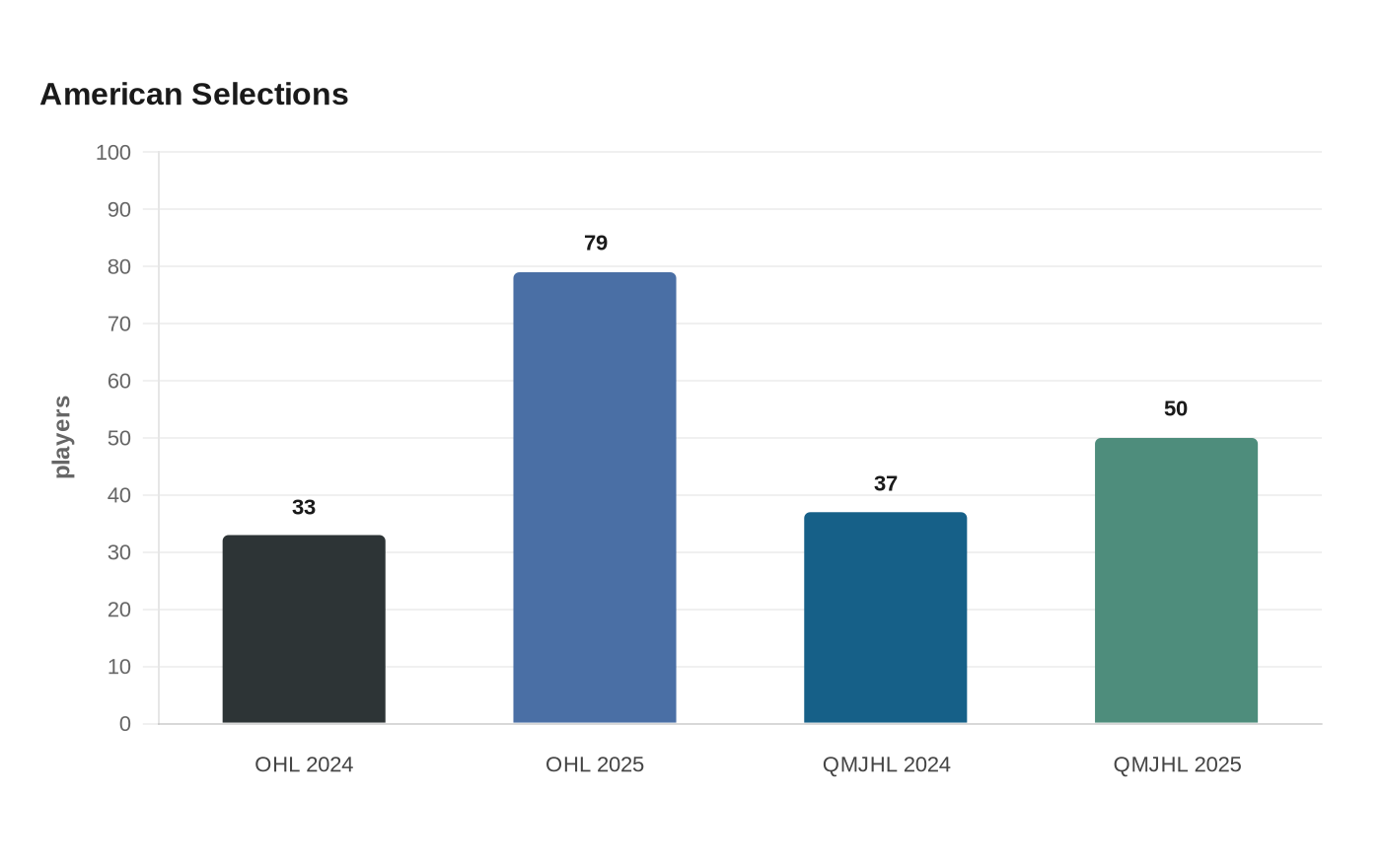
The numbers suggest this is more than one player chasing a different opportunity. By late 2025, the CHL said it believed it had about 250 players across its three leagues who would not have been eligible under the old rules. The Ontario Hockey League selected 79 Americans in 2025, up from 33 in 2024, while the Quebec Maritimes Junior Hockey League took 50 Americans, up from 37 a year earlier. With no cap on American players, the CHL can keep pushing south for talent in a way the USHL cannot match.
That is the problem for the United States Hockey League, even if the league still has the stronger U.S. development pitch. The USHL remains the top USA Hockey-sanctioned junior league in the country and has 16 active teams, but its teams have historically been limited to six non-U.S. citizens each. Glenn Hefferan said in January 2026 that the league’s priority on player development had not changed after the NCAA-CHL rule change, yet the recruiting battlefield has clearly shifted.
The next two seasons will tell whether this is a temporary burst or a lasting migration. If elite American players keep viewing the CHL as the best way to raise draft value while preserving NCAA options, the USHL will have to fight harder for every top-end prospect.
Sources
- [1]x.com
- [2]chl.ca
- [3]sportsnet.ca
- [4]thehockeynews.com
- [5]usahockeyntdp.com