USHL history traces league’s rise from merger to Tier I status
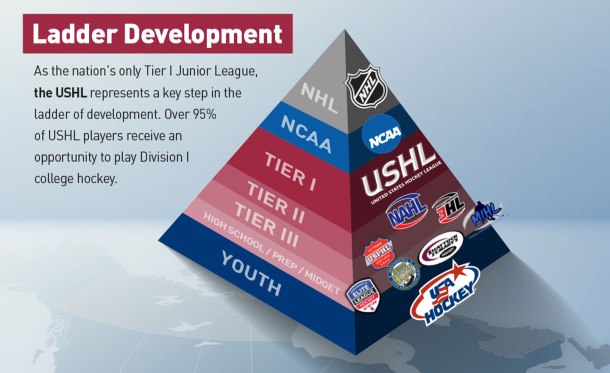
The USHL did not begin as the country’s premier junior pipeline. It became one through a series of structural decisions that changed who the league served, how it was governed and what it promised players aiming at college hockey and the NHL. The league’s own history shows that the modern USHL was built from a merger, then refined through leadership and standards until it stood alone as the only Tier I junior circuit in the United States.
From regional merger to national identity
The turning point came in 1979, when the USHL and the Midwest Junior Hockey League merged. That merger mattered because it stitched together a broader junior footprint and gave the league a platform larger than a regional competition. The USHL’s history ties that period directly to Harold Anderson, the figure for whom the league’s regular-season trophy is named, and to the Midwest Junior Hockey League predecessor he helped shape.
The next defining shift came when Gino Gasparini became commissioner before the 1995-96 season. His tenure bridged the old league structure and the modern one, and the league marks that era as the period when it was established in 2002 as the nation’s only Tier I junior hockey league. That is the pivot point in the USHL story: the league was no longer just a place where teams played for a local title, but the top rung of American junior hockey.
Why Tier I changed everything
USA Hockey’s junior hockey structure gives the USHL its real weight. The governing body identifies the USHL as the only Tier I junior hockey league in the United States, with the NAHL as Tier II and the NA3HL as Tier III. Those tiers are not just labels; USA Hockey says all three are designed to help players maintain NCAA eligibility, which is why the USHL’s position at the top of the pyramid matters so much to families, coaches and scouts.
That status reshaped the league’s daily purpose. Players are not just chasing wins, they are trying to prove they can handle a schedule, speed and level of responsibility that translates to college hockey and beyond. Coaches, in turn, are judged not only on standings but on whether they can develop players who are ready for NCAA Division I and, for the best of them, the NHL.
The trophies that connect old and new eras
The Anderson Cup is the clearest link between the league’s earlier identity and its present one. The trophy has been awarded to the USHL regular-season champion since 1973, years before the 1979 merger and long before the league’s Tier I designation. By keeping that award in place, the league preserved a piece of its premodern history even as it rebuilt its structure around elite development.
That matters because the USHL’s heritage is not a clean break from the past. It is a layered history in which older traditions survived while the league’s standards changed around them. The Anderson Cup reflects continuity, while the Gasparini Award narrative reflects transformation: governance, growth and a deliberate push toward the highest level of junior hockey in the country.
The pipeline that scouts now track
The modern USHL proves its value through production. The league said more than 800 alumni were on NCAA Division I rosters for the 2025-26 season, a number that underscores how often USHL players move straight into the college game. It also said its alumni held more than 50% of NCAA Division I roster spots during the 2024-25 season, a sign that the league is not just sending a few players upward, but occupying a dominant share of that market.
The NHL footprint is just as striking. The USHL said more than 25% of NHL players had USHL experience during the 2024-25 season, and it said more than 195 alumni were on NHL Opening Night rosters that year. Macklin Celebrini, Adam Fantilli and Cole Caufield were among the names highlighted in that group, the kind of player markers scouts use when explaining why the league’s track record carries so much authority.
The 2025 NHL Draft added another data point: eight USHL alumni were selected in the first round. That is the sort of number that confirms what the league’s reputation already suggests. The USHL is not a middle stop for fringe prospects. It is a proving ground for players who are already moving toward the top of the sport.
A league built to stay at the top
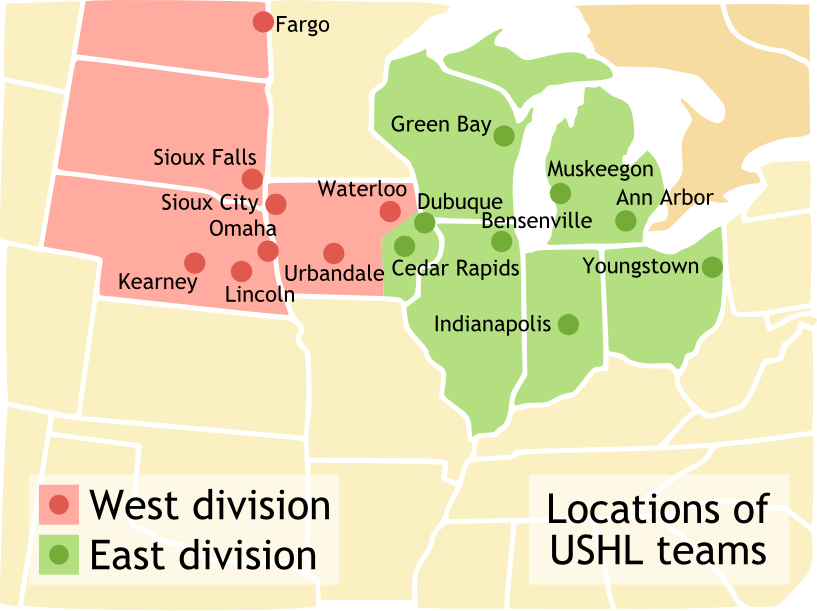
The USHL’s current scale shows how stable that model has become. The league lists 16 member clubs, and in January 2025 it said all 16 had signed declarations to compete in the 2025-26 season. In June 2026, the league said it was preparing for its 25th season at the Tier I level. Those details matter because they show the Tier I identity is no longer experimental or transitional. It has been the league’s operating framework for a generation.
That same 2026 period also hinted at the league’s next chapter. The USHL announced a memorandum of understanding to establish member clubs in Arizona, California and Nevada, tying expansion to a broader collaboration with the NHL and USA Hockey in support of the Tier I development pathway. The league that merged in 1979 to broaden its reach is again looking west, this time with the infrastructure and brand power that come from being the top junior league in the country.
How the league keeps modernizing
The USHL’s history is not only about governance and geography. It is also about how the league prepares players for the next level. The 2025 Gasparini Award page pointed to growth in attendance, NCAA Division I scholarships and NHL Draft selections during Gasparini’s tenure, evidence that the league’s standards were built to produce measurable results.
Modern ownership and operations now extend that evolution. The league honored Chicago Steel owner Larry Robbins in 2025 for expanding video and analytics tools and for adding mental resilience training and resources for players. That is the kind of detail that separates today’s USHL from the league that emerged from the 1979 merger. Development now includes data, recovery, and mental performance, not just ice time and games played.
The league’s origin story is really a story of consequences. A merger created scale, leadership created direction, and Tier I status created a destination that changed what players, coaches and scouts expect from junior hockey in the United States.
Sources
- [1]ushl.com
- [2]usahockey.com