USHL homepage highlights league's top-tier path to college and NHL

Open the USHL homepage and the league tells you exactly how it wants to be understood: as the only Tier I junior hockey league in the United States, with a direct line from youth development to college hockey and, eventually, the NHL. The site is not built like a single-market team page or a noisy news feed. It is organized as the league’s front door, with standings, schedules, stats, teams and player information positioned to show how the season works and where a prospect fits inside it.
What the homepage puts first
The official hub gives priority to the items people in junior hockey need most in real time. Standings, schedules, stats and game information sit at the center of the experience, which makes the page less about marketing and more about access to the competition itself. That structure matters because USHL teams are not just playing for points, they are playing in a system that scouts, families and college staffs use to measure progress from week to week.
The homepage also reinforces the league’s national reach. Instead of presenting itself as an isolated regional brand, the USHL ties its identity to major hockey institutions, including USA Hockey and the NHL. That linkage signals where the league sits in the sport’s ladder: a national junior circuit that serves as a staging ground for players trying to move into NCAA hockey and, for a smaller group, into the professional game.
Why the Tier I label matters
USA Hockey says it oversees three junior leagues, the USHL, the NAHL and the NA3HL, and it identifies the USHL as the only Tier I junior hockey league in the United States. It also says junior hockey opportunities are for players ages 16 to 20. That age band is the critical window the homepage is built to serve, because it is where roster decisions, draft lists and college recruiting boards begin to overlap.

A 2017 USA Hockey guide put the broader landscape in context by noting that there were more than 120 teams in five different leagues spread across the country. Against that backdrop, the USHL’s official site is doing more than posting game dates. It is staking a claim as the top layer of a nationwide pyramid, the place where elite junior players show they can handle the highest level available in the United States before moving on to NCAA rosters or drawing NHL attention.
The season is organized around visibility
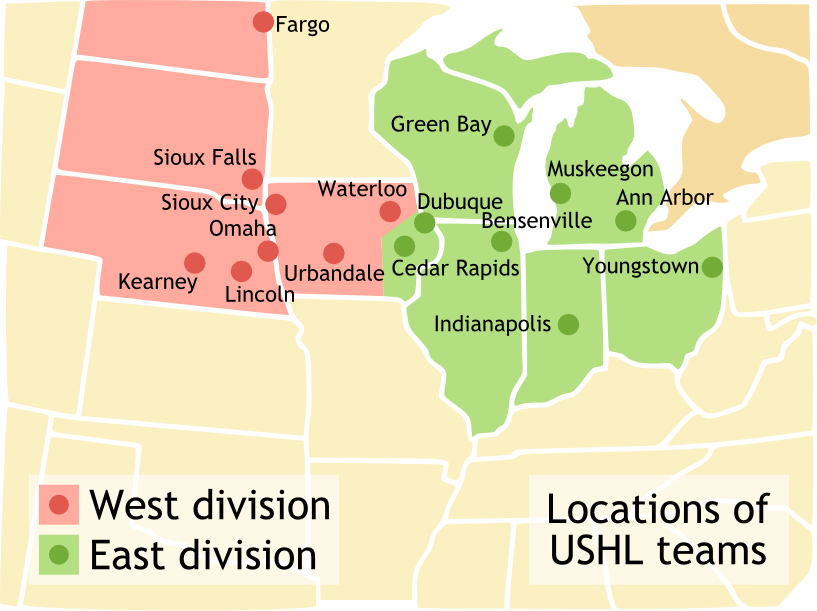
The league’s own materials underline how deliberate that pipeline is. The USHL’s 2023-24 media guide described that campaign as the league’s 45th Anniversary Season and said 16 teams took the ice in pursuit of the Clark Cup. That same season snapshot also captured the league’s shifting balance of power, with the Fargo Force winning their first Anderson Cup as regular-season champions the previous year and the Youngstown Phantoms winning the Clark Cup for the first time. Those details matter because they show a league where the chase is competitive, but the exposure is constant.
The homepage reflects that same structure through official navigation to team directories, league news and communications. For fans, that means a single place to check where every club stands and what each game means. For recruits, it means the league is presenting not just the next matchup, but the full framework of a season designed to be watched, measured and evaluated.
Draft timing and season milestones are part of the message
The USHL Draft page says the draft takes place during the first week of May each year and is completed in two phases. That detail says a lot about how the league sees itself: not just as a winter competition, but as a year-round pipeline with a formal entry process that begins well before opening night. The draft format also keeps the league’s talent pathway visible, giving players, families and scouts a clear calendar for when the next wave of prospects starts to take shape.
The league’s official news flow reinforces that rhythm. The USHL announced its 2025-26 schedule on June 24, 2025, another example of how the homepage functions as the central release point for the league’s most important dates. From schedule drops to draft information, the site connects the events that define the season and turns them into a single, trackable system.
Development is the point, not the side note
That system is why the USHL homepage feels different from the average sports landing page. The league uses its platform to point outward toward the larger junior-hockey ecosystem and upward toward college and pro opportunities. USA Hockey’s Feb. 14, 2019 long-term partnership agreement with the NAHL was framed as an effort to improve junior hockey development in the United States, and that broader development conversation helps explain why the USHL’s Tier I status carries so much weight.
The same logic shows up in event coverage around the Fall Classic. USA Hockey’s Sept. 24, 2025 story on the DICK’S Sporting Goods USHL Fall Classic said 94 youth teams from 40 organizations participated in the youth tournament. That kind of turnout turns the USHL into a live showcase for younger players who can see the standard up close and understand what it takes to reach it. It also shows how the league’s digital presence and event footprint work together: one presents the structure, the other demonstrates the pathway.
The homepage’s real function is simple. It tells you that the USHL is not trying to be a general hockey website or a local scoreboard page. It is presenting the sport’s clearest U.S. junior gateway, with the standings, schedules, draft dates, team pages and development links all pointing toward the same destination: NCAA hockey first, the NHL for the best of the rest.
Sources
- [1]ushl.com
- [2]usahockey.com
- [3]static.ushl.com
- [4]1rink.com