USHL powers college hockey, alumni make up majority of NCAA Division I rosters
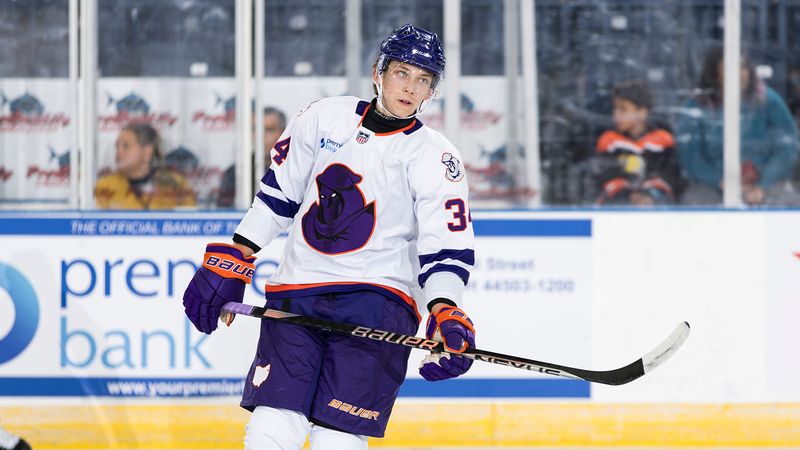
The clearest proof of the USHL’s value is on NCAA rosters. More than 910 league alumni opened the 2024-25 college hockey season on Division I teams, a share that represented more than half of all players in the division and put the league at the center of the sport’s most important stage. That reach is exactly why coaches, recruits, and parents treat the USHL as more than a junior option. It is the most direct American pathway from elite youth hockey to college hockey’s highest level.
Why the USHL is the benchmark
USA Hockey defines junior hockey’s main job as preparing players for either collegiate advancement or a professional opportunity, and it says all three sanctioned junior tiers preserve NCAA eligibility. Within that structure, the USHL stands apart as the only Tier I junior hockey league in the United States. The league also describes itself as the world’s leading 16-to-20-year-old junior hockey league, a claim backed up by how often its alumni show up in the sport’s biggest college and pro games.
That distinction matters because the USHL is not simply a place to accumulate ice time. It is the most visible American junior environment for players who want hard competition without closing the door on college hockey. For families making a pathway decision, that combination is the selling point: strong daily standards, national exposure, and a route that still points cleanly toward NCAA Division I.
The numbers behind the pipeline
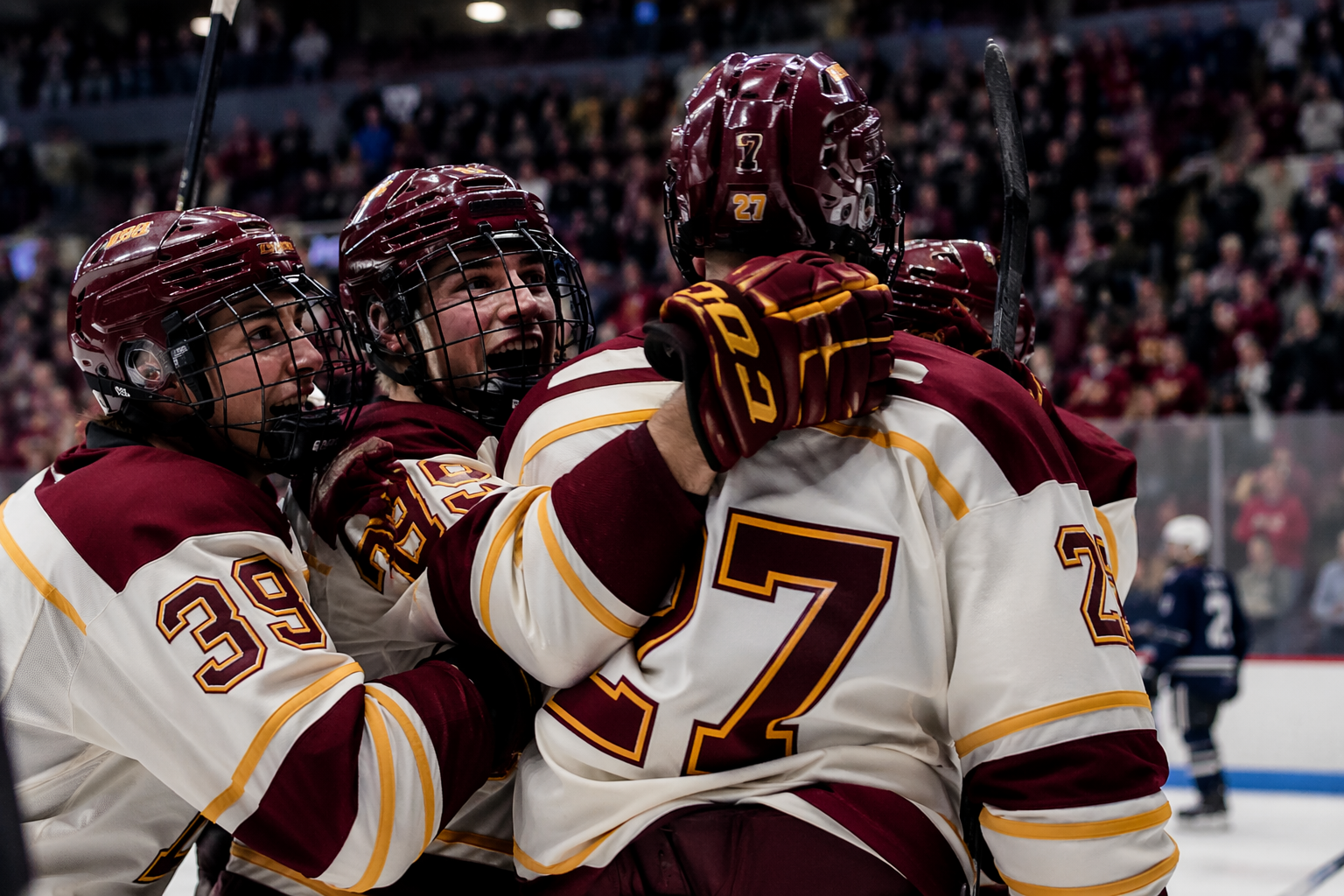
The USHL’s own roster data tells the story with unusual force. More than 910 alumni were on NCAA Division I rosters at the start of the 2024-25 season, and more than 185 of those alumni were NHL draft picks. The same league accounting said more than 195 alumni were on NHL Opening Night rosters, while over 25 percent of NHL players had USHL experience during the 2024-25 season.
Those numbers show a feeder system that reaches in both directions. The USHL develops college-ready players, but it also sends players onward to the professional ranks with real pedigree. That is one reason college coaches trust the league so heavily: it produces athletes who have already been tested against top-end junior competition and can fit into major Division I programs without a long adjustment period.
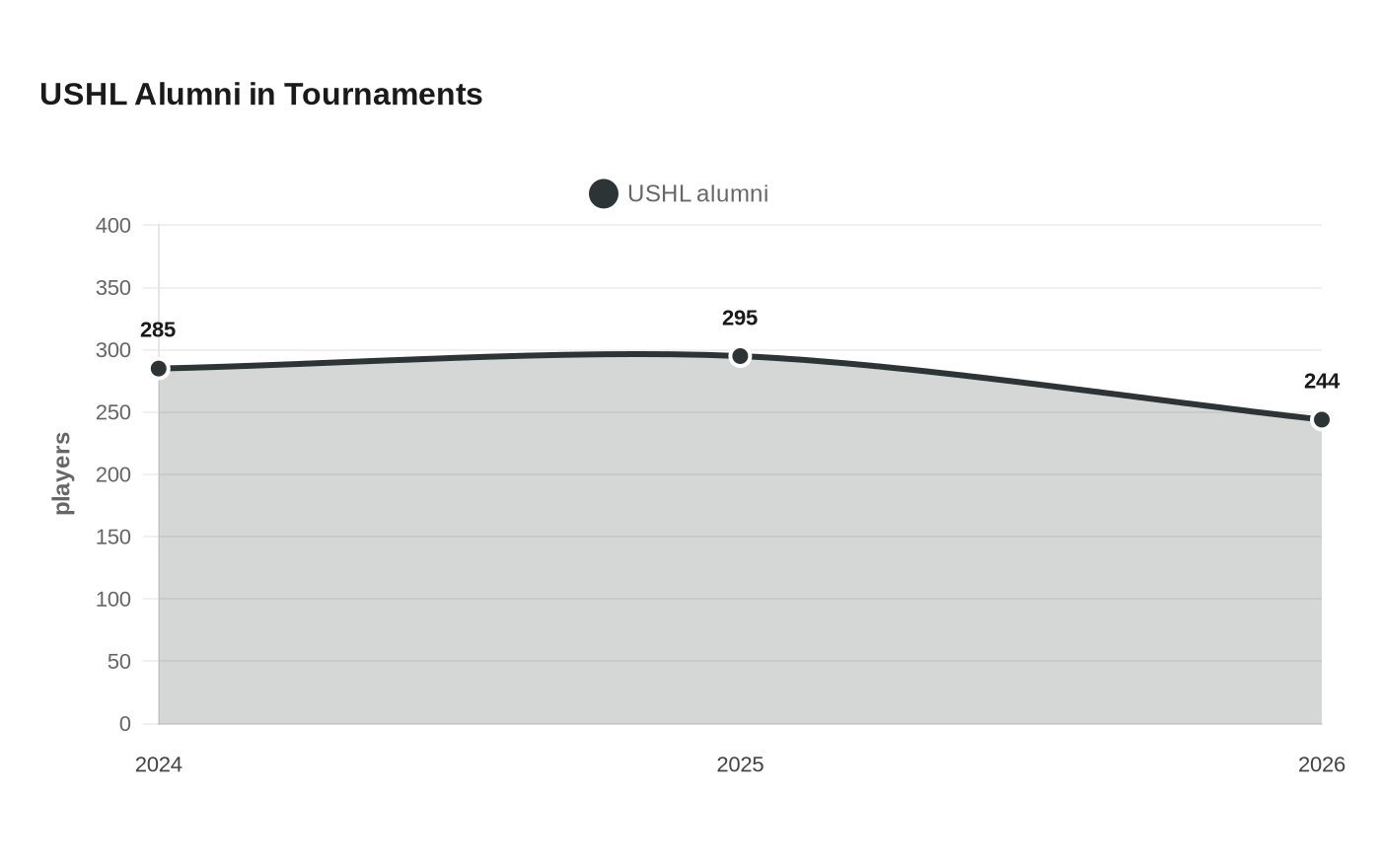
The tournament data sharpens that picture further. In the 2025 Division I men’s hockey championship, the USHL said 295 alumni were in the field. In the 2026 NCAA men’s tournament, 244 of 437 players were USHL alumni, a 56 percent share that included 220 skaters and 24 goaltenders. That spread matters because it shows the league’s reach across positions, not just in one elite scoring class or one hot goaltending cycle.
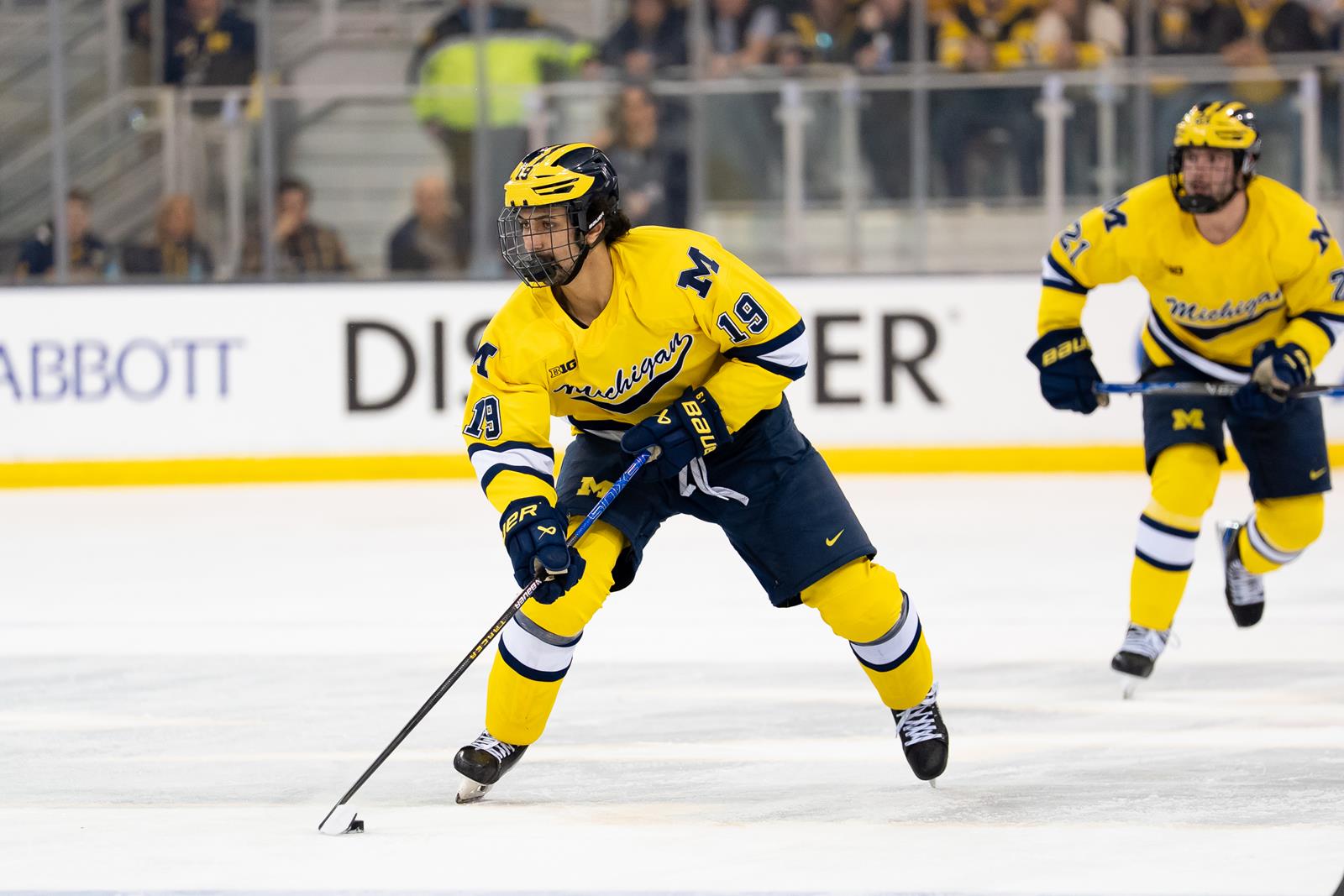
The 2024 tournament field carried the same imprint. The USHL said 285 alumni were on those rosters, with Boston College, Michigan, and Michigan State each carrying 22 former league players. Wisconsin, Western Michigan, Denver, and North Dakota each had 20. When the bracket is full of USHL alumni at schools that routinely shape the national title race, the league’s influence is no longer theoretical. It is built into the sport’s weekly competitive structure.
What the USHL offers that other routes do not
The USHL’s strongest advantage is not a slogan. It is the combination of competition level, visibility, and development infrastructure that players can actually use. As the only U.S. Tier I junior league, it gives players a higher-end weekly schedule and a roster pool built around prospects who are already on the radar of college staffs and NHL scouts.
That visibility starts early. USHL combine programs have been running for 15 years, and the league said its 2025 development series was expected to draw more than 1,000 players born between 2007 and 2012. That scale matters because it creates a consistent scouting environment where prospects are evaluated against other elite players at a young age, not after they have spent years hidden inside fragmented local circuits.
The league has also reinforced that pathway with formal development policy. In April 2026, the USHL announced a Standard Player Development Agreement designed to strengthen its player-first model and support athletes pursuing both NCAA Division I hockey and NHL opportunities. That move fits the league’s broader identity: it is not just selling exposure, it is building a framework around training, advancement, and accountability.
For players, the day-to-day value is simple. The USHL offers a setting where habits are expected to translate to college hockey immediately: pace, structure, travel demands, and the ability to stay ready against older, stronger competition. That is the gap between a junior league that merely fills a season and a junior league that prepares a roster spot at Boston College, Michigan, North Dakota, Denver, or another Division I program where mistakes are punished fast.
A system that develops more than players
The USHL’s development footprint extends beyond skaters and goalies. The league says it has advanced more than 600 officials to professional, collegiate, and international levels of hockey, including 22 former on-ice officials who earned professional contracts. That matters because a league’s standard is often visible in the people who work its games. A strong officiating pipeline suggests a stronger overall hockey environment, one where the pace, rules, and game management all support the same developmental mission.
That broader footprint helps explain why the league has become such a reliable college source. It is not only producing players who can survive the jump to NCAA Division I. It is also operating as a full-service hockey development system, with coaches, scouts, administrators, and officials all tied to the same high-level standard.
The league’s leadership and its college-first identity
Glenn Hefferan, named the USHL’s 11th president and commissioner in 2023, has become the public face of that identity. Under his leadership, the league has continued to present itself as the best American route for players who want elite junior competition without sacrificing the college option.
That message still fits the wider hockey landscape, even as NCAA rules have evolved. The NCAA Division I Council’s 2024 rule change for men’s ice hockey and skiing opened new flexibility for certain prospects who participate on Major Junior or professional teams, as long as they are not paid beyond actual and necessary expenses. In that environment, the USHL’s traditional model remains distinct: it has long been built around keeping NCAA eligibility intact while delivering the level of competition and exposure that top recruits want.
The result is a league that matters in a very practical way. It sends players to college hockey in large numbers, puts them on the biggest tournament stages, and supplies the habits that coaches trust when the schedule tightens and the games get louder. That is why the USHL is not just part of the pathway. For college hockey, it has become the pathway.
Sources
- [1]ushl.com
- [2]usahockey.com
- [3]ncaa.org