USHL’s Anderson Cup gives regular season its own crown
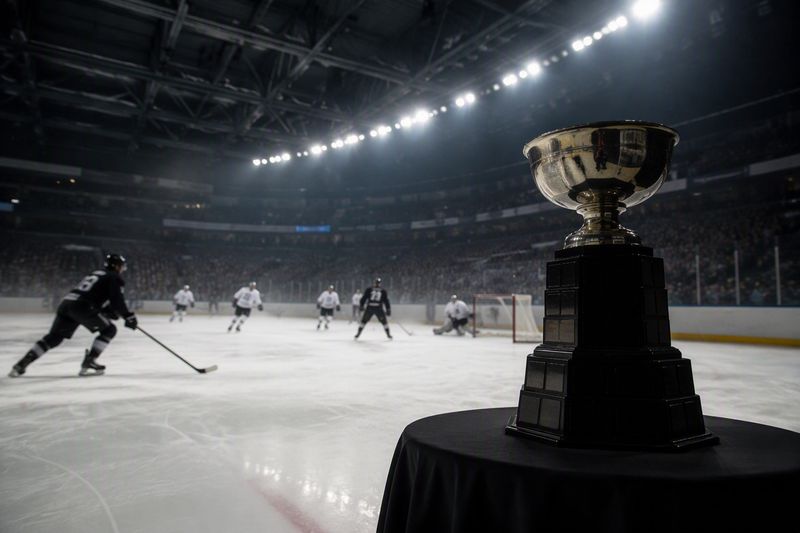
The USHL gives the regular season its own crown, and that is not a ceremonial extra. The Anderson Cup sits beside the Clark Cup because in junior hockey the best six-month body of work and the best spring run are not always the same thing. That split matters even more here, where USA Hockey says the USHL is the only Tier I junior league in the United States and junior hockey is built for players ages 16-to-20.
Two trophies, two different jobs
The cleanest way to read the USHL standings is to treat them as the first half of the season’s story, not the whole thing. The Anderson Cup goes to the regular-season champion, which means it rewards consistency over a long grind of travel, injuries, roster churn, and players making developmental jumps in real time. The Clark Cup is the playoff championship, and that title answers a different question: who handled short series, pressure shifts, and elimination hockey when every mistake got magnified?
That distinction is why both trophies carry real weight with fans, coaches, scouts, and players. One trophy honors the club that built the best full-season resume. The other belongs to the team that peaked when the margin for error disappeared. In the USHL, those are related achievements, but they are not the same achievement.
What the Anderson Cup actually is
The Anderson Cup is not a cheap plaque or a line on a standings page. According to the USHL’s Anderson Cup page, the trophy was created in 1973, stands nearly five feet tall, and cost over $5,000 to build. It has been awarded every year since then, which gives the regular season its own long-running tradition and puts the trophy squarely beside the playoff championship in the league’s honor roll.
That physical presence matters. When a league hands out a trophy that big, old, and expensive-looking, it sends a message that the regular season is worth finishing properly. Winning the Anderson Cup is not a seeding footnote. It is an actual championship, one that has been part of the league’s identity for more than five decades.
Why the Clark Cup still feels different
The Clark Cup is the USHL’s playoff championship trophy, and that alone tells you what separates it from the Anderson Cup. Regular-season champions have to stay steady for months, but Clark Cup winners have to survive the emotional volatility of postseason hockey, where a hot goalie, a bad bounce, or one ugly period can swing a series. That is a different kind of test, and the league’s setup makes room for both.
There is a reason the spring bracket has its own identity. The team that wins the Anderson Cup might be the most complete roster. The team that wins the Clark Cup might be the one built for depth, matchup flexibility, and momentum. Sometimes it is the same club, and sometimes it is not, which is exactly why the USHL hands out two separate trophies instead of forcing one season to answer every question.
Recent seasons make the split obvious
The easiest way to understand the two-trophy system is to look at the last few years. The USHL awarded the Anderson Cup to the Chicago Steel in April 2021, the Fargo Force in March 2024, and the Lincoln Stars in April 2025. The league described the Steel in 2021 as the first back-to-back Anderson Cup winners since the Green Bay Gamblers in 2008-09 and 2009-10, which shows how hard it is to stay at the top through a full junior season.
The playoff side told a different story in those same windows. The Fargo Force won the 2024 Clark Cup, but the Lincoln Stars did not turn their 2025 Anderson Cup into a playoff title, finishing their season in the conference finals. In 2026, the Youngstown Phantoms were crowned Anderson Cup champions, then the Sioux Falls Stampede won the Clark Cup. That is the clearest argument for the league’s two-trophy system: the regular season and the postseason are connected, but they do not always crown the same team.
There is also proof that a club can carry both crowns in the same year. The Chicago Steel paired their 2021 Anderson Cup with the Clark Cup, and Fargo did the same in 2024. Those seasons do not make the split-crown structure unnecessary; they make it clearer. When a team wins both, it means the league’s toughest regular-season group also solved the playoff bracket. When it does not, the Anderson Cup still matters because it recognizes the six months that came before the spring chaos.
Why the league’s history gives both trophies more weight
The USHL’s championship history stretches across two eras: the semi-pro era from 1961 to 1979 and the junior era from 1979 to the present. That split matters because it shows how long the league has valued championships, even as its identity changed from semi-pro roots to the Tier I junior pipeline that exists now.
In that context, the Anderson Cup is more than a modern add-on. It is a durable part of the league’s championship culture, and the Clark Cup is the postseason prize that closes the book. Together, they give the USHL a structure that rewards the team that ruled the long haul and the team that endured the pressure run at the end. That is why the standings matter in January and why the bracket still feels different in May.
Sources
- [1]ushl.sportngin.com
- [2]ushl.com
- [3]usahockey.com
- [4]fargoforce.com
- [5]en.wikipedia.org