USL Championship stadiums showcase the league’s distinctive venue identity
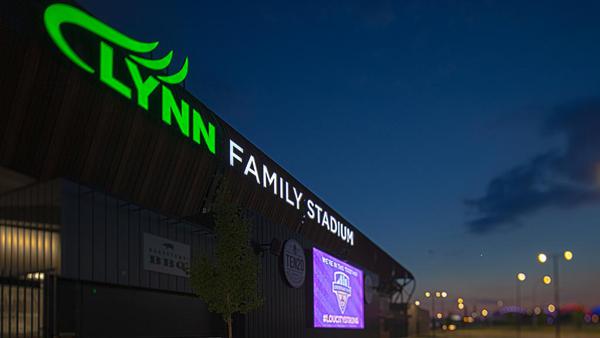
USL Championship stadiums are part of the league’s competitive edge because they do more than hold a match. They shape noise, sightlines, walking patterns, food sales, and the feeling that a club belongs to its city in a way the scoreboard alone never can. From Louisville’s downtown Lynn Family Stadium to Charleston’s original soccer-specific home and Pittsburgh’s team-owned riverfront ground, the league’s venue identity is one of its clearest calling cards.
New downtown builds changed the standard
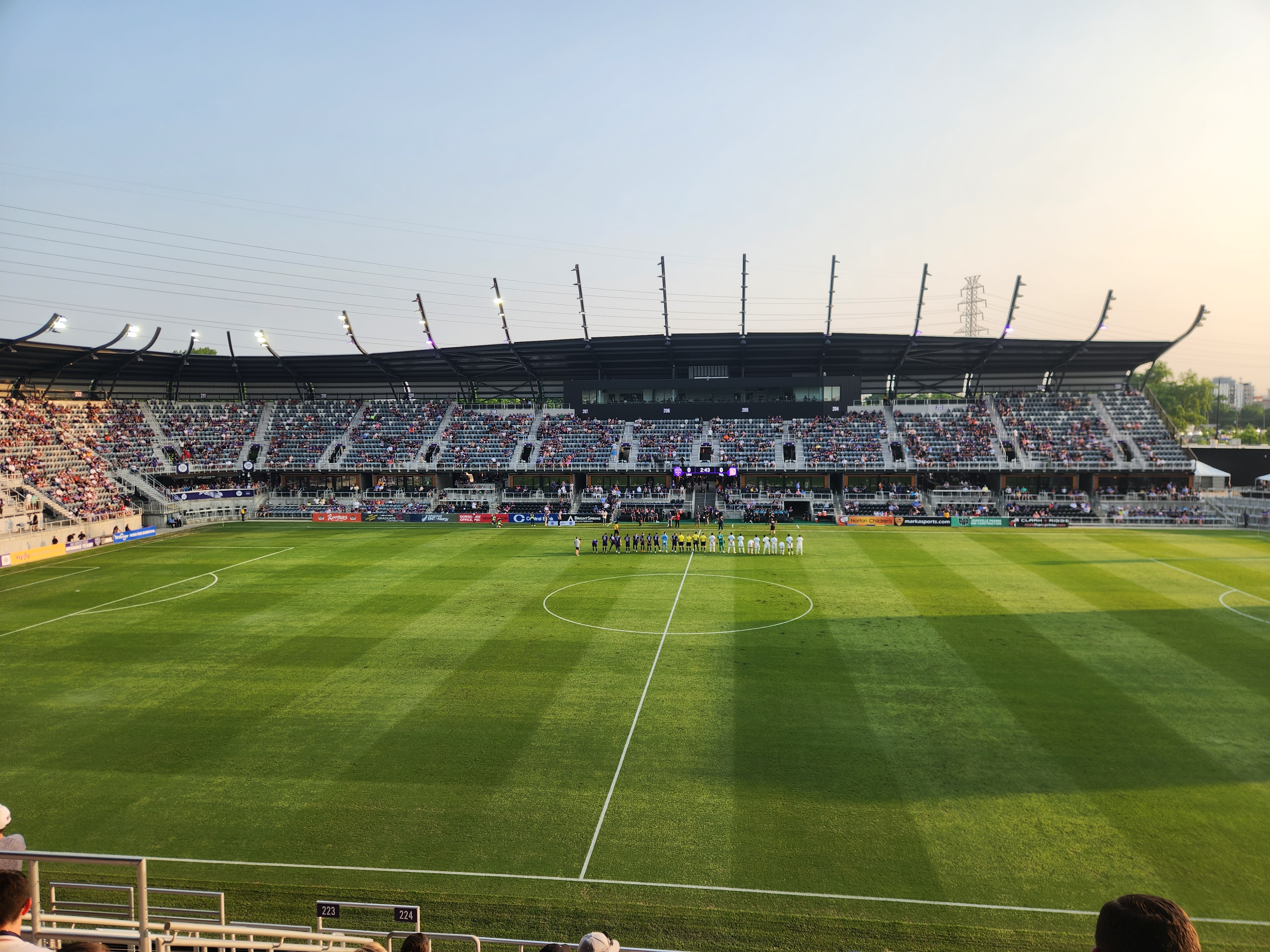
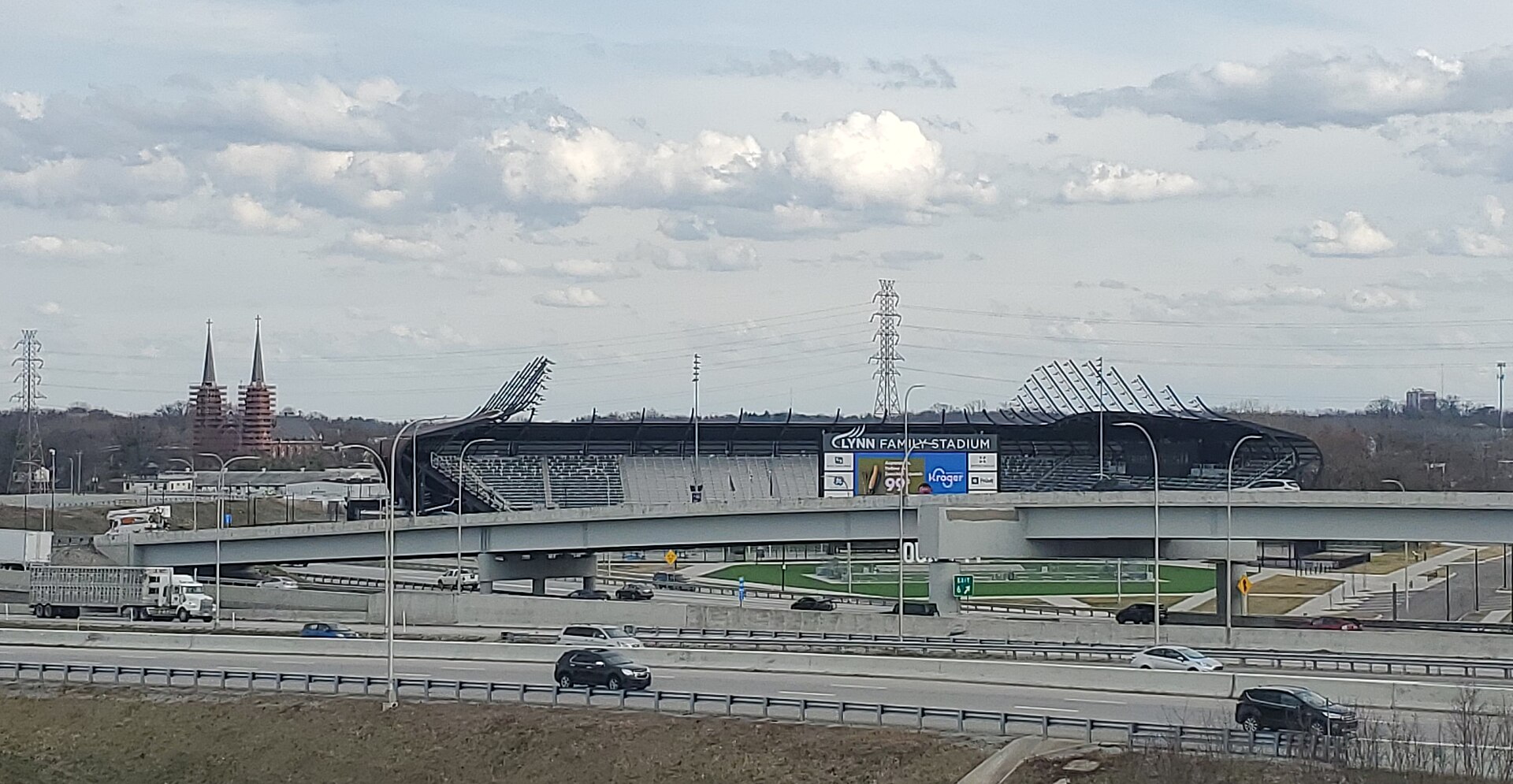
Lynn Family Stadium set that tone when Louisville City FC opened the $65 million venue on July 12, 2020. Designed by HOK and built on a brownfield site close to downtown Louisville, the stadium gives the club a modern soccer-specific home with 11,600 fixed seats, 18 luxury suites, club and loge seating, and capacity for 15,304 when standing areas are included. The large safe-standing supporters’ section is not a decorative touch. It is one of the reasons the building feels alive on match night, with the crowd brought closer to the pitch and the atmosphere built into the architecture itself.
That is the key difference between a stadium that merely hosts soccer and one that helps sell it. Lynn Family Stadium gives Louisville City a landmark in a city center location, while also creating premium inventory for a club that has already shown the business value of an intense matchday environment. It is the kind of venue that makes a club feel established even without top-flight status.
Pittsburgh’s F.N.B. Stadium works from a different angle, but with the same logic. The Pittsburgh Riverhounds’ home opened in 2013 and is team-owned, soccer-specific, and set on Pittsburgh’s South Shore. The league has highlighted the site as one of the most scenic in North American soccer, which matters because the best venues in this league are not always the largest. Sometimes the view, the proximity, and the sense of place do as much work as the capacity figure.
Older soccer-specific grounds still carry real weight
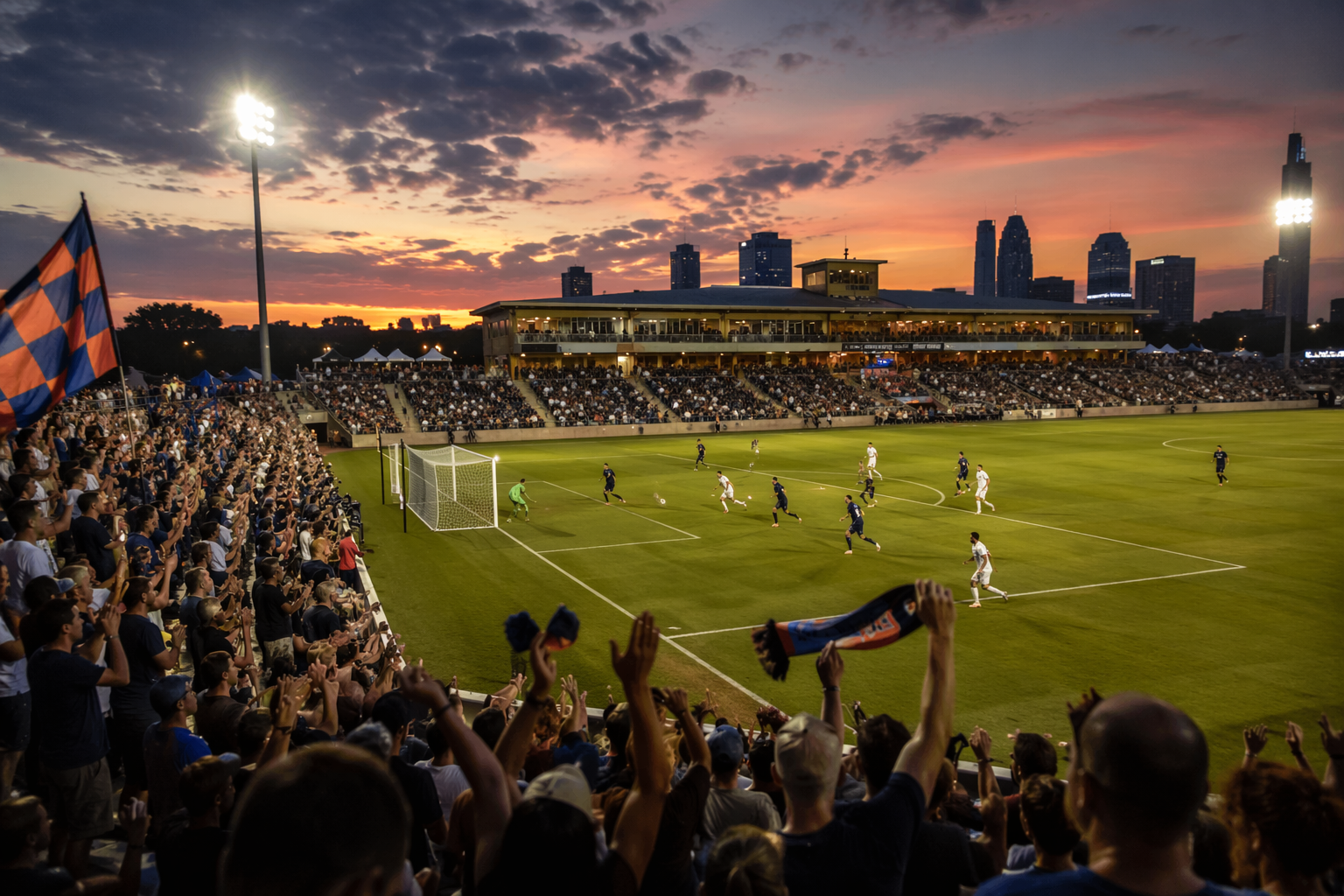
Charleston’s MUSC Health Stadium is the clearest reminder that USL’s venue story did not begin with the recent downtown wave. When it opened in April 1999, it was the first soccer-specific stadium built in the United States and the first privately financed soccer-specific stadium in North America. That alone makes it a landmark, but the details around the building explain why it has lasted as a reference point for the league.
The stadium includes the Three Lions Club, a full bar, an English restaurant, solar panels, and a 3,000-square-foot jumbotron. Those features do more than pad the amenity list. They turn the venue into a place where fans can spend time before and after the game, not just during the 90 minutes, and that helps create habits around attendance. Charleston Battery’s home has long been treated as a model because it understood early that soccer culture grows when the venue gives supporters reasons to linger.
Charlotte’s move to the Sportsplex at Matthews showed a different version of that same idea. The club shifted there in 2017 as part of its path toward Division II compliance, and the site surrounds fans with 12 full-size fields, food trucks, and paved trails. It is less polished than a downtown showcase, but it creates a soccer environment that feels immersed in the game itself. The setting makes the venue useful not only for the first team, but for the broader soccer community around it.
Colorado Springs offers another useful comparison. The original Weidner Field was a 1985 facility adapted for modern supporters with an LED display, shade awnings, Wi-Fi, and concourse upgrades. Those renovation-era improvements matter because many USL clubs do not start with a blank slate. They have to work with existing structures and make practical changes that improve comfort, visibility, and day-to-day use. Colorado Springs later moved into a new downtown Weidner Field in 2021 after the project budget reached $42 million, showing how some clubs eventually use renovation as a bridge to a more ambitious next step.
The league still treats stadiums as strategic assets
The league’s stadium coverage makes clear that these are not background buildings. They are strategic tools. Oklahoma City’s MAPS 4 Multipurpose Stadium is budgeted at $121 million and is planned to open in 2028 on a nine-acre property donated by Echo Investment Capital. The most striking detail is not the price tag, though that is significant. It is the design idea that supporters will stand on the actual playing surface behind the south goal, bringing fans closer to the action than in almost any other setting.
That concept matters because it turns matchday into a physical experience rather than a distant viewing exercise. When fans are that close, the stadium becomes part of the product. The noise lands differently, the energy travels faster, and the club can build a stronger sense of intimacy around the game. For a league that competes for attention against bigger domestic sports and a crowded entertainment market, those details are not cosmetic.
Sacramento Republic FC’s planned Railyards Stadium points in the same direction. The project has been updated to a 20,000-plus-seat venue at the Railyards, and the club has said it will build there through a long-term agreement. That scale suggests ambition, but it also shows how USL clubs use stadium plans to signal permanence in their markets. A venue in the Railyards is not just a place to play. It is a declaration that the club intends to become part of the city’s daily geography.
Orange County SC’s expansion of Championship Soccer Stadium tells a quieter but equally important story. The club moved to expand after recording sellouts in the majority of matches in the prior season. That is the clearest possible sign that venue demand can drive club planning. When a building is consistently full, the stadium stops being a container and becomes an argument for growth.
What makes a USL stadium feel distinct
The practical answer is not complicated: a USL stadium feels distinct when it is designed around soccer habits instead of generic event use. That can mean a safe-standing supporters’ section in Louisville, a pub and restaurant in Charleston, a scenic riverfront site in Pittsburgh, a field complex in Charlotte, or a downtown venue in Colorado Springs and Oklahoma City. The common thread is that the building gives fans a reason to identify with the club beyond the final whistle.
Those choices matter because they shape attendance patterns and local identity at the same time. A venue with club seating and luxury suites helps the business side. A standing section, a close pitch, or a trail-lined campus helps the culture. And when a club gets both right, the stadium becomes part of the fan base-building strategy rather than a neutral asset sitting on the edge of town.
That is why USL Championship’s venue identity stands out. The league has clubs in buildings that feel custom-made for their markets, whether the home is a new downtown showcase, an older soccer-specific ground with history, or a retrofitted site that had to evolve with the sport. In USL, the stadium is not just where the game happens. It is where the club tells supporters who it is.