USL Championship tiebreakers put head-to-head results first in standings races
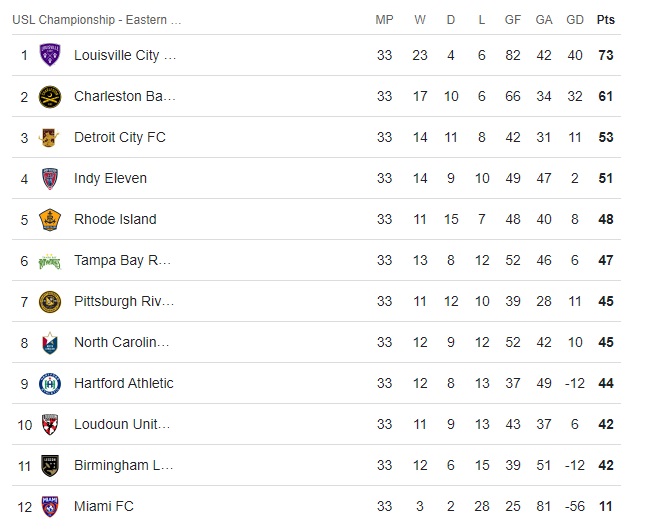
In USL Championship, head-to-head points in regular-season league matches come before goal difference. That means one season series can outweigh a prettier overall table, and a single result against a direct rival can reshape seeding, home-field paths, and even who stays alive in the race.
Head-to-head is the first thing that matters
USL Championship and USL League One both use head-to-head results as the principal regular-season tiebreaker. In the Championship, points earned in the matches between the tied teams come before total goal difference across the season. If that still does not separate them, the league moves to head-to-head goal differential, then points-per-game against in-conference opponents, then total wins, then overall goal differential in league games, then goals scored, then points against the top four conference finishers, then disciplinary points, and finally a league lottery.
A club that takes four or six points from a direct rival can create a real cushion even if both teams end the year with similar records. A team that piles up style points in one-sided wins but keeps splitting with the teams around it can still get punished when the table tightens.
Why the season series can beat the bigger number
This is where USL Championship feels different from leagues that lean primarily on overall goal difference. In USL, who you beat matters before how many goals you scored in all your other games. That makes the calendar itself part of the standings race, because the direct meetings between contenders can be worth more than an extra comfortable win against the bottom half of the league.
The math gets especially sharp in late summer and fall. In one 2024 three-team scenario, Pittsburgh Riverhounds SC had the best points-per-game mark against in-conference opponents among the tied clubs, which would put it on top if the earlier head-to-head steps could not clear the logjam.

A few recent race scenarios show how fast this swings
Recent playoff-race swings have repeatedly turned on head-to-head tiebreakers. Colorado Springs Switchbacks FC held the head-to-head edge over other contenders in key playoff-position battles, which gave it an advantage without needing a massive separation in the table.
A club can be in one week and out the next depending on whether a rival has already won the direct matchup. FC Tulsa owned the head-to-head tiebreaker after a key matchup, and that kind of edge is not cosmetic. It is the difference between chasing from behind and controlling your own seed.
In Week 33, Loudoun could clinch a top-four finish while Indy needed a win to keep its path open, and the visitors had already sealed their first trip to the postseason the previous Saturday night.
The final has one wrinkle fans need to know
The USL Championship Final follows the same head-to-head logic, but with a twist. Tiebreaker No. 3 is not applicable there, so if teams are level on head-to-head points and head-to-head goal differential, the league skips directly to No. 4.
In a one-game final scenario, the league is not trying to sort a conference table over months of work. It is trying to settle a match, and if that match somehow leaves the teams even on the first two measures, the process jumps ahead.

What the standings page tells you to watch
USL’s public standings page is built around more than just points. It tracks clinched playoff places, home-field advantage, and elimination status, which means the tiebreaker order is not just about the top seed or the last playoff berth. It affects the entire board, from whether a team has already locked a place to whether it can still climb into home advantage.
If head-to-head is not applicable because the teams did not play each other, the league skips directly to tiebreaker No. 4. That keeps the standings moving in conferences where teams may not meet enough times to settle every possible tie by direct comparison.
What supporters should track down the stretch
The final weeks are easier to read if you follow the right numbers instead of just the top line in the table. Watch the season series between teams that are clustered together, because a split can quietly become a loss if the other club owns the first head-to-head edge. Then check in-conference points-per-game, especially in three-team ties, because that step has already decided at least one 2024 scenario.
Total wins, overall goal difference, goals scored, points against the top four conference finishers, and disciplinary points all sit deeper in the chain, which means they are usually the backup plans when direct results do not separate the field. If everything else is equal, the league can even go to a lottery.