USL Championship youth minutes surge as young talent shapes midseason trends

The USL Championship’s youth push is no longer just about promises and press releases. By midseason, 22 different U21 players had already logged at least 500 minutes across USL competitions, the strongest late-June mark since 2022, and the clubs driving that surge are starting to look very different from one another.
Minutes are turning into trust
The clearest sign of a real shift is not simply that young players are appearing, but that they are staying on the field. Backheeled’s June 25 midseason review found that six of those 22 high-minute U21 players are on loan from MLS, double last season’s number, which shows that the league’s youth pipeline now runs through multiple channels at once. It is not just academy products anymore; it is loanees, international signings, and homegrown prospects all competing for the same meaningful minutes.
That breadth matters because the headline names are not all the same kind of prospect. Phoenix Rising FC’s Jean-Eric Moursou, San Antonio FC’s Dmitrii Erofeev, and Sacramento Republic FC’s Aaron Essel stand out as international U21 signings helping drive the surge. Their presence undercuts the idea that USL’s youth growth is only a domestic academy story and instead points to a league that is becoming a true landing spot for young players from multiple markets.
The clubs actually backing youth with real responsibility
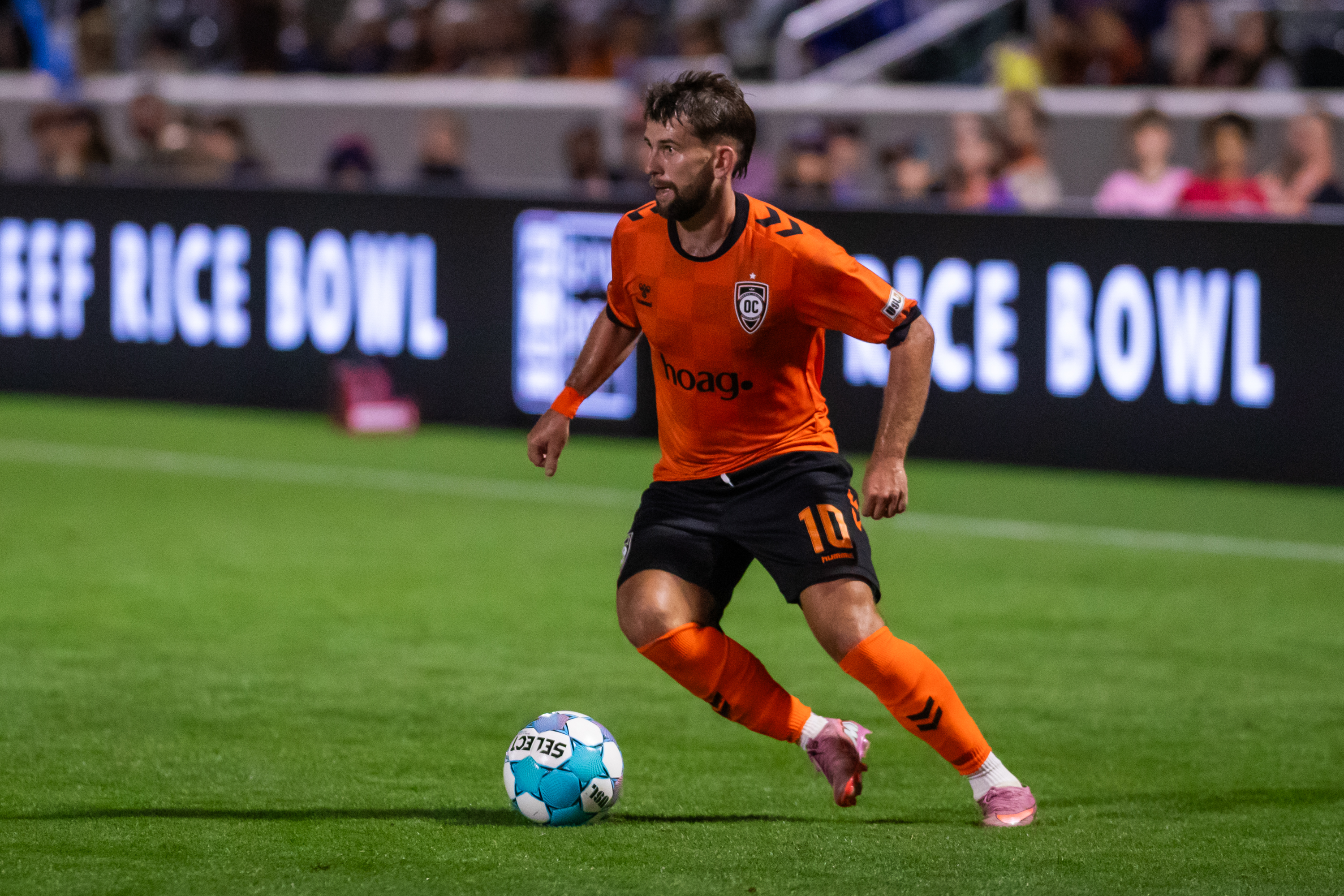
Orange County SC remains the league’s most established development environment, but in 2026 it has spread minutes more broadly rather than concentrating them in a single breakout player. Efren Solis and Tyson Espy both crossed the 500-minute threshold by midseason, which is exactly the sort of detail that separates symbolic youth usage from genuine squad trust. A club can talk about development all it wants, but getting multiple U21s to that workload tells a different story about selection decisions and week-to-week confidence.
Other clubs are making similar choices with their own young cores. Monterey Bay FC has leaned on Fernando Delgado and Belmar Joseph, Miami FC has done the same with Mathieu Ndongo and Brandon Bent, Las Vegas Lights FC have gotten contributions from Carson Locker, and Phoenix Rising FC has become a leader on the academy front. Taken together, those examples show that the youth minutes surge is not concentrated in one region or one model; it is spreading across the table in ways that can reshape roster construction league-wide.

The league built a pathway, then started widening it
USL’s identity as a development league did not appear overnight. The Championship is a Division II league with 24 clubs, and the broader USL ecosystem reaches more than 200 communities nationwide, giving the league scale that can support player movement at multiple levels. USL launched its Academy signing program in 2013, allowing players to join first-team squads and compete in league play and the Lamar Hunt U.S. Open Cup while retaining NCAA eligibility, and that framework has since been adopted as a standard by other professional domestic leagues in the United States.
USL also added another pressure point for coaches in 2024 by allowing clubs to include two players under age 18 in gameday rosters above the normal 18-man squad. USL sporting director Oliver Wyss said those roster spots were meant to give youth players an uncompromised opportunity to play in competitive matches and increase their value, a philosophy that turns roster sheets into development tools. Tampa Bay Rowdies coach Robbie Neilson backed the rule in 2024 as a way to create chances young players might not otherwise have had, which is important because rules only matter when coaches are willing to use them.
The early-season numbers already pointed here
The midseason picture did not come out of nowhere. Through the first five weeks of the 2026 USL Championship and USL League One seasons, players under 20 had combined for 67 starts and more than 6,000 minutes, up 88% and 70% from the same point in 2025. That kind of jump cannot be explained by expansion alone, even if more clubs do create more roster spots and more matchday decisions; it also reflects a deliberate willingness to trust younger players with real responsibility.
USL’s own early-season spotlight reinforced that point in Week 4 of 2026. Five players were called away to U.S. youth national teams, yet 63 age-eligible Young Player of the Year candidates still saw action, including 19 who played a full 90 minutes and four who logged 180 minutes across a double-game week. Those are not token appearances. They are signs that clubs are building match plans around young players who can handle repeated demands in a compressed schedule.
Transfers are becoming part of the development story
The minutes surge is also changing how the league is viewed in the transfer market. Ahead of the 2025 season, USL highlighted the Championship as a launch point for players heading to MLS and Europe, with Jonathan Gomez, Diego Luna, Fidel Barajas, Kobi Henry, Joshua Wynder, and Korede Osundina all cited as examples of that pathway. That reputation sharpened in the 2024-25 offseason when Matthew Corcoran moved from Birmingham Legion FC to Nashville SC and Elijah Wynder transferred from Louisville City FC to LA Galaxy in what USL described as a domestic-record Championship fee.
The clearest sign that the league’s value proposition is widening came in February 2026, when Orange County SC transferred 17-year-old Pedro Guimaraes to Eintracht Frankfurt. That move matters because it shows USL is not only a feeder into MLS, but also an alternative development route for top prospects who may not come through MLS academies. When a teenager can move from Orange County to Frankfurt, the league’s identity shifts from alternative to credible pipeline.
What this means for roster-building now
The practical effect of all this is that clubs have to treat youth minutes as a roster strategy, not a side project. The teams getting the most out of U21s are not merely filling space, they are assigning responsibility, spreading it across multiple players, and pairing it with transfer value. That approach changes how clubs think about veteran depth, short-term results, and whether to sell, loan, or hold on to a player once he starts stacking meaningful minutes.
It also changes the league itself. The USL Championship is no longer just describing a pathway for young talent; it is proving that pathway on the field through Orange County SC, Phoenix Rising FC, Monterey Bay FC, Miami FC, Las Vegas Lights FC, and the MLS loanees now pushing the minute totals higher. The clubs that trust youth are not just filling out lineups, they are helping define the Championship’s competitive identity and its place in the domestic transfer market.
Sources
- [1]x.com
- [2]backheeled.com
- [3]uslchampionship.com
- [4]uslsoccer.com