Wallonia-Brussels padel grows to 119 clubs and 400 courts
Wallonia-Brussels padel has crossed from boom to infrastructure test. Padel Wallonie-Bruxelles says the region now counts 119 clubs, 400 courts, 20,000 regular players and 95,000 affiliated members across the wider tennis, padel and pickleball structure, a scale that shifts the conversation from access to sustainability.
Those numbers matter because they show a sport that is no longer simply finding its footing. The federation is recognized in the Fédération Wallonie-Bruxelles, its tournament calendar runs from January to the end of November, and clubs can request extra events if they follow the rules. That kind of calendar density matters in padel: courts alone do not build a scene, but courts plus rankings, interclubs and a repeatable competition structure do.
The federation’s new mobile app, launched on 23 April 2026 for Android and iOS, is part of that next step. It is designed to centralize profiles, results, interclubs and rankings, which is exactly the sort of plumbing a maturing padel market needs once recreational demand stops being the main problem. If Wallonia-Brussels is going to keep growing, the bottlenecks are now less about discovery and more about coaching depth, youth development, match quality and whether indoor capacity can keep pace with an increasingly year-round calendar.

The competitive ladder is already visible. The federation describes the Lotto Belgian Padel Tour as a circuit for Belgium’s best players, with men’s events at P1000 and P700 and women’s at P700 and P500. That national framework sits above the regional calendar and gives the 119-club network a sporting purpose beyond casual play. It also helps explain why the region’s 20,000 regular players are more than a participation number: they are the base from which tournament fields, interclub teams and future elite players are supposed to emerge.
Leadership has also changed as the structure has scaled. Christophe Dister became director general of Tennis Padel Pickleball Wallonie-Bruxelles on 19 January 2026, after Samuel Deflandre’s voluntary departure. The federation said nearly 200 applications came in for the post, a sign that the administrative side of the sport is now attracting attention that used to belong mainly to the courts themselves.
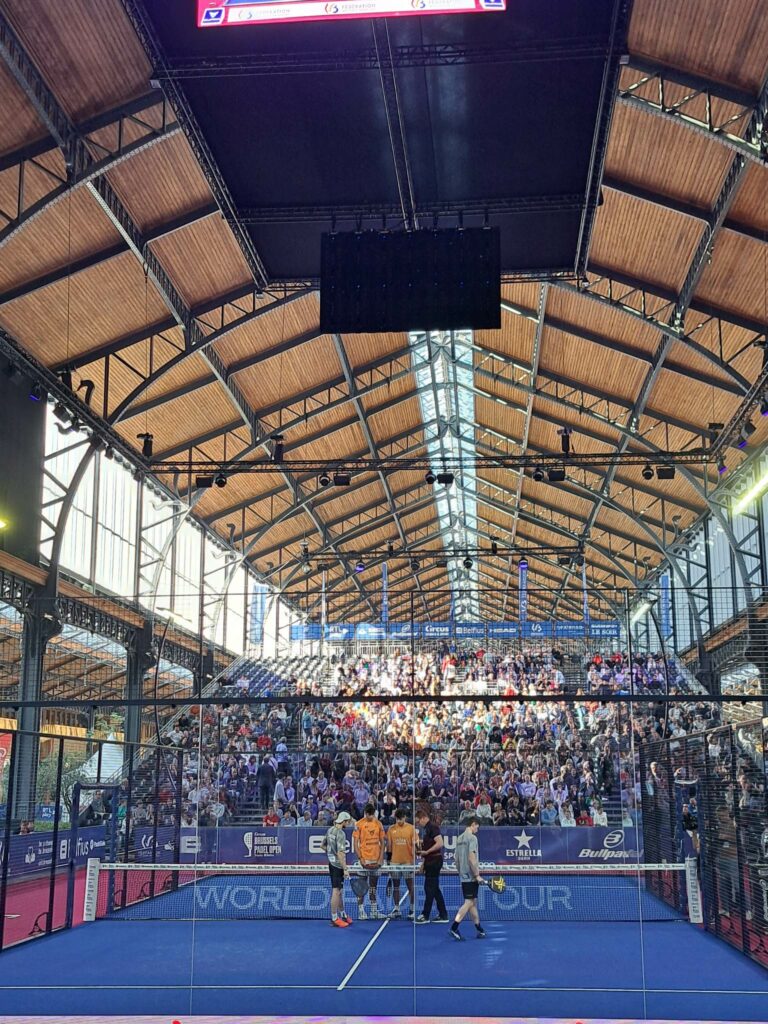
The wider Belgian context is even larger. The International Padel Federation’s 2023 profile listed Belgium with 416 clubs, 1,752 courts and more than 95,000 members, while its 2025 World Padel Report said global padel had passed 35 million players, with clubs up 16.1 percent, courts up 15.2 percent and registered federation members up 42 percent year on year. Wallonia-Brussels now looks less like an emerging outpost and more like a regional ecosystem under pressure to prove it can produce better players, better events and better facilities, not just more of them.
Sources
- [1]actu-padel.com
- [2]padel.tppwb.be
- [3]padelfip.com