Waukee neighbors gather every Sunday at Buck's Field for wiffle ball
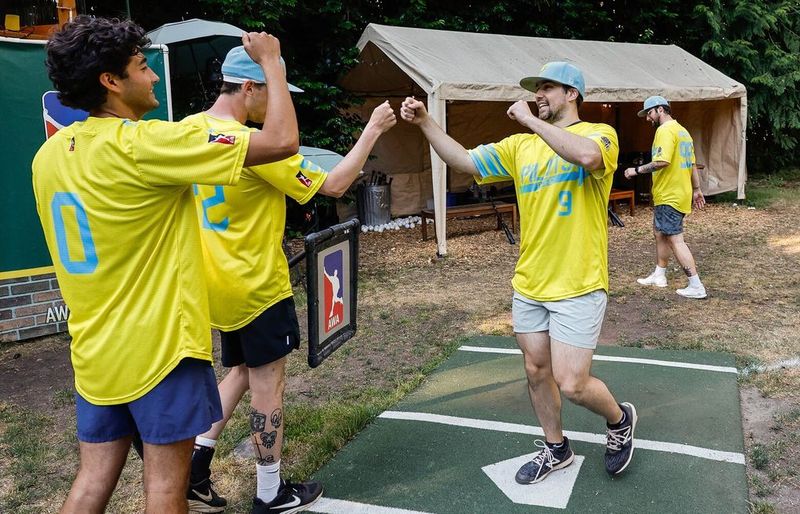
Buck's Field does not feel like a casual backyard setup by the time Sunday night arrives. A neighborhood across from Waukee High School has made a habit of showing up there every week for four straight summers, and the repetition has turned wiffle ball into a local appointment. Tom Buckmiller hosts the whole thing from his backyard, and the result is part ballfield, part civic square, part summer ritual.
A backyard that runs on a weekly rhythm
The appeal of Buck's Field starts with how regular it is. WOI-TV's feature on the site says the Sunday-night tradition has lasted four years, which matters as much as any individual inning or score because consistency is what gives the place its pull. People know when to come, neighbors know who will be there, and the field has earned a schedule that feels as dependable as any organized league.
That cadence changes the meaning of the game. Wiffle ball is easy to pick up, low-cost, and familiar enough that nobody needs a long introduction, so the backyard becomes a shared language as much as a place to compete. At Buck's Field, that accessibility is what lets families, neighbors, and casual players stay connected without needing a ticket, a formal complex, or a special reason to stop by.
Tom Buckmiller's role as host and steward
Buckmiller is the person making that continuity possible. Drake University identifies him as a professor in the School of Education and director of the LEAD program, and the university's academic catalog says he has been a professor of education since 2009. In summer, he is also the owner and organizer of Buck's Field, the steady presence who keeps the space running.
That dual identity matters because it explains why the field feels established rather than improvised. Buckmiller is not just lending out a yard for a few pickup games. He is maintaining a place where the neighborhood can expect a regular gathering point, and the event has the feel of something stewarded rather than simply allowed to happen. That kind of ownership gives a backyard league the continuity that informal sports settings often lack.
Why the setting works in Waukee
The field sits across from Waukee High School, which gives it a clear anchor in the neighborhood and makes the gathering visible in the middle of a fast-growing suburb. Waukee is one of Iowa's fastest-growing communities, and that growth has already brought larger sports investments into the local conversation. Against that backdrop, Buck's Field stands out because it is intimate, personal, and built around a host rather than a development plan.
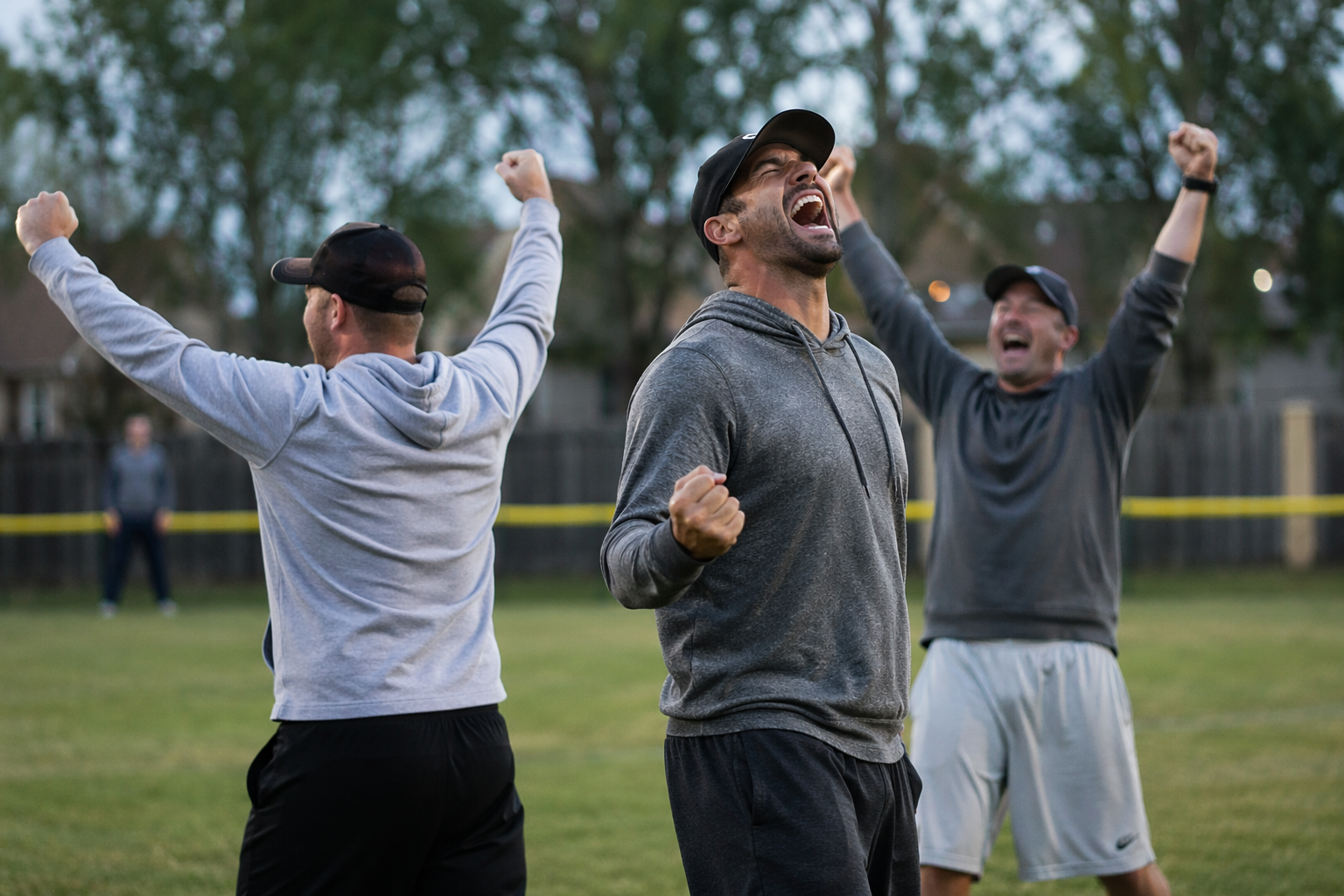
WOI-TV has also reported on the 140,000-square-foot Kettlestone Sports Complex, which opened in spring 2025 and later became the subject of a property-tax dispute that put its future in limbo. The scale of that facility underscores what Buck's Field is not. One is a major sports asset with a public footprint and legal complications; the other is a neighborhood tradition that depends on a backyard, a schedule, and people willing to keep coming back.
How a sandlot becomes a local institution
Calling it Waukee's own Sandlot is more than a nostalgic comparison. The story around Buck's Field works because the game is only part of the attraction. People gather to catch up, to see familiar faces, and to anchor the week around something simple that everyone understands. That is what turns an ordinary backyard diamond into a dependable local institution.
The social value is practical. A field like this does not need expensive gear or a formal stadium to matter, and it does not need national attention to become important to the people who use it. It needs a host with the commitment to keep the lights on and a neighborhood with the habit of showing up. Buck's Field has both, and that combination is what gives the place its staying power.
What Buck's Field shows about summer sports spaces
The lesson from Buck's Field is not about size. It is about rhythm, stewardship, and the way a simple game can organize a community's summer nights. Buckmiller's backyard has become a place where generations and households can overlap without ceremony, where the game serves as the excuse and the gathering is the point.
In a suburb where big sports projects can make headlines, the field across from Waukee High School shows another model entirely. It is built on repeat visits, familiar rules, and one host who treats the space like a weekly responsibility. That is why the neighborhood keeps coming back, and why Buck's Field now functions less like a backyard and more like a local tradition with its own identity.
Sources
- [1]weareiowa.com
- [2]drake.edu
- [3]news.drake.edu
- [4]catalog.drake.edu