Wheelchair Ultimate blends mixed teams, wheelchair play and classic scoring
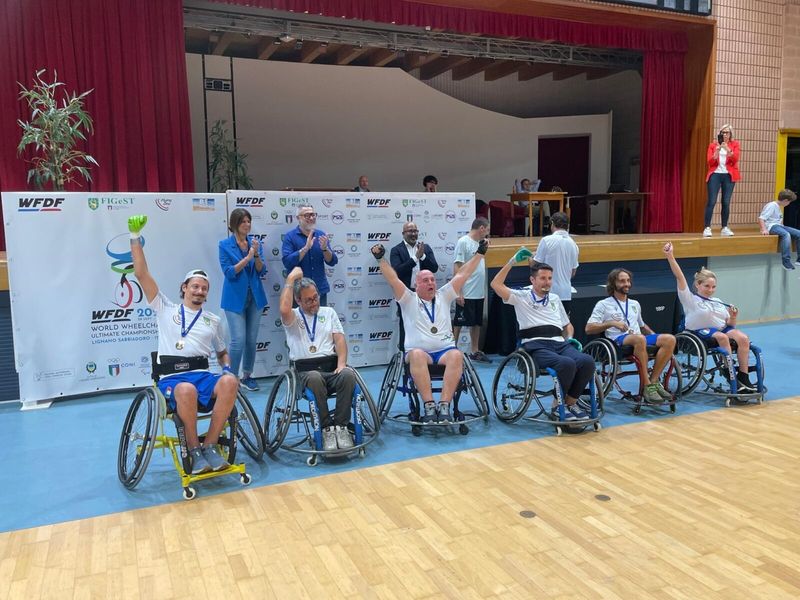
Team Italy - White won the first gold medal at the inaugural World Wheelchair Ultimate Championships with a 7-5 victory, and the score line tells you almost everything about the sport’s appeal. Wheelchair Ultimate keeps the familiar objective of Ultimate Frisbee, advancing the disc by passes and scoring across the opponent’s goal line, while changing who can play, how players move and how contact is controlled.
The core game stays unmistakably ultimate
WFDF defines Wheelchair Ultimate as a mixed team sport for male and female quadriplegic and paraplegic players, and the teams compete in groups of four. That small-sided format changes the rhythm immediately: every pass matters more, every lane opens and closes faster, and each possession carries more weight because there are fewer bodies on the floor at once.
The other defining adjustment is just as important. Players use manual wheelchairs, and contact between wheelchairs is not allowed. That rule preserves the sport’s safety while forcing a cleaner, more positional style of play, where spacing, timing and disc movement become the main tools for gaining yards and creating the final cut into the end zone.
Classification is the gate to the field, not an afterthought
Wheelchair Ultimate is not presented as a casual adaptation of the sport. WFDF’s rules require players to meet minimum disability criteria and be classifiable under the relevant sport classification system, which makes eligibility part of the discipline’s structure rather than a side note. That matters because it is how the format keeps competition organized across countries and events instead of drifting into one-off exhibition play.
WFDF also identifies itself as a Recognized International Sport Federation by the International Paralympic Committee and describes Wheelchair Ultimate as its first Para Sport discipline. That status gives the game a governance framework that goes beyond the playing field: rules define who is eligible, how fairness is preserved and how a new discipline can be standardized for international competition.

The sport grew through federation planning, not a quick launch
The pathway to Wheelchair Ultimate runs back to the 2013 WFDF Congress, where initial discussions about introducing the discipline under the federation umbrella emerged and support for development was broadly agreed. That detail matters because it shows the sport was built through policy and structure first, with competition arriving only after the groundwork was in place.
In 2021, WFDF introduced the ebook “Flying Disc Parasport Wheelchair Ultimate - BOOK 1,” written by José Amoroso, as a resource for its more than 100 national federations. That publication signaled a deliberate effort to spread knowledge about the format, not just promote a showcase event. It also gave national bodies something practical to work from as they thought about rules, access and event design.
The first world championship gave the format a real competitive benchmark
WFDF staged the inaugural World Wheelchair Ultimate Championships at Bella Italia Efa Village in Lignano Sabbiadoro, Italy, on 29-30 September 2023. Four teams took part: two from Italy, one from Germany and an international team with its core group from Japan. That mix shows how quickly the discipline could bring together local depth and cross-border competition once a formal championship existed.
The final result gave the format a clear early benchmark. Team Italy - White beat the field 7-5 to claim the first gold medal in the event’s history, which is exactly the kind of score line ultimate fans recognize: competitive, possession-driven and decided by a handful of clean chances. Even in a new para discipline, the logic of controlling the disc and finishing in the end zone remained the sport’s central drama.
Four-a-side ultimate changes the geometry of possession
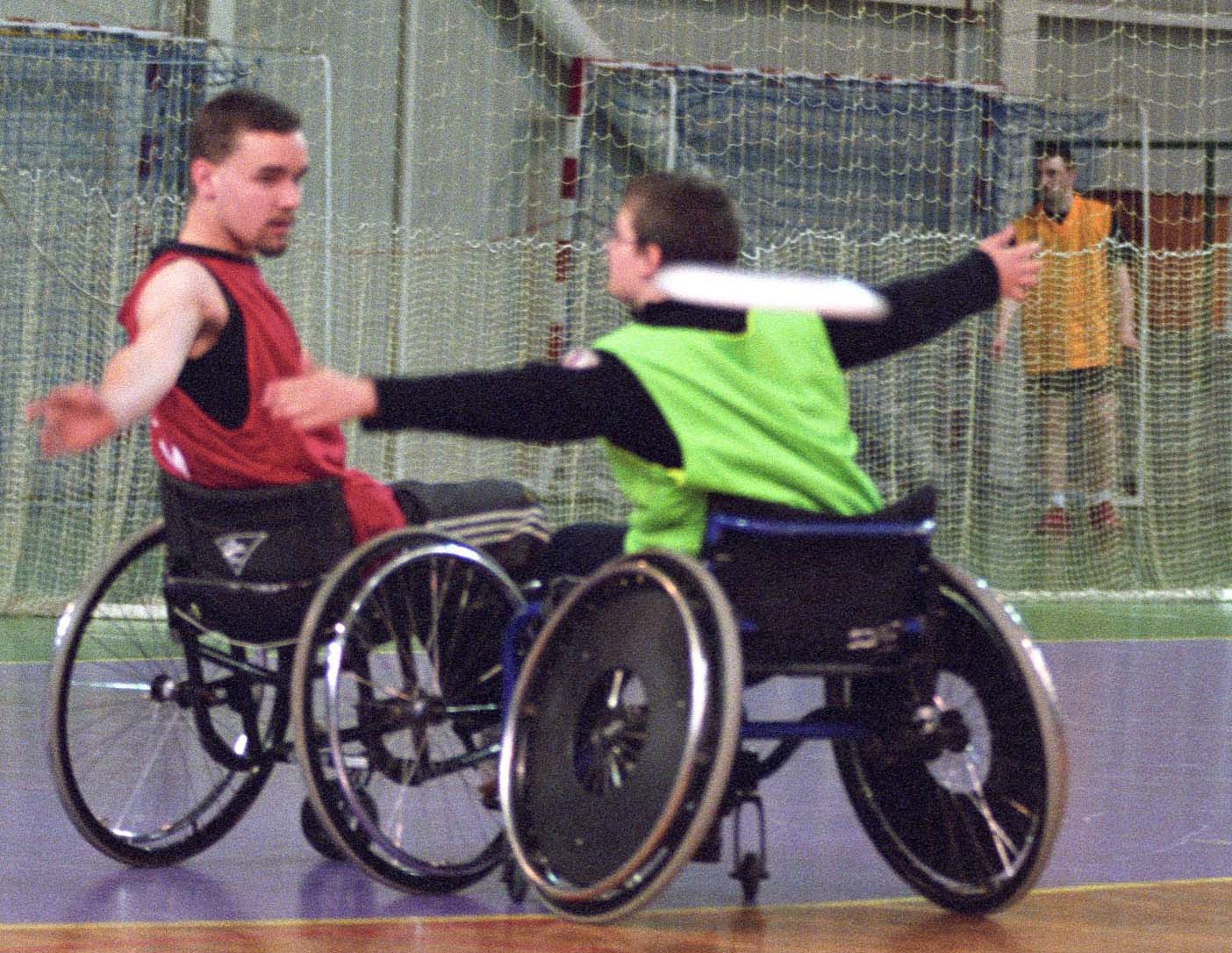
The strategic consequences of the format are easy to see once the structure is clear. With only four players per side, there is less room to hide, fewer reset options and more responsibility on every touch. Passing windows matter more, defensive positioning becomes more compressed and each turnover can swing the shape of the entire point.
Because wheelchair contact is forbidden, the game rewards discipline in lanes and timing rather than physical collision. That shifts the balance toward controlled movement and precise disc circulation, while keeping the sport rooted in the same possession-based identity that defines standard Ultimate. The result is not a simplified version of ultimate, but a different geometry for the same scoring objective.
The rules keep tightening as the sport settles in
WFDF’s Wheelchair Ultimate Technical Rules and Regulations version 1.0 were created in 2023, then version 1.1 was approved on 2025-05-18. The 2025 update came after the 2023 World Championships and community feedback, and it added compliance with the IPC 2025 Classification Code and WFDF Classification Rules and Regulations version 1.0.
That progression shows the discipline moving from concept to event to standardized international sport. Versioned rules matter because they make the game portable: a team in one country can prepare for the same competitive conditions as a team in another, with classification, equipment and contact rules aligned under one system.
Wheelchair Ultimate reveals what serious inclusion looks like when a sport is built to last. It does not abandon ultimate’s core logic to make room for more athletes; it adapts movement, space and eligibility so the same game can be played by more people, under rules that can travel, govern and grow.
Sources
- [1]wfdf.sport
- [2]ultiworld.com