Wheelchair Ultimate formalizes rules, enters global para sport framework
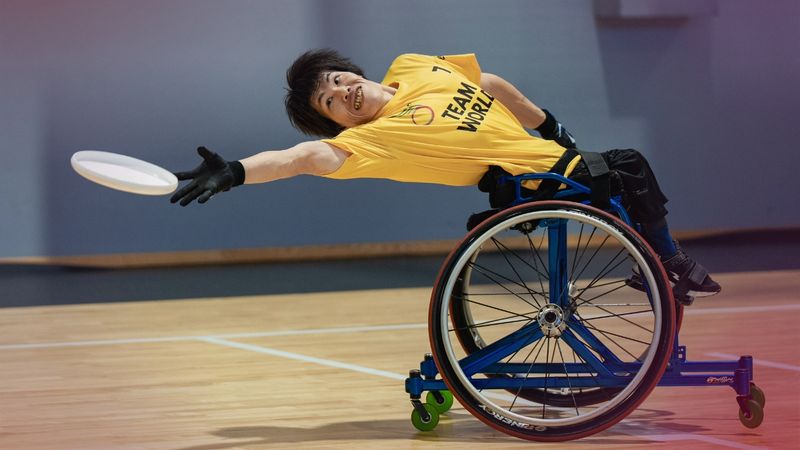
Wheelchair Ultimate has moved from a concept with promise to a sport with paperwork, standards, and a clear regulatory spine. WFDF’s version 1.1 technical rules, updated on 2025-05-18, did more than clean up language: they aligned the discipline with the IPC 2025 Classification Code and WFDF Classification Rules and Regulations version 1.0.
From draft idea to formal discipline
The version history tells the story better than any hype reel. WFDF’s first draft resource, created in 2021 as version 0.1, was the starting point, not the finish line. In 2023, the Para Sport Commission created the first formal Technical Rules and Regulations as version 1.0, then the Board of Directors pushed the work forward again in 2025 with version 1.1 after the 2023 World Championships and community feedback.
That progression matters because it shows Wheelchair Ultimate following the same institutional path as other mature Ultimate formats: community experimentation, governing-body support, and then a rule framework that can actually hold up in competition. The sport is no longer being defined by enthusiasm alone. It now has a dated version history, named standards, and an update cycle that tournament directors and coaches can use.
What the rules preserve, and what they rewrite
The core objective is still recognizably Ultimate. WFDF’s 2023 rules describe Wheelchair Ultimate as a mixed team sport for male and female quadriplegic and paraplegic players, played by teams of four. The disc still has to get across the opposing team’s goal line, so the game keeps the same end-zone logic that makes Ultimate instantly legible to fans of the sport.
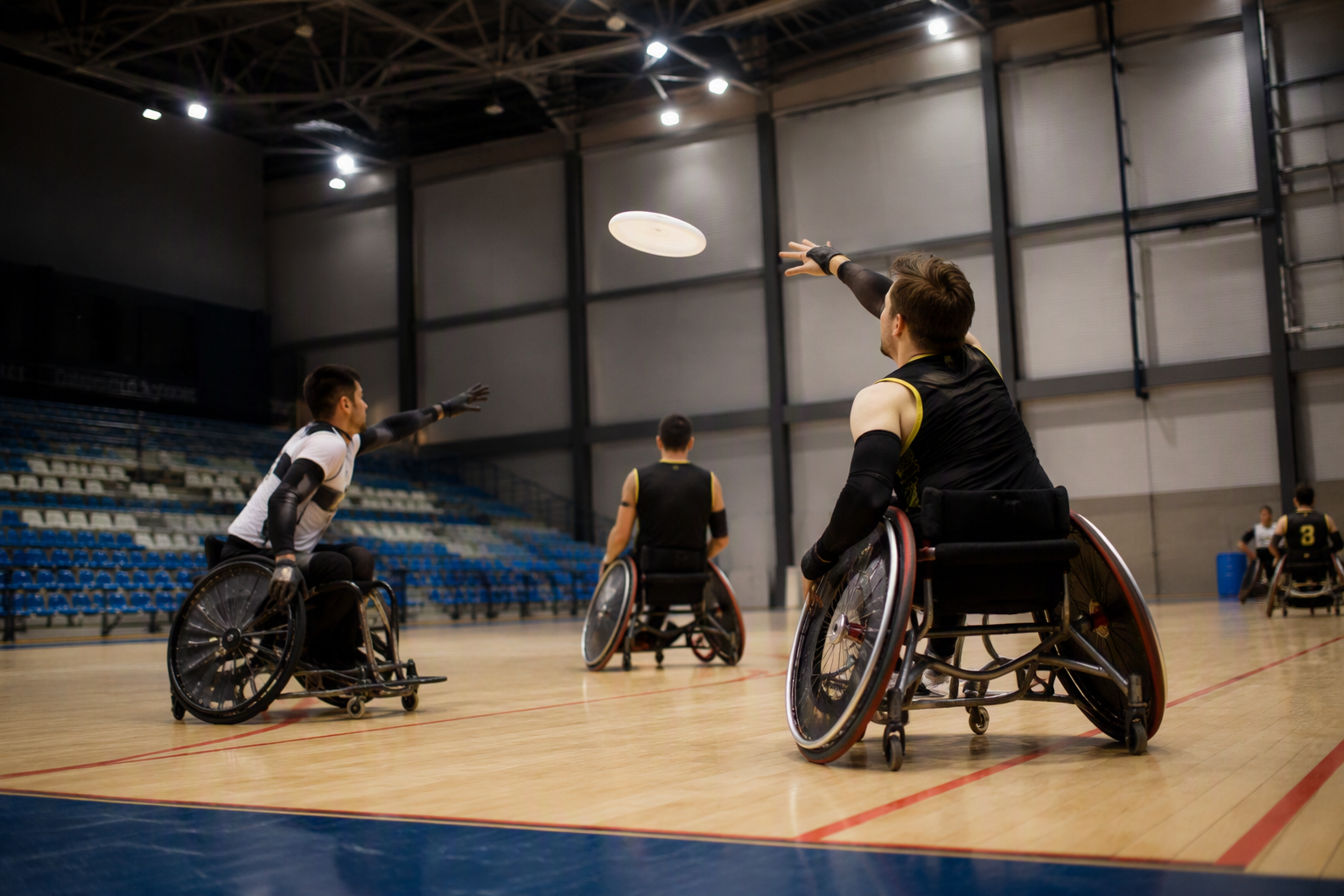
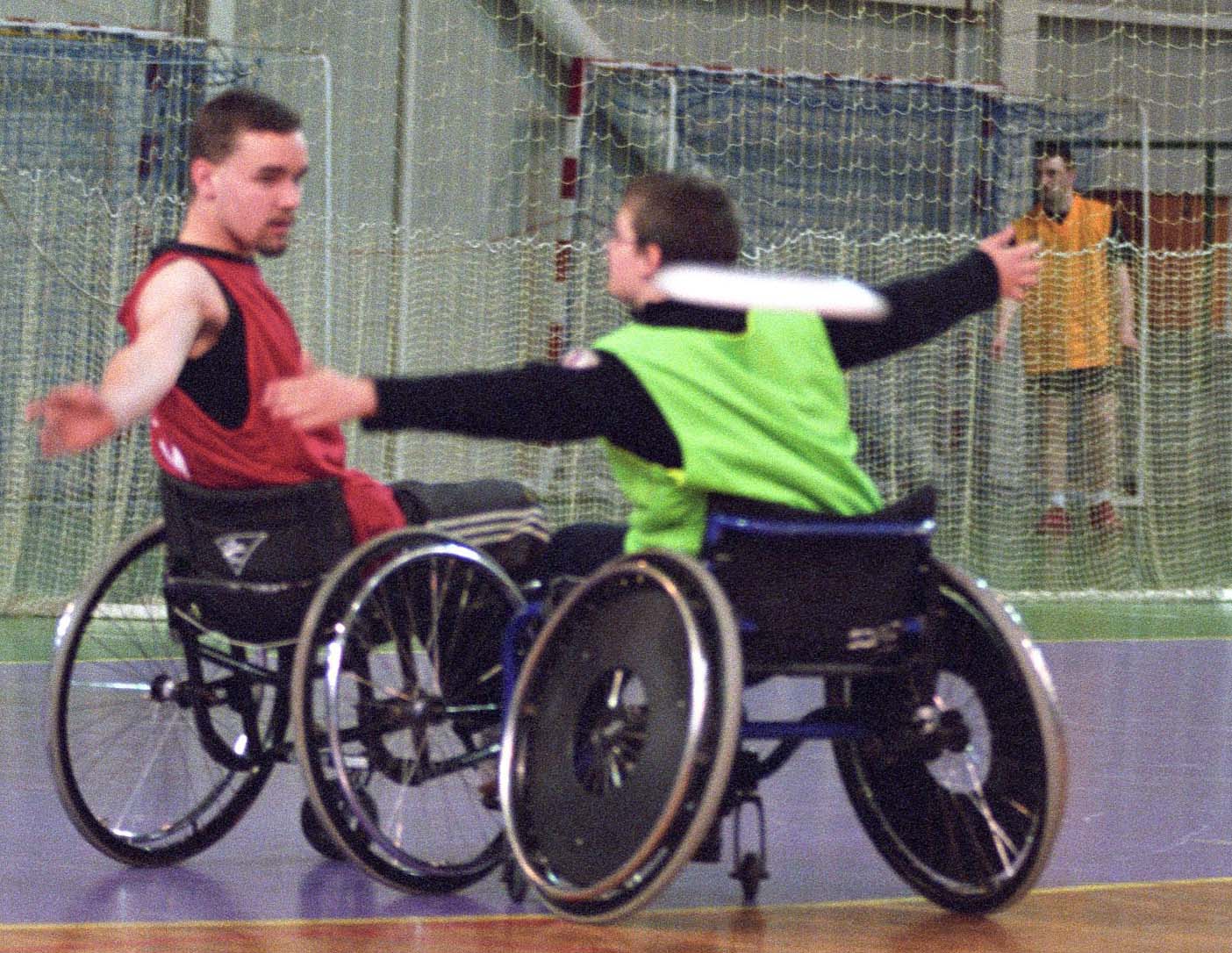
But wheelchair play forces some hard rewrites, and that is where the discipline earns its legitimacy. Contact between wheelchairs is not allowed, and players compete in manual wheelchairs. That changes the geometry of the game, the way space is defended, and the way collisions are managed, which is exactly why a formal rulebook matters. Without written standards, every tournament would be improvising the line between competitive physicality and unsafe contact.
The rules also make clear that Wheelchair Ultimate is its own sporting blend, drawing from basketball, rugby, and handball. That description is useful because it tells you the game is not a simple transplant of field Ultimate into a chair. It is a designed sport with its own movement patterns, its own defensive constraints, and its own expectations for equipment and body control.
Why classification is the real unlock
The biggest update in version 1.1 is not cosmetic. By adding compliance with the IPC 2025 Classification Code and WFDF Classification Rules and Regulations version 1.0, WFDF gave the discipline a formal standard for eligibility and category management. That is the kind of detail that separates a demo from a viable para sport.
A 2022 WFDF board-minutes source says the commission had already worked out classifications for Wheelchair Ultimate and that those classifications had been accepted by the IPC. Put plainly, the sport had been building toward a classification framework before the 2025 update made it explicit in the rulebook. Once classification is in place, organizers can run events with clearer eligibility standards, coaches can plan lineups and training around known categories, and athletes know the competition is being administered by rules, not guesswork.
That is especially important because WFDF identifies itself as a Recognized International Federation by the International Paralympic Committee and says it represents 131 member associations across more than 127 countries. A rule system that fits that scale has to travel cleanly from one federation to another. If the sport is going to grow beyond a few showcase events, it needs shared definitions, not just shared enthusiasm.
The road from advocacy to championships
The groundwork goes back farther than most people realize. WFDF’s 2021 eBook, Flying Disc Parasport Wheelchair Ultimate - Book 1, was introduced as a resource to promote adaptive disciplines to WFDF’s global audience of more than 100 national federations. That same document says the initial discussions on introducing Wheelchair Ultimate under the WFDF umbrella began during the 2013 WFDF Congress, where support for the sport’s development was broadly agreed.
By March 10, 2023, WFDF had gone from internal discussion to competition planning, announcing that the inaugural WFDF World Wheelchair Ultimate Championships would be staged in Lignano Sabbiadoro, Italy, from 2023-09-28 to 2023-10-01. Ahead of that first worlds, an introduction published on September 19, 2023 framed the discipline as an emerging international sport, not a theoretical project. The result was a clear timeline: discussion, educational material, first formal rules, first world championship, and then a regulatory update tied to classification standards.
That sequence is what makes the story bigger than one tournament. The sport now has a public-facing pathway that other adaptive formats can follow: teach the concept, define the classification, stage the championship, then revise the rules after real competition and community input.
What formal rules unlock for the future
The value of codification shows up in practical ways:
• Safer competition: the ban on wheelchair contact and the alignment with classification standards reduce ambiguity about what kind of play belongs in the sport.
• Clearer tournament standards: with a rulebook in hand, event organizers can build brackets, officiate games, and set expectations around eligibility and equipment.
• Better coaching and development: national federations and local programs can train to a defined format instead of creating their own version of the game.
• Real growth potential: WFDF’s global footprint, plus its IPC recognition, gives Wheelchair Ultimate a route into the same governance ecosystem that supports other international para sports.
WFDF has also shown the same rule-making muscle in its mainstream game. Its updated Ultimate Rules for 2025-2028 were developed with extensive engagement through the WFDF Rules Sub-Committee, which shows the organization is treating Wheelchair Ultimate as part of the same governance culture, not as a side project.
That is the point of this rulebook. Wheelchair Ultimate has preserved the disc, the score line, and the mixed-team format, but it has rewritten the contact, classification, and competition standards that make wheelchair play safe and sustainable. The sport now has the kind of formal structure that lets it grow on purpose, not by accident.
Sources
- [1]wfdf.sport
- [2]ultiworld.com