Who invented kickball? New research traces its contested origins
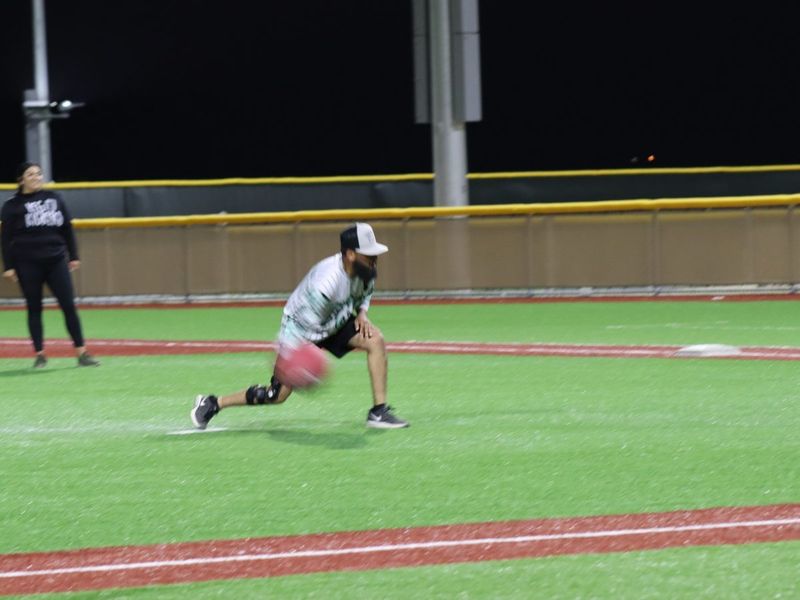
Kickball does not have a clean birth certificate. The sport sits in the middle of baseball, soccer, and recess culture, and that is exactly why the authorship fight around it has lasted so long: one camp credits Nicholas C. Seuss with inventing it around 1917, while another points to Emmett Dunn Angell’s 1910 playground manual as the earliest known blueprint for a game that looks far more like modern kickball.
The credit question starts with what you mean by “invented”
The sharpest way to read the debate is to separate three different claims. “Invented the game” means the first person to imagine or name a kickball-like activity. “Formalized the rules” means the first person to put the game into print with enough structure that others could repeat it. “Shaped the modern version” means the version that most closely matches what players know now, with a pitcher, a kicked ball, and fielding rules that feel familiar.
That distinction matters because the historical record does not point to one single moment. Protoball classifies kickball as a baseball derivative, and its glossary places it among more than 200 baserunning games, alongside sports such as softball, stickball, and Finnish baseball. In other words, kickball belongs to a family of games that evolved through schools, parks, and printed manuals rather than through one neat origin story.
Angell’s 1910 manual gives the earliest strong paper trail
Emmett Dunn Angell’s 1910 book, Play: Comprising Games for the Kindergarten, Playground, Schoolroom and College, is the strongest evidence for an early formalized version of the game. The digitized record identifies him as Emmett Dunn Angell, and the book itself fits squarely into the early physical-education movement, when organized play was being written into school and playground life.
The World Kickball Association treats Angell’s 1910 description as the earliest known rules and diagrams for a game very close to modern kickball. That is an important distinction. The WKA is not simply saying Angell mentioned a similar activity. It is saying his version supplies the earliest rule set that lines up with the game played now, which makes him the best candidate for the role of formalizer, even if not the first person to kick a ball in a game-like setting.
Angell’s version also looks more like the sport on contemporary fields because a pitcher delivered the ball to the kicker. That is the detail that pulls his description closer to today’s game than many later accounts do.

Seuss appears later, but his version helped define the story
Nicholas C. Seuss is the name most often attached to kickball’s invention in later retellings. Gary Belsky and Neil Fine credit him with inventing kickball around 1917, and the 1917 Cincinnati playground volume, The Playground Book: Cincinnati Playgrounds, Under Direction of the Board of Education and the Board of Park Commissioners, anchors that version in an institutional setting rather than a playground myth.
SABR’s research suggests Seuss’s contribution was real, but different from the full invention claim. His “kick base ball” used a basketball or volleyball and allowed kicks from a stationary position or off a bounce. That makes it a recognizable ancestor, but not the same thing as the modern game in which a pitcher feeds the ball to the kicker. Seuss helped codify a playable version in print and in Cincinnati’s organized playground world, but the evidence does not make him the earliest known author of the sport’s core rules.
That is where later retellings blur the line. Once a playground game gets printed, edited, and passed through a city system, the public memory often compresses everything into a single inventor. In kickball’s case, the cleaner story of one man “inventing” the game obscures the messier reality of several versions moving through schools and parks at once.
The newspaper trail pushes the timeline back even further
The published record reaches before both 1910 and 1917. SABR cites a January 29, 1907, reference in The Dayton Herald saying “Prof. Suess” brought a new kickball-type game to Cincinnati. It also cites an April 25, 1904, report in The Minneapolis Journal describing Angell as the inventor of “kicking baseball.”
Those notices do not settle the debate on their own, but they matter because they show that kickball-like play was already circulating in print before the later Cincinnati codification. That is why the fight over credit cannot be reduced to a single winner. The dates suggest a progression: early mention in 1904, a new version in Cincinnati in 1907, Angell’s printed manual in 1910, and the Cincinnati playground volume in 1917.
Taken together, those milestones point to a sport that was being named, adjusted, and repackaged over time. The public history of kickball looks less like a sudden invention and more like a chain of refinements.

Why the game’s roots run through playgrounds and schools
Angell’s book was not a standalone sports manifesto. It was a playground-games manual, which reinforces the idea that kickball emerged from the early 20th-century effort to organize children’s play through educational systems. The Cincinnati volume tied to Seuss emerged from the Board of Education and the Board of Park Commissioners, showing the same institutional pattern.
That context explains why kickball survived while so many playground novelties faded. Once a game is written into manuals, adopted by school systems, and taught through parks departments, it gains a life beyond any one inventor. The sport becomes standardized by institutions, not merely created by individuals.
That is also why the current debate is useful. It keeps the historical record honest. Angell appears to have documented the earliest rules that most closely match modern kickball. Seuss appears to have helped popularize and systematize a later Cincinnati version. And the newspaper record shows that the game’s shape was already evolving years before either man received lasting credit.
The clearest verdict
If the question is who invented kickball, the most careful answer is that no single figure owns the whole story. If the question is who first formally described a version closest to the modern game, Angell has the strongest claim. If the question is who helped shape the version that later retellings remembered, Seuss belongs in that history too.
Kickball’s origin story is contested because the sport itself was always a hybrid. Its rules were assembled in the spaces where American organized play took shape: playgrounds, schools, parks boards, and printed manuals. That makes the real history more interesting than the simplified version, and it leaves Angell and Seuss in their proper places, as different authors of the same evolving game.
Sources
- [1]sabr.org
- [2]kickball.com
- [3]archive.org
- [4]books.google.com