Why college ultimate should expand D-I Nationals to 24 teams

The argument is no longer about whether college ultimate is deep enough for a bigger championship. It is about who gets squeezed out by a 20-team D-I Nationals field, and whether four more slots would make the tournament fairer without turning it soft. Charlie Eisenhood’s June 30 Mailbag column takes that question head-on, and it lands in the middle of a sport that has more college teams, more athletes, and more legitimate bracket contenders than its current setup can comfortably hold.
The bracket is already too tight
USA Ultimate still sends 20 men’s teams and 20 women’s teams to the Division I College Championships, while Division III hosts 32 teams for smaller schools. That D-I event is the Memorial Day weekend finale, and the 2026 edition ran May 22-25 in Rockford, Illinois, with 20 men’s teams and 20 women’s teams in the field. Out of more than 600 colleges and universities across North America, only 72 teams earned the chance to advance to the championship events, which is exactly why the cutline keeps getting sharper every year.
That scarcity matters because the college division has long since outgrown a cozy, exclusive championship model. USA Ultimate says college ultimate began in 1984, and it is now the organization’s largest member segment, with more than 18,000 student-athletes across 800-plus college teams. When the pipeline is that wide, a 20-team nationals field stops looking like a premium showcase and starts looking like a bottleneck.
Why the 20-team model feels outdated
Eisenhood’s central point is simple: college ultimate has more depth than a 20-team bracket can represent. That is not theory for theory’s sake. Ultiworld’s 2026 men’s D-I primer said there were roughly 35 teams that could realistically start the season with Nationals ambitions, even though only 20 could qualify. Its June 4 men’s power rankings ran 25 teams deep, with Massachusetts, Carleton, Colorado and Oregon at the top of the list, which is a clean snapshot of how crowded the sport has become near the top.

That depth creates a real competitive problem. When 25 teams can credibly see themselves as nationals material and only 20 spots exist, the sport is forcing good teams to disappear before the national stage ever begins. It also puts enormous pressure on strength bids, because the cutline gets decided not only by who is good, but by who is trapped in a loaded region, who survives one brutal weekend, and who gets punished by the math of a format that has no room for error.
The FIFA comparison is useful, not decorative
Eisenhood reaches for FIFA’s World Cup expansion, and the comparison works because it captures the tradeoff at the center of every championship reform debate. World Cup expansion has been controversial in soccer, but it also opened the door to more underdog stories and more knockout games where one clean performance can rewrite the bracket. That is the right lens for college ultimate too: more teams do not automatically mean a worse event, and fewer teams do not automatically mean a better one.
The key question is what kind of championship the sport wants to stage. A 20-team Nationals rewards exclusivity, but it can also shrink the bracket so much that several deserving programs never get the national games they earned. A 24-team field would not erase the pressure of making nationals, but it would give the event more room to breathe and make the last few bids feel like legitimate competitive decisions rather than a hard cap that lops off a handful of worthy teams.
What 24 teams would actually change
A move from 20 to 24 teams would not just add four names to a bracket sheet. It would change bid allocation, because more spots would mean more regions and more programs could be rewarded for sustained quality rather than being squeezed out by geography and one bad result. It would also ease strength-bid pressure, especially in the men’s division, where the difference between being excellent and being national-caliber is often one stalled point or one narrow loss in a stacked field.
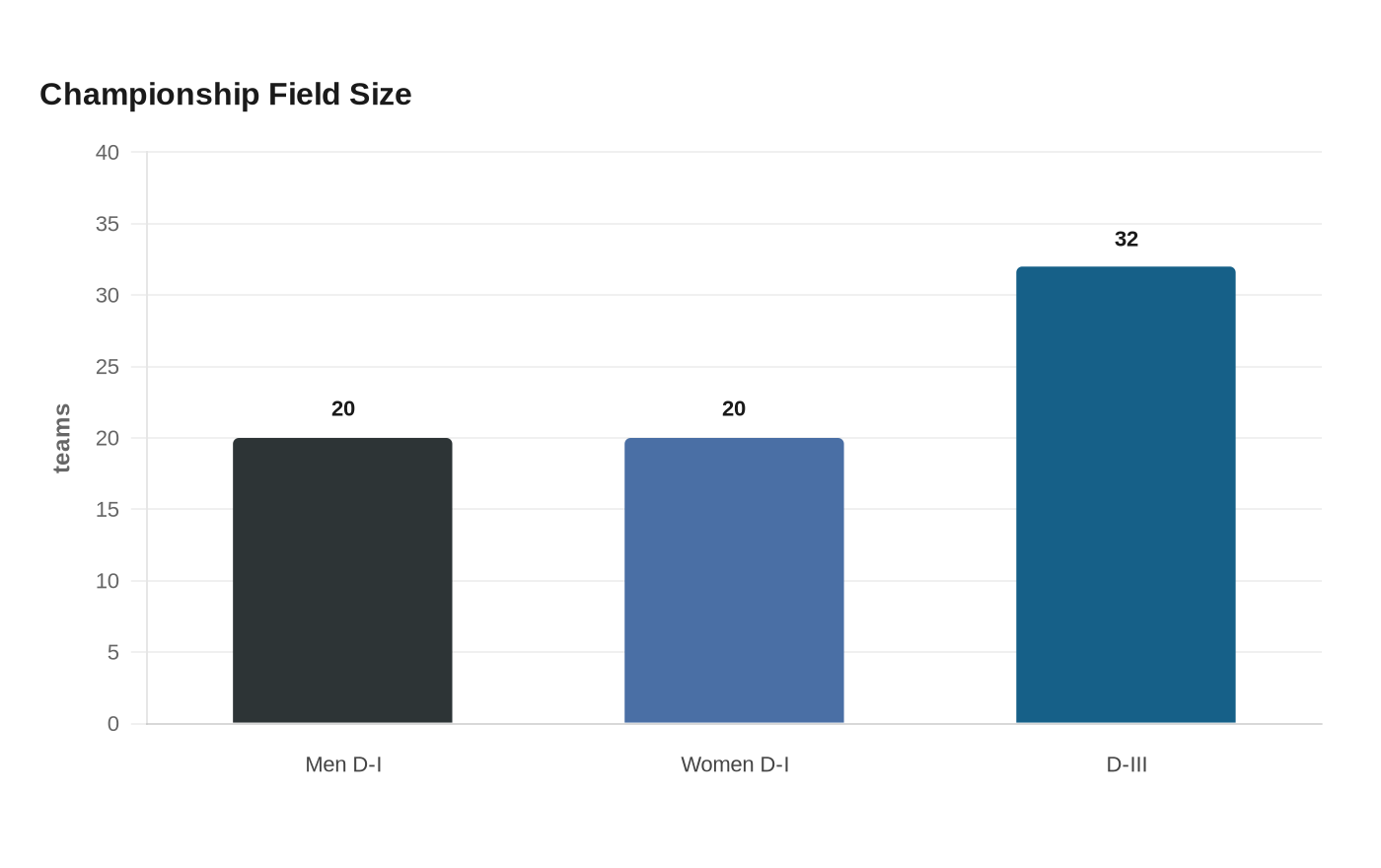
It would also reduce the sense that the bracket is too small to be meaningful. Right now, a 20-team field leaves too many strong programs sitting on the outside looking in, and that can flatten the value of the postseason. Four more teams would not dilute the event if those teams are genuinely good, because the real test is whether the added games are competitive. If the extra slots produce more bracket games between programs that can actually win on Sunday, the championship gets stronger, not weaker.
Travel costs will rise for the extra teams, of course. More rosters would have to fund flights, hotels, and tournament-weekend logistics to get to Rockford or wherever the event lands next. But the sport already asks teams to absorb a lot of travel just to reach the point where they are denied access, and the current model saves money only for the programs that make the cut, not for the larger group that spends a whole season chasing a door that barely opens.
Why the conversation matters now
This is not some abstract governance debate detached from the actual season. The 2026 D-I College Championships showed how deep the top end really is, and Ultiworld’s preseason and ranking work reinforced the same point from another angle. When college ultimate can produce 35 plausible Nationals hopefuls on the men’s side and still only send 20, the sport is telling on itself.
The cleanest case for 24-team Nationals is also the hardest one to dismiss: it would let more deserving teams into the room without turning the championship into a participation trophy. College ultimate already has the scale, the talent, and the series structure to support that move. The only thing missing is the willingness to stop pretending that 20 teams is enough.