Why dodgeball balls differ across college and British leagues

The National Collegiate Dodgeball Association builds its college game around ten 8.5-inch rubber playground balls, while British Dodgeball uses a stepped ladder of cloth and foam equipment that changes with age group, safety needs and competitive format.
The college game starts with a rubber ball
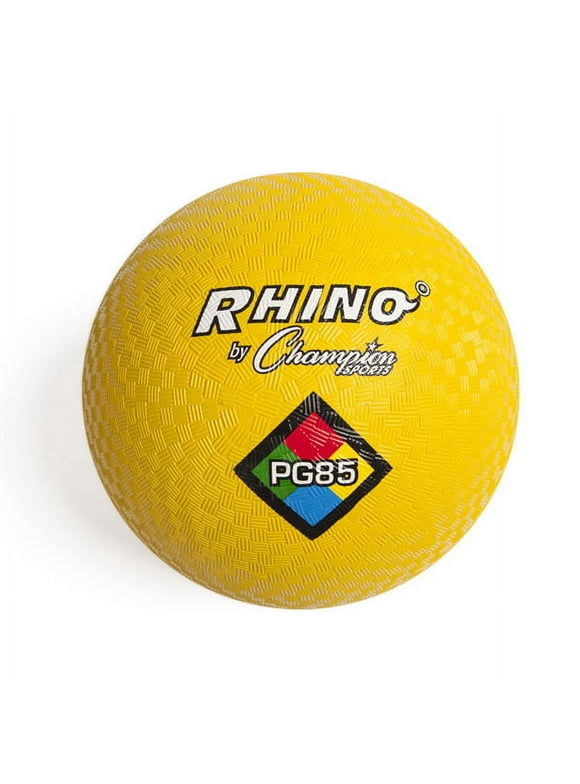
The NCDA’s preferred ball is the Champion Sports PG8.5, a nylon-wound, two-ply rubber playground ball that measures 8.5 inches in diameter. The setup is not casual: the rulebook requires ten balls, and if a team cannot supply its share, the host has to fill the gap. Extra balls are encouraged, too, because a match can be turned by one popped ball or one that becomes blood-stained.
Founded in 2005 by a handful of Midwest colleges and recognized as a 501(c)(3) nonprofit in 2014, the association traces its version of dodgeball to big pickup games in Chicago’s UIC neighborhood. It later spread to the East Coast, the Deep South and the Great Plains.
The NCDA says its old-school rubber playground balls can fly at speeds of up to 80 miles per hour. That speed changes every decision at the line: throws have to be quicker, catches have to be cleaner, and blocks become a skill, not just a reflex. A hard rubber ball also rewards teams that can release fast and reset faster.
British Dodgeball uses the ball to separate age groups and formats
British Dodgeball takes a different path. Its official size 3 cloth balls are the adult standard and the ball used by juniors aged 14 and up. They are listed at 7 inches in diameter, smaller than the NCDA’s rubber playground ball and built for a different throwing and catching rhythm. The organization also uses size 2 cloth balls for under-15s and under-13s, and size 1 foam balls for under-11 primary players.
The material matters as much as the diameter. British Dodgeball also sells an adult foam ball with a 17 cm diameter, 40kg/m3 density, non-toxic material and low bounce, and it recommends that ball for inclusion and disability sessions. That low-bounce design changes the whole feel of a match: throws are softer, rebounds are less violent, and players who are still learning the game can track the ball more easily without the same punishment that comes with harder equipment.
British Dodgeball develops the sport across the UK, and its Dodgeball Survey gathers views from players, coaches, teachers, clubs, schools and spectators. Its inclusive activity guide says everyone should have the chance to enjoy dodgeball, and every activity should be delivered in an inclusive manner.
British Dodgeball’s adult format is primarily the 5-ball cloth game, which means the field is managing fewer projectiles than the NCDA’s 10-ball setup. With fewer balls in play, spacing and shot selection become more measured, and ball control matters just as much as raw pace.
Why the World Dodgeball Federation makes the ball a governing issue
The World Dodgeball Federation sits above that conversation and turns it into a rules question. Its competition rules require WDBF-approved balls for official events, and its ball standards cover consistency in circumference, weight, pressure, type, color and related traits. Those standards keep one sanctioned match from drifting too far from another when the ball itself can change how players throw, catch and absorb contact.
The federation was formed in July 2011. Its first mandate was drafted on July 20, 2011, and its first ruleset followed on August 10, 2011. Its early leadership included Hong Kong, Malaysia, Canada and the United States, and by 2025 the WDBF said it supported dodgeball in more than 100 countries across all seven continents. A 2026 rules update was developed through consultation with athletes, referees, continental confederations, national federations and technical leaders.

The WDBF constitution allows dodgeball to be played with balls of varying composition and size, but those balls are regulated for sanctioned competition. Its sanctioned events can be played on wood, turf, sport flooring, sand or trampoline and elastic surfaces. The same ball behaves differently on each surface, which is why the standards are written so tightly.
What a spectator sees when the ball changes
To a first-time viewer, the contrast is easy to spot. The NCDA’s rubber playground ball produces a harder, faster college game, where release speed and catching discipline can decide a point before the sideline has finished reacting. British Dodgeball’s cloth format slows that feeling down, especially in the youth ladder, where size 2 cloth and size 1 foam balls help match the equipment to the age group.
Foam changes the sport again. It softens impact, cuts rebound and makes the game more forgiving for inclusion-focused sessions, which is exactly why British Dodgeball separates that material from its adult cloth standard.