Why flag football offenses work better with fewer concepts
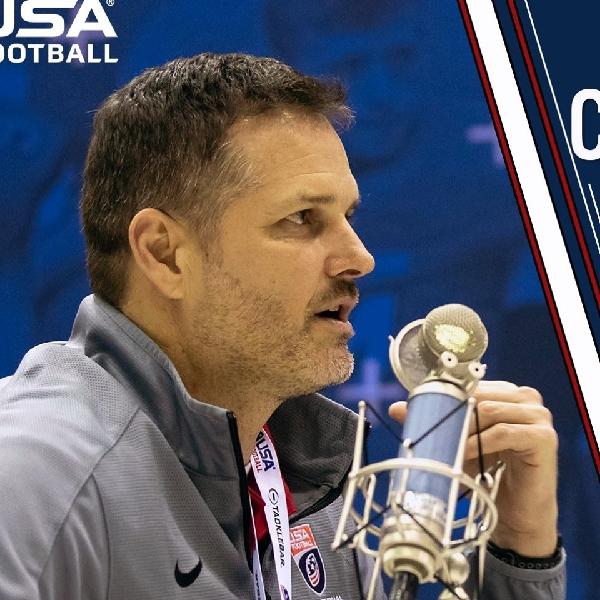
The best flag football offenses do not overwhelm players with options. They teach a small menu of repeatable concepts, then dress those ideas up with tags, formations, and personnel so the same call can survive different coverages and game states. That is the practical lesson in Keith Grabowski’s USA Football coaching work: when the playbook shrinks, timing improves, decision-making speeds up, and execution gets cleaner under pressure.
Why fewer concepts create more offense
Grabowski’s offense once carried separate route packages for different coverages, a system that created "a long menu of route concepts" and made practice planning and game-day play-calling difficult. The answer was not to invent more answers, but to narrow the system to "five concepts that we could tag." That structure matters in flag football because players often switch roles, teams usually have limited practice time, and coaches need a language that can be installed quickly without losing flexibility.
The bigger idea is simple: one concept can be run from any personnel grouping, any formation, and any game situation. If the offense can say the same thing in different ways, defenders have to keep solving the same problem while seeing a different picture. That is how a small call sheet becomes a broad package of answers, and why repetition is not boring in flag football, it is a competitive advantage.
Repetition sharpens timing and decision-making
A short concept menu gives quarterbacks and receivers the same rep with different looks until the read becomes instinctive. Instead of memorizing dozens of unrelated calls, players learn how one family of routes behaves when it is tagged, shifted, or aligned differently. That makes practice faster to teach and game day easier to execute, because the offense is not asking people to process brand-new information every snap.
This is especially valuable in 5-on-5 flag football, where NFL FLAG says successful players master fundamentals and every player has a role on the field. When everyone is responsible for more than one job, clarity matters more than volume. A team that has repeated the same five concepts from multiple alignments is usually calmer when the defense disguises pressure or rotates late, because the offense has already seen the answers in practice.
USA Football’s own teaching resources reflect that same logic. Its 7-ON-7 FLAG PLAYBOOK and ADM-Playbook for strong, split, and I formation are built around formation families and teachable concepts, not a bloated pile of isolated calls. The point is not to collect plays for their own sake, but to create a system that players can remember, rep, and trust.

Why the run game still belongs in flag football
Tom LaNeve’s USA Football guidance makes a second point that too many offenses ignore: "Developing a running game in flag football is essential." He also notes that younger players just starting out pick up that skill faster than the passing game, so coaches should focus on the run first and add passing second. That sequence gives young teams a starting point, especially when the quarterback-running back exchange is the first piece of the offense they can actually execute cleanly.
This matters because the sport is still a major development pipeline. NSCA’s long-term athlete development work says approximately 2 million youth ages 6 through 12 participate in football every year. In that environment, a run-first teaching progression helps coaches build confidence before asking players to handle full-field passing concepts, route timing, and defensive recognition all at once.
The run game also protects against the temptation to turn flag football into a pass-only classroom. A team that can hand off, exchange cleanly, and threaten defenses on the ground can slow down blitz looks, hold linebackers, and create easier throwing windows later. In other words, the run game is not a fallback, it is the foundation that makes the rest of the offense easier to teach.
Flag football is getting bigger, and the coaching standard is rising
The case for fewer concepts gets stronger as flag football’s profile rises. The International Olympic Committee and LA28 have confirmed that flag football will make its Olympic debut at the 2028 Los Angeles Games, and LA28 describes it as a non-contact format played in two 20-minute halves. NFL clubs approved player participation in the 2028 Olympic Games on May 20, 2025, a sign that the sport’s ceiling is no longer limited to youth leagues and recreation fields.
That growth changes what coaches need to do. NFL Play Football says youth sports participation overall has declined 13% over the last decade, yet more kids than ever are getting involved with flag football. The sport is becoming both an entry point and a showcase, which means the best coaches are the ones who can teach quickly, keep players engaged, and still build enough structure to survive better defenses.

As visibility increases, the offenses that travel best will not be the most crowded. They will be the most organized. A five-concept offense with tags can scale from youth competition to higher-level play because the teaching language stays consistent even when the alignments change.
What the best flag football offenses actually teach
The most effective systems usually follow a clear progression:
• Install a few core concepts and rep them from multiple formations • Add tags that change the picture without changing the base language • Teach the quarterback-running back exchange before flooding players with pass concepts • Use practice time to build timing and reaction, not just to install more calls • Keep the offense adaptable enough to fit any personnel grouping or situation
That approach gives coaches flexibility without chaos. It also helps players stop thinking of the playbook as a list and start thinking of it as a system, which is exactly what efficient flag football demands. The offense that knows five concepts well will usually function better than the one that knows twenty concepts halfway.
The sport’s next stage, from youth fields to the Los Angeles Olympic tournament, will reward the teams that can repeat the same ideas under pressure and still look fresh doing it. In flag football, the cleanest offense is often the most dangerous one.
Sources
- [1]blogs.usafootball.com
- [2]nsca.com
- [3]playfootball.nfl.com
- [4]la28.org
- [5]nfl.com
- [6]nflflag.com
- [7]assets.usafootball.com