Why padel is its own sport, not pickleball, tennis or squash
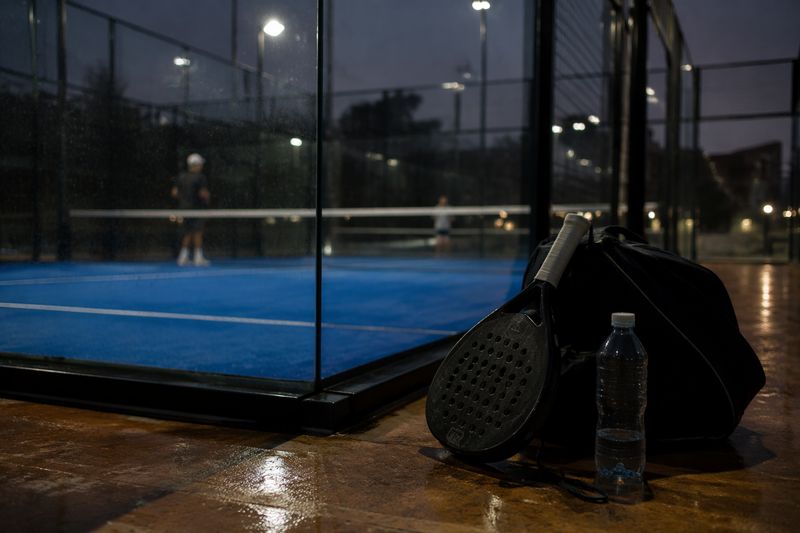
On a padel court, the walls stay in play. They change points almost immediately, because in padel they are part of the rally, not just the boundary. That design makes the game more defensive, more geometric and far more doubles-driven than pickleball, while still feeling closer to tennis than to anything played with a kitchen line.
What the court tells you before the first shot
A padel court is enclosed above ground with glass and weld-mesh rebound walls and a synthetic turf playing surface. The International Padel Federation sets the official doubles court at 20 by 10 metres, with back walls 4 metres high, made up of 3 metres of glass and 1 metre of mesh, plus a minimum indoor clear height of 6 metres.
The enclosed court keeps the ball alive after the first bounce, and the turf changes footing and contact in a way tennis players notice immediately. Padel is built for doubles from the ground up, so spacing, communication and positioning matter from the opening point, while pickleball is usually played on an open court.
Why the walls change every rally
In padel, the walls are not just something you avoid. You can let the ball rebound off the back wall after a bounce, and that turns defense into a skill instead of a bailout. A shot that would be dead in tennis or pickleball can become a new phase of the point, which is why rallies stretch longer and why players spend so much time thinking about angles, recovery and the next ball rather than just the one in front of them.
That wall-based geometry creates the sport’s signature cat-and-mouse rhythm at the net. A good lob can force a retreat, a smart overhead can pin a team deep, and a patient pair can use rebounds to wear down opponents who are still trying to play padel like a faster version of tennis. Pickleball has its own soft-touch patterns and the kitchen shapes its strategy, but it does not ask players to solve the same rebound problem.
Serve, scoring and the habits you have to unlearn
Padel keeps tennis-style game scoring, which makes the scoreboard feel familiar the first time you step in. The serve, though, is underarm and must be struck below waist height, which immediately changes the pace of the point and the kinds of returns you see. Instead of the high-speed serving contests that define tennis, padel starts from a lower, more controlled launch point that keeps rallies alive and gives both teams time to organize.
That is one reason padel rewards lobs, overheads and wall defense so heavily. The sport is social and accessible, but it is not simplistic: the best points often come from team positioning, not raw power. Pickleball uses a different scoring system from tennis.
The history
The International Padel Federation credits Enrique Corcuera with padel’s origin in Acapulco, Mexico, in 1969. The sport then spread to Spain in 1974 after Alfonso de Hohenlohe built courts at the Marbella Club, and from there it took root in Argentina and beyond.
Pickleball was invented in 1965 on Bainbridge Island, Washington, by Joel Pritchard, Bill Bell and Barney McCallum, who improvised a family game.
Why the comparison is everywhere now
Part of the confusion is simple growth. The LTA put padel participation in Britain at 15,000 in 2019 and more than 400,000 by the end of 2024. The sport had 860,000 players and 1,553 courts in the UK in 2025.