Why padel’s underarm serve changes everything about rallies
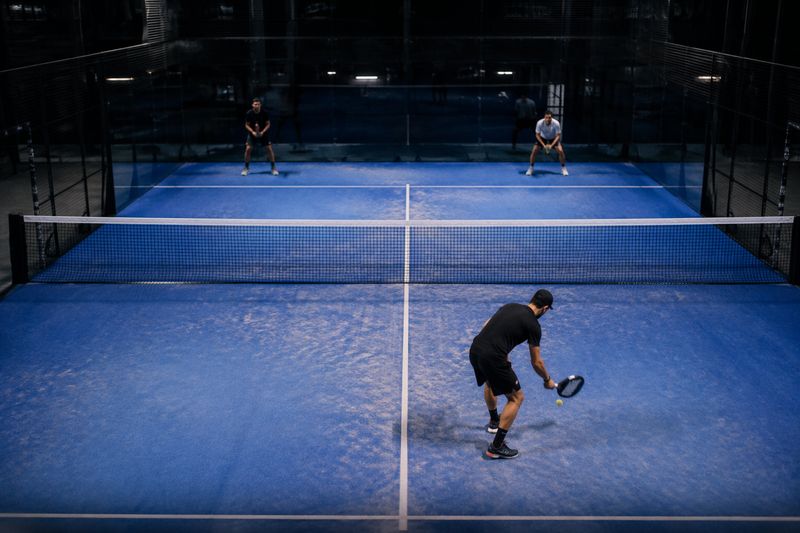
Padel starts with a rule that instantly rewires how a rally is built: the serve is underarm, struck below the waist after a bounce, and sent diagonally into the opposite service box. That means the first shot is not a weapon designed to blow points open like tennis; it is a controlled opening move meant to create a playable return and an immediate run to the net. For tennis players, the adjustment is less about learning a new swing than accepting a different logic for the entire point.
The serve is not a point-ender
The International Padel Federation’s service rules are precise. The server must stand behind the baseline, within the designated service-side area, let the ball bounce on the ground, and strike it below waist height into the opposite service box. That structure limits raw pace and makes the serve a repeatable starting shot instead of a dominant weapon.
That difference is why aces are relatively rare in padel compared with tennis. The best serves are not necessarily the hardest ones, but the ones that land awkwardly, stay low, or force the returner into a cramped contact point. A deep bounce, a body serve, or a ball aimed at the service T can disrupt balance without trying to finish the point outright.
How the first shot changes the rest of the rally
Because the serve is underarm and the receiver usually gets a playable ball, the point immediately becomes a contest over position. The serving pair’s common tactical goal is to hit a serve that lets both players move forward and take the net. That single aim shapes everything that follows, from return quality to who gets the first volley.
In padel, the net matters early and often because the sport is played in doubles, not singles. The serving team rarely serves to win the point outright on the first strike. Instead, the goal is to force a manageable return, close the distance, and take control at net before the other pair can dictate the rally.
That is why the serve changes the geometry of the game. In tennis, the server often starts from a position of immediate pressure on the returner. In padel, the server is trying to enter the same fight as everyone else, only from a slightly better starting line. The rally becomes less about one explosive action and more about sequencing, coverage, and the first volley.
What the official rules reward
Padel’s service rules reward disguise, control, and placement far more than power. A server who telegraphs direction or swings too ambitiously gives away the one advantage the shot is supposed to create. By contrast, a low, well-disguised serve can pull the returner out of position and set up the net rush that follows.
A practical padel serve usually tries to do three things:
• land deep enough to limit an aggressive return • target the body, the corner, or the service T to create discomfort • give the serving pair time to advance together and claim the net
That sequence is central to understanding padel. The serve is not isolated from the point, it is the first link in a chain. A good server thinks less about winning with the ball itself and more about what the ball allows the pair to do next.
Why padel feels playable from the start
The underarm serve also helps explain why newcomers can get rallies going so quickly. Because the serve is lower-impact, the receiving pair sees more live balls and more chances to build a point. That makes padel feel less punishing than tennis in the earliest stages, especially for players who are still developing timing and footwork.
This is a major part of the sport’s social appeal. The rule keeps the first shot from becoming a high-speed barrier to entry, which means more exchanges, more teamwork, and more points that feel alive. In a doubles format built around cooperation, that matters as much as any shot-making flourish.
The sport’s roots match its style
Padel’s origins help explain why its service rule feels so distinct. The International Padel Federation says the sport was invented in 1969 by Enrique Corcuera in Acapulco, Mexico. It later moved to Spain in 1974 and spread further through Latin America, where it developed as a compact, tactical game built around walls, doubles play, and sustained exchanges.
That history matters because it shows padel was never shaped to mimic tennis. Its design encourages longer rallies, more returns in play, and a style that values coordination over raw serve dominance. The underarm serve fits that identity perfectly because it preserves rally length and keeps the game centered on positioning rather than one-shot superiority.
Growth has made the rule even more important
The sport’s rise has only amplified the importance of its serving rules. A July 5, 2024 industry snapshot put padel at 25 million players worldwide, more than 40,000 courts, and a €2.3 billion market. By 2025, FIP-related coverage placed global participation above 35 million, while industry coverage based on the 2025 FIP report said courts and clubs were still rising rapidly worldwide.
That growth is tied to accessibility as much as spectacle. A sport that starts with an underarm serve is easier to pick up, easier to rally in, and easier to share socially. The serve lowers the entry barrier, but it does not simplify the game. Instead, it shifts the challenge toward angles, anticipation, and teamwork, which is exactly why so many players keep coming back.
What tennis instincts need to change
For tennis players, the biggest adjustment is mental. In tennis, the serve can be the whole point. In padel, it is the first move in a sequence, and that sequence usually ends with both teams fighting for net control. Power still matters, but only after the ball has been placed correctly and the pair has moved together.
That is the real lesson of padel’s underarm serve. It does not weaken the sport, and it does not make rallies less serious. It creates a different kind of intensity, one built on disguise, control, and setup, where the best point often begins with a serve that looks simple and ends with a pair already moving forward to take command.
Sources
- [1]ltapadel.org.uk
- [2]padelfip.com
- [3]padel.fyi
- [4]sgieurope.com
- [5]playtomic.com