Why racquetball is a serve-and-control sport, not a rally game
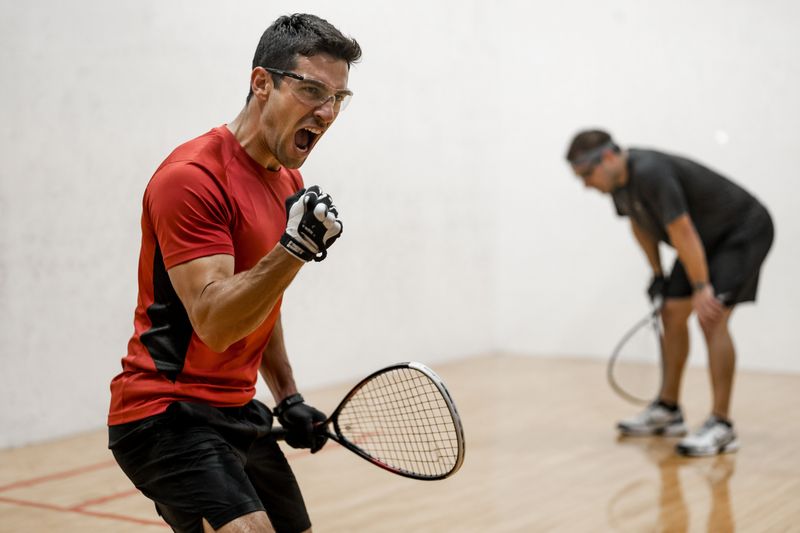
In sanctioned racquetball, the server gets two chances to put the ball into play, the coin-toss winner chooses whether to serve or receive in game 1, and only the serving side can earn points. Sideouts and handouts create the real rhythm of a match.
The serve is the point’s starting power source
Racquetball’s scoring system turns the serve into the sport’s tactical engine. The first two games go to 15 points, with a deciding game to 11, so every missed serve, weak return, or lost service exchange matters immediately. A player does not merely want to keep the ball alive. The goal is to keep the ball on the string long enough to convert the serve into points and to deny the other side any chance to build a run of its own.
That is why the opening shot matters so much. A clean serve can create a short, awkward, or rushed return that sets up the next ball. A poor serve hands the receiver control.
Why placement matters more than raw pace
The serve in racquetball is a precision shot wrapped in power. Before the motion begins, the referee must call the score or second serve, and the server has to start from the service zone with both feet and the ball inside the proper boundaries. The ball must bounce once in the service zone, then be hit before a second bounce, strike the front wall first, and rebound far enough to travel beyond the short line. The receiver may still take it on the fly, which means legality is only the baseline. The real test is whether the serve forces a weak return.
That is where drive serves, ceiling serves, and body-positioning games become so valuable. A drive serve can jam the opponent or pin the return close to the wall. A ceiling serve can change timing and trajectory, making the first decision harder. The best servers use the service zone and the short line as targets, not just the front wall as a destination, because the aim is to deny the receiver a clean attack.
Second-serve pressure changes the entire risk profile
The presence of a second serve changes how every point begins. The server has two chances, but that does not mean two equal chances. The first serve is usually the more aggressive option, designed to score directly or produce a poor return. The second serve often has to be safer, but even then it cannot be passive, because the receiver is waiting to pounce on anything floaty or predictable.
That tension is what makes racquetball feel so different from a pure rally game. The player serving on second serve is not just trying to survive; the player is trying to survive while still keeping enough shape and placement to prevent the receiver from taking over the point. When the second serve slips, the sideout arrives and the scoreboard freezes.
Doubles rules widened the tactical opening
The strategy becomes even sharper in doubles. USA Racquetball’s 2020 rule revision allowed the server and the non-serving doubles partner to step outside the service zone as soon as the ball contacts the server’s racquet. That adjustment matters because the start of the point now gives doubles teams a little more tactical room and timing flexibility. It changes how quickly partners can move, recover, and set up the next ball after contact.
In doubles, the serve is a positioning cue. The serving team can use the new timing freedom to create better court spacing and reduce the opponent’s first-attack options.
The sport’s history backs up the modern logic
Joseph G. Sobek invented racquetball in 1950, and USA Racquetball’s Hall of Fame lists 25 prototypes for his first racquetball racquet. The equipment itself has kept evolving, moving from Sobek’s wood-and-leather model to alloy, then fiberglass, and now graphite composite. As racquets improved, players could shape the ball with more intent, which only increased the value of a well-placed serve.
Britannica put the sport at about 10 million players in more than 90 countries by the early 21st century.
Global competition still reflects the same logic
The international structure of the sport reinforces how important the serve is. The International Racquetball Federation was formed in 1979 with 13 national federations, was recognized by the International Olympic Committee in 1985, and has been part of The World Games since the event began in 1981. At the 2025 World Games in Chengdu, China, the field included 32 athletes from 16 national teams, and mixed doubles appeared for the first time at that event. The matches were staged at the High Tech Zone Sport Center.
USA Racquetball was founded in 1969 and is the sport’s U.S. national governing body. It now conducts six national championships each year and sanctions hundreds of tournaments. At the 2025 Junior National Championships, 170 athletes played, the most since 2017, and 212 athletes entered the 2026 National Indoor Championships, a 17% rise from 2025.