Why racquetball’s serve is the sport’s most deceptive weapon
Drive-serve lines sit 3 feet from the side walls on a 20-foot by 40-foot racquetball court, turning the serve into a calculation about angles, space, and visibility. With a 20-foot ceiling, a 5-by-20-foot service zone, a short line at midcourt, a service line 5 feet in front of it, and a receiving line 5 feet behind it, the server’s stance stops being cosmetic. Where you stand, how open your body is, and which lane you choose can decide whether the returner gets a clean look or a rushed swipe.
The court is a map, not just a box
The official court markings tell the whole story. The service zone stretches 20 feet across the court and only 5 feet deep, so the server is operating inside a narrow launch area before the ball even leaves the hand. The short line splits the court in half, while the service line and receiving line create a tight corridor that governs how early the ball can be attacked.
Because the drive-serve lines sit 3 feet in from each side wall, a server cannot treat the service motion like a casual toss from anywhere in the box. The launch point changes the angle into the front wall, the angle off the front wall changes the bounce, and the bounce changes whether the receiver can move up, stay back, or get pinned behind the short line.
Not every serve plays by the same geometry
USA Racquetball’s play regulations draw a sharp line between serve types. The drive-serve restrictions apply only to hard, low drive serves. Cross-court drive serves, along with the hard-Z, soft-Z, lob, and half-lob, are exempt from those drive-serve line restrictions. The server is not choosing only between power and placement. Those exemptions create different trajectories, each with its own risk profile and its own way of making the first return uncomfortable.
A hard, low drive serve is built to rush the receiver and stay tight to the wall, but it has to respect the drive-serve lanes. A cross-court drive serve can change the receiver’s angle without carrying the same restriction. The hard-Z and soft-Z add another layer because they alter the ball’s path after the front wall, forcing the receiver to read more than one bounce in real time. The lob and half-lob trade speed for placement, lifting the ball into spaces that pull the receiver away from the center lane.
Doubles changes the starting point
The doubles rules make the serve even more layered. In a 2024 USA Racquetball rules Q-and-A, the governing body clarified that the server can stand anywhere fully inside the 20-by-5 service zone, including either of the small service boxes used in doubles. The same clarification also made one thing plain: the lob serve is not limited to the center of the zone.
In doubles, being able to start from either service box changes what the receiving team has to cover before the ball even reaches the front wall. A left-side start can open one lane, a right-side start another, and the ability to serve a lob from any legal spot in the zone means the server can disguise intent without stepping outside the box.
What a screen really is
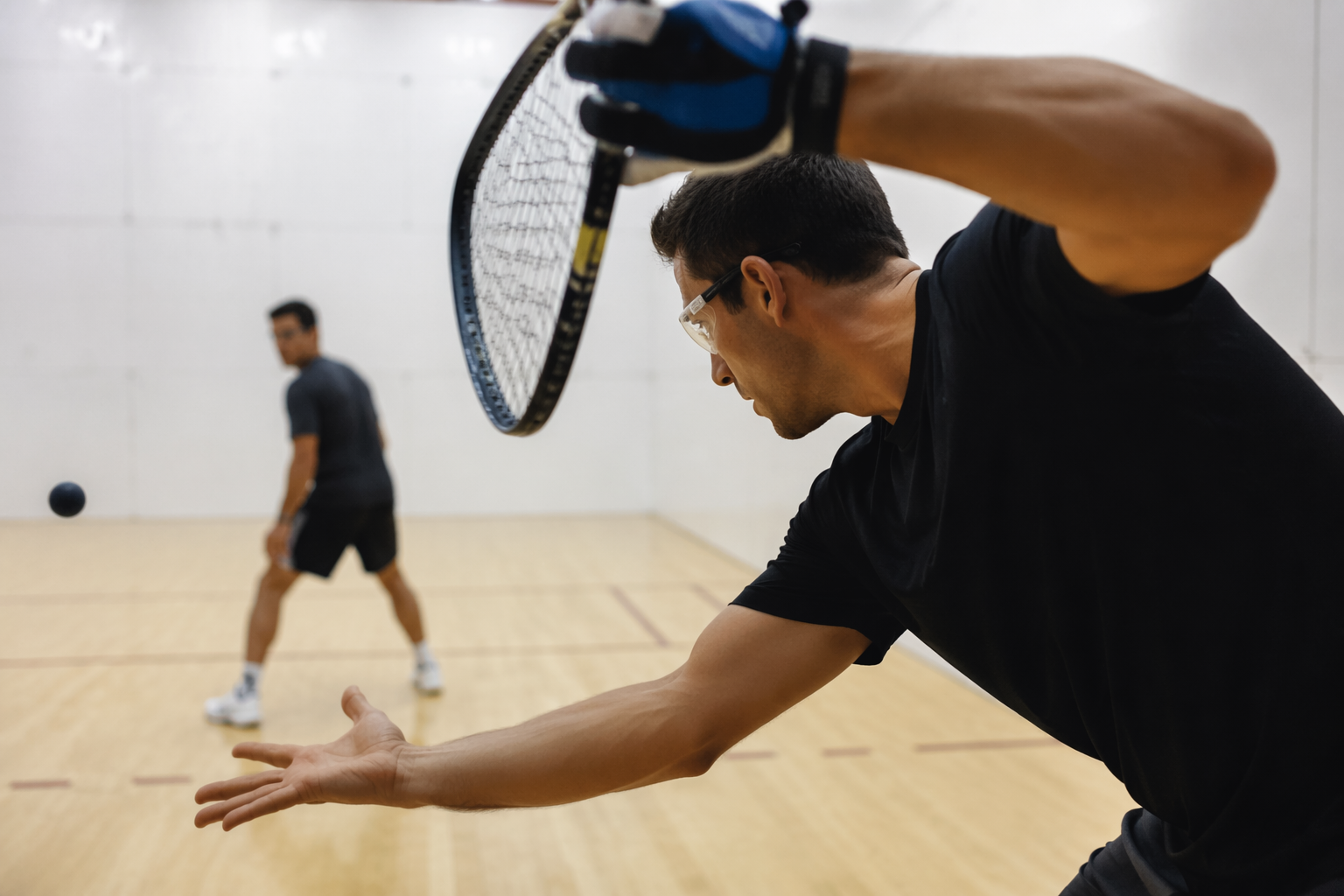
In the 2026 discussion of the Z-serve, a screen is defined as a rebound that passes so closely to the server that the receiver cannot get a clear view of the ball.
The receiver is expected to take good court position near center court, which is where the best sightline and the best chance of reading the bounce usually live. If you drift too far off center, you invite the server to hide the ball behind a body line or make the rebound harder to track. If you stay near center and still lose the ball, the server has probably done real work with angle and placement, not just luck.
A hard-Z or soft-Z can become dangerous for exactly that reason. Once the ball comes off the front wall and rebounds into the space around the server, the returner may lose sight of it for a split second.
How elite servers use the same rules differently
The best servers treat the rulebook like a toolkit. They know the drive-serve lines sit 3 feet off the walls, so they use body position to change the angle without giving away the target. They know hard, low drive serves live under one set of restrictions, while cross-court drive serves, hard-Zs, soft-Zs, lobs, and half-lobs offer different legal lanes. They know doubles allows a server to work from either service box, which makes the first read harder for the receiving team.
A clean lob can pull a receiver out of center court. A sharp drive can jam the body before the receiver gets set. A Z-serve can create a screen and force a late contact.
How to read it, counter it, and use it yourself
If you are receiving, center court is not optional. Start there, track the server’s body position, and be ready for the ball to come off the front wall in a way that changes your first step. When the server stands close to one side of the service zone, expect a lane that opens away from that setup. When the serve is a lob or half-lob, do not drift too deep too early or you hand over the middle of the court.
If you are serving, keep the court geometry in your head before you swing. Use the 20-by-5 service zone fully and legally. Respect the drive-serve lines on hard, low drives. Mix in the exempt serves when you want to change the receiver’s depth and sightline instead of just challenging the back of the court. And when you do use a Z-serve, understand what you are chasing: not a miracle ace, but a rebound that arrives close enough to your body or line of motion to blur the receiver’s view.