Why Team USA plays in the USHL, and what it means for development
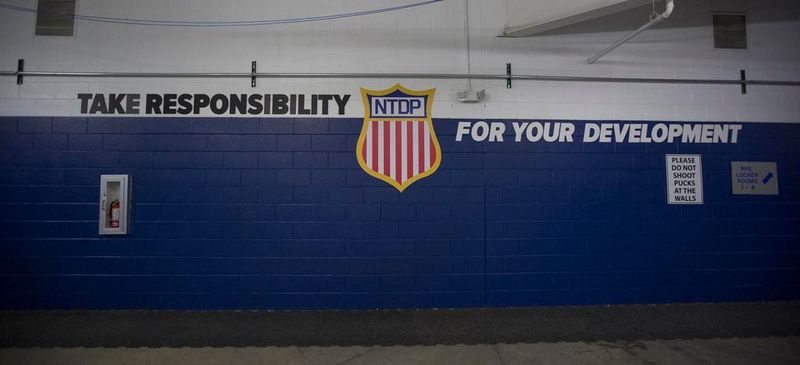
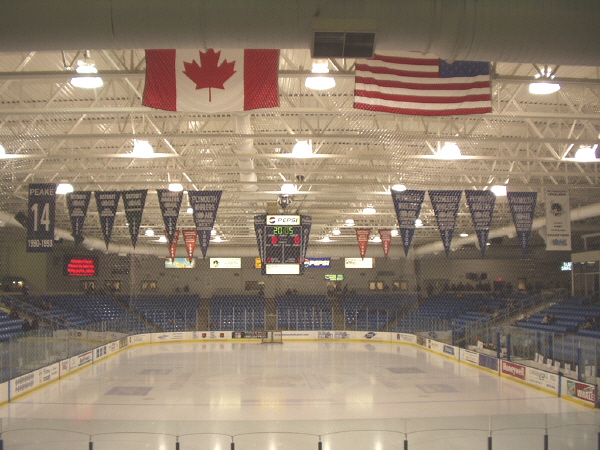
At USA Hockey Arena in Plymouth, Michigan, the U.S. National Under-17 Team spends its season in the USHL. USA Hockey built the National Team Development Program to push elite teenagers into games that are faster, heavier and harder to survive. That setup gives the league a national-team presence every night, and it changes what a USHL schedule means for everyone else.
A national team inside a junior league
The NTDP, launched in 1996 and now based at USA Hockey Arena in Plymouth, Michigan, is split into two squads, the U.S. National Under-17 Team and the U.S. National Under-18 Team. The Under-17 team competes in the United States Hockey League, while the Under-18 team travels a broader route that includes NCAA Division I and Division III opponents, USHL teams, NAHL and college teams, and international tournaments.
Most junior schedules are built entirely around club-versus-club competition. In the USHL, one of the opponents is a national development program with Olympic-level expectations, NHL eyes on the bench, and a mandate that reaches well beyond wins and losses.
All NTDP games played at USA Hockey Arena are available free of charge. That gives supporters, scouts and decision-makers public access to the country’s best under-17 and under-18 players in real time.
What USHL clubs gain from the matchup
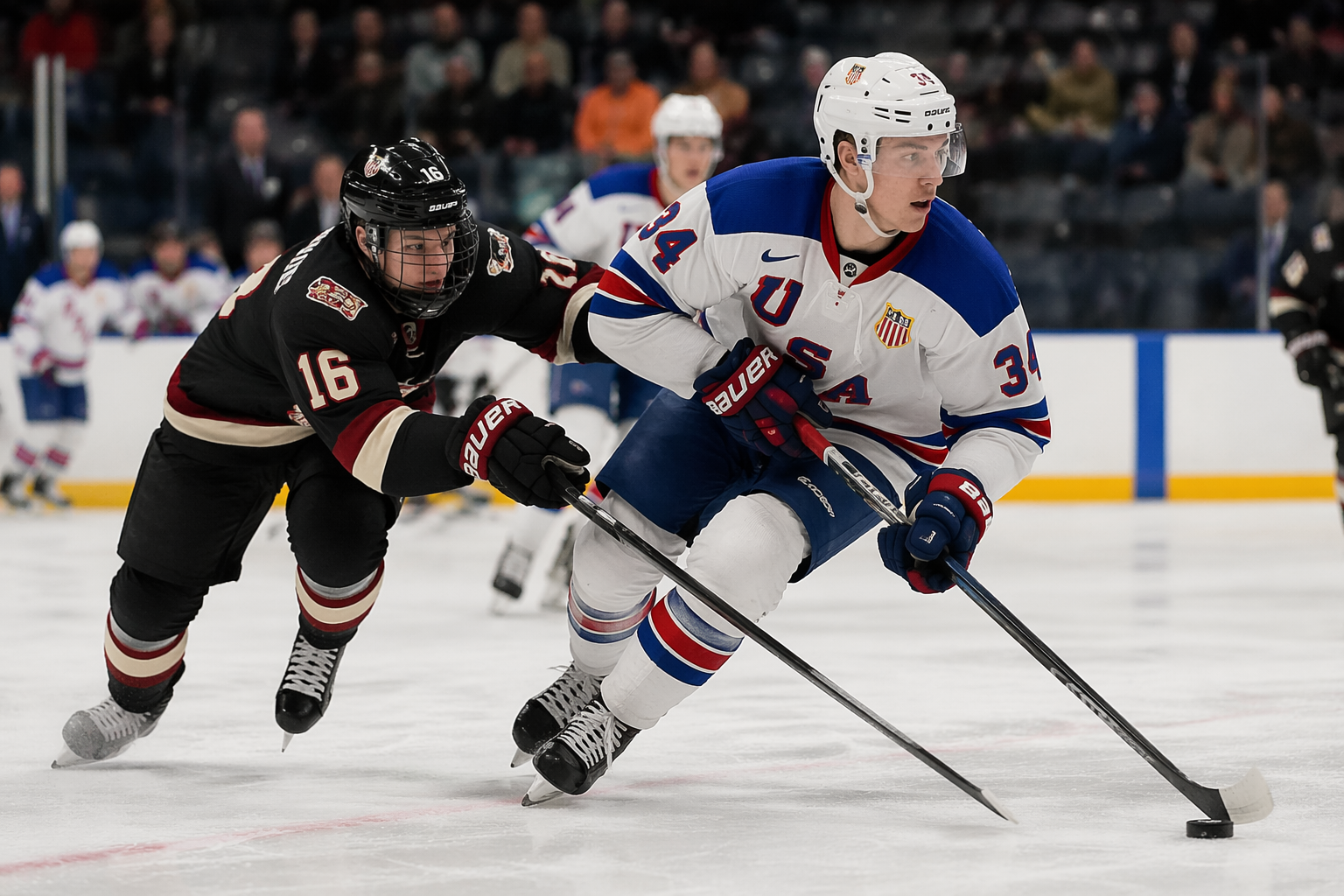
For USHL clubs, playing the NTDP raises the competitive standard in a way that ripples beyond a single night on the calendar. The Under-17 team brings speed, structure and top-end skill, but it also brings the pressure of facing older, stronger players across a full junior schedule. That forces opponents to move the puck faster, clean up their details and make decisions under stress, because a half-step of hesitation is often enough to turn a play the other way.
Games against Team USA tend to draw more attention from scouts, agents and national evaluators, which gives USHL players a different stage. A strong shift against the NTDP can carry more weight than a routine league win because it happens in a game that feels closer to the next level than to youth hockey.
That is especially true when the Under-18 team is involved. When a USHL club faces the older NTDP group, the matchup can resemble a pro-style scouting test: pace, discipline and small-area execution matter as much as raw talent. For a USHL program trying to show it can develop future college and pro players, those nights are built-in proof points.
The tension between standings and development
The same arrangement that strengthens the league also creates a built-in tension. The NTDP is not judged by wins and losses, but by player development and the chance to face older competition. That philosophy fits the program, but it can complicate the USHL standings race because the objective is not always to maximize points in the moment.
A USHL coach has to manage that same balance from the opposite side. Beating the NTDP matters for the table, but the game can also expose weaknesses in transition defense, special teams, puck management and conditioning that a club might not uncover against a less demanding opponent.
The league played a 62-game regular season in 2024-25, embedding the NTDP in a real junior environment rather than a showcase circuit. The NTDP plays as part of the season grind, not on a separate exhibition schedule, and every meeting has consequences for development, reputation and playoff positioning.
How the program got here
Scott Monaghan, now a senior USA Hockey operations executive, helped establish the program in 1996 when it was housed in Ann Arbor, Michigan. USA Hockey later moved it to USA Hockey Arena in Plymouth in 2015.
The first NTDP group consisted of 46 players who made up the original U-17 and U-18 teams that began play in the 1997-98 season.
The younger national squad is learning to play against opponents who are already accustomed to the junior grind, and that difference shows up in board battles, shot selection and the pace of decision-making.
Why the pathway still matters now
In April 2025, the NHL, USA Hockey and the USHL announced the Declaration of Excellence, an elevated partnership designed to align resources, standards and support systems around elite player development. In May 2026, that collaboration expanded further.
In a 2025 U.S. National Junior Team preliminary roster note, 19 players had played at least one NTDP game and 17 were full-time residents in the two-year program.
In June 2026, the USHL's west coast expansion plans were moving ahead as part of the Tier I development pathway, and USA Hockey also announced a new Development League slated to begin in 2027-28 and meant to cooperate with Tier I hockey.
Sources
- [1]teamusa.usahockey.com
- [2]usahockey.com
- [3]ushl.com