Why the Atlantic League is baseball’s rule laboratory
Baseball's strangest ideas often get their first honest test in the Atlantic League, where MLB has used live games to see whether new rules survive pressure. Founded in 1998 by Frank Boulton and grown from six teams to 10 in 2026, the league became MLB's first Partner League in a 2019 three-year agreement. That arrangement turned independent baseball into a proving ground for pace, strategy, and entertainment.
How the Atlantic League became MLB's test field
The Atlantic League was not built as a novelty act. Boulton had been working on the project since 1995, pitched it publicly in Atlantic City on April 3, 1995, and finally brought the league to life on May 20, 1998. That long runway mattered because MLB needed a league with enough structure, credibility, and nightly competition to absorb rule experiments without turning them into exhibition theater.
By 2019, MLB had formalized the relationship and said it would install radar tracking technology in the league's eight ballparks. The idea was simple: put new rules into actual games, then study what happens when players, managers, and umpires have to live with them. That is why the Atlantic League became more than a side project. It became baseball's safest laboratory.
The strike zone went from human judgment to live technology
The clearest example is automated balls and strikes, or ABS. MLB said the Atlantic League pioneered ABS testing from 2019 to 2022, and later said the full ABS system was first used there in 2019. That made the league the first place where baseball could see how a technology-driven strike zone would affect pitch selection, hitter patience, and the rhythm of an inning.
This was not just about replacing an umpire's call with a machine's verdict. It was about whether the game still felt like baseball when every borderline pitch could be tracked by technology. The Atlantic League gave MLB real innings, real crowds, and real managerial choices to measure, which is very different from charting pitch data in a bullpen or spring training setting. MLB's later challenge-system work in the Florida State League in 2022, then Triple-A in 2023 and 2024, traces directly back to that Atlantic League proving ground.
Pitch counts, pickoffs, and the pressure on baserunners
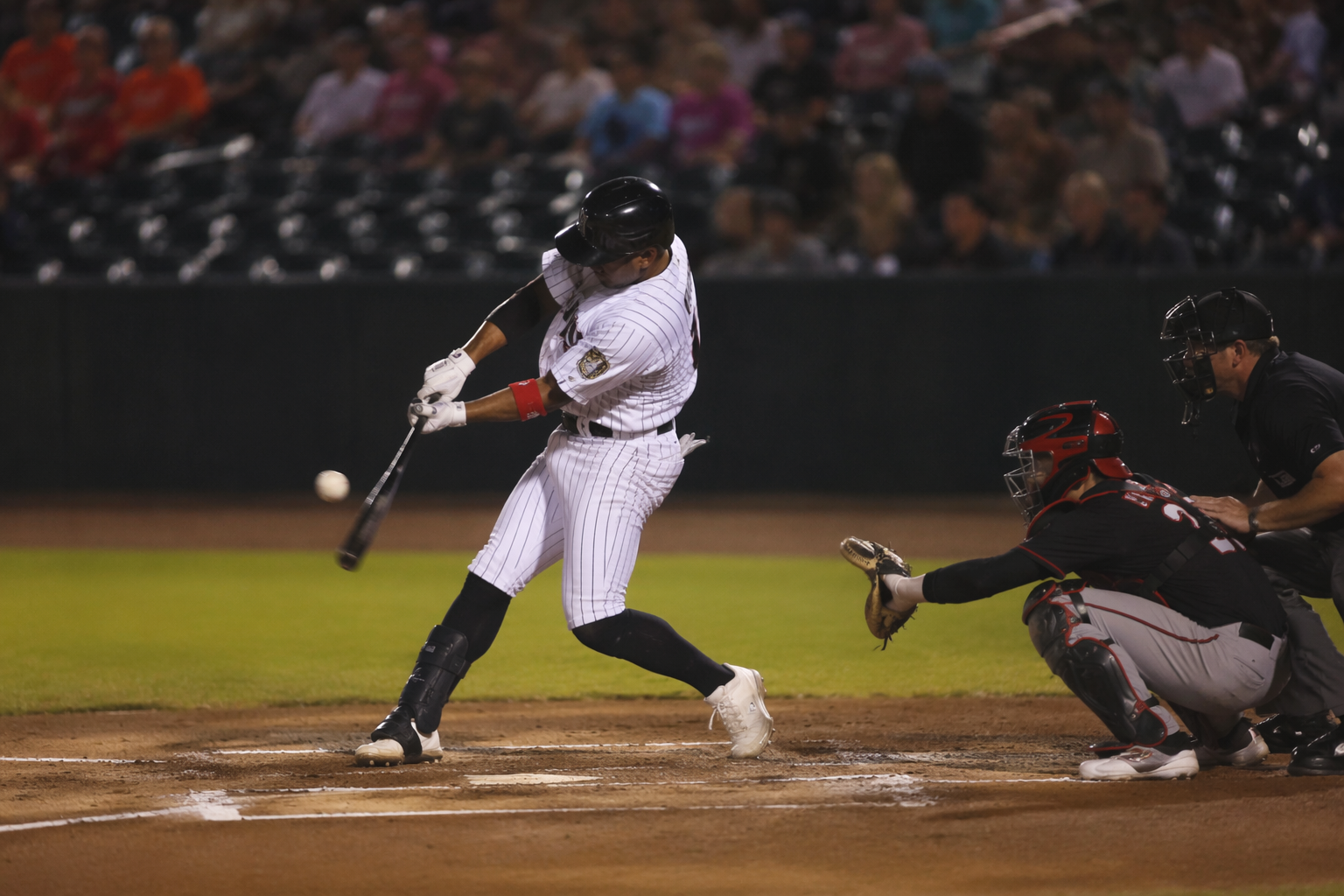
Several of the league's most revealing experiments targeted the cat-and-mouse game between pitcher and runner. In 2019, MLB tested no mound visits except for pitching changes or medical issues, a three-batter minimum, bigger bases, defensive-shift restrictions, shorter breaks between innings and pitching changes, and moving the rubber back 24 inches to 62 feet, 6 inches in the second half of the season. Each tweak changed how clubs managed tempo and leverage.
The mound-visit limit forced clubs to choose their in-game conversations more carefully. The three-batter minimum pushed managers to think in longer arcs instead of one-batter specialist matchups. Bigger bases and shift restrictions touched the action between the lines, giving runners a little more room and hitters a different defensive picture. MLB had already installed timers in big league parks in 2015 to measure breaks, then reduced those breaks in 2019, so the Atlantic League tests fit into a broader pace-of-play push rather than standing apart from it.
The double-hook DH changed roster strategy in a way fans could see
The 2021 and 2023 Atlantic League trials brought in one of the most memorable ideas in the sport: the Double-Hook Designated Hitter. In plain English, the rule ties the designated hitter's life to the starting pitcher. If the starter does not last five innings, the team loses the DH for the rest of the game. That turns one roster spot into a strategic wager on starting-pitcher durability.
MLB also tested a one-foot increase in the distance from home plate to the pitching rubber in 2021. That kind of change sounds small, but it can reshape everything from velocity perception to pitch count management to the way hitters react to fastballs and breaking balls. The Atlantic League was uniquely suited for this because it could show whether the sport's most delicate balance, offense against pitching, improved when the geometry changed just a little.
The 2023 package pushed the baserunning game even further
MLB's 2023 Atlantic League announcement made clear that the league had already served as the place for a long list of experiments: the Double-Hook DH, the dropped pitch rule, the increased distance of the pitching rubber, automated balls and strikes, no mound visits, the three-batter minimum, bigger bases, and defensive-shift restrictions. The same announcement added another important wrinkle, a limit of one disengagement per at-bat. That directly affects pickoff strategy and makes the duel between pitcher and runner more aggressive.
The Designated Pinch Runner fit that same logic. It is not a vague pace-of-play tweak. It is a formal roster tool that lets a club list one player who can enter as a baserunner at any point and later return without penalty. That kind of rule matters because it changes late-game tactics, bench construction, and the value of speed in tight situations. In the Atlantic League, those ideas are tested where they matter most, in real innings with real consequences.
Why this league can absorb baseball's risk
The Atlantic League's value comes from its scale and its independence. Ten teams, a 126-game schedule, and a league identity rooted in experimentation give MLB a place to test ideas without forcing them straight into the majors. That is why the partnership has lasted: it helps the sport answer a practical question, not a theoretical one.
Baseball does not need every experiment to survive, but it does need a place where changes can fail in public before they reach the biggest stage. The Atlantic League has filled that role for years, and the record of ABS, the double-hook DH, bigger bases, shift restrictions, and pitching-rubber adjustments shows how much of modern baseball's rule evolution has passed through its ballparks first.
Sources
- [1]mlb.com
- [2]atlanticleague.com