Why the keeper is quadball’s most tactical role
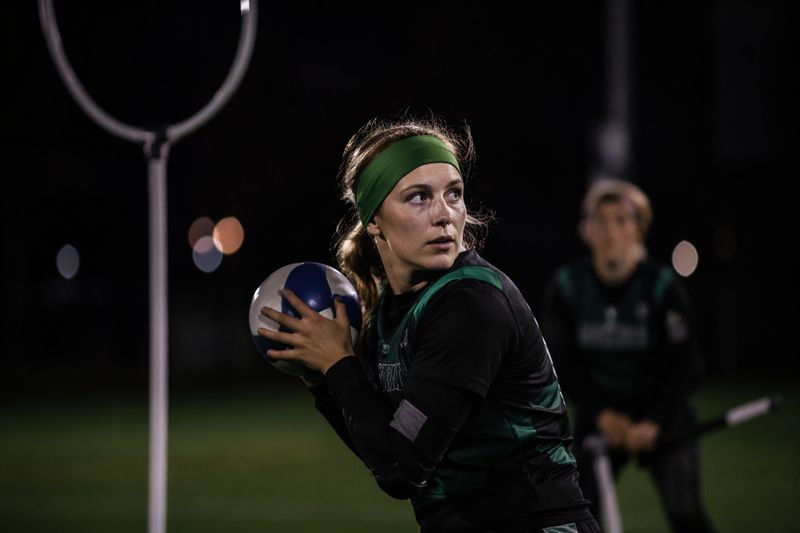
The keeper is quadball’s most revealing position because it changes the shape of a possession every time the ball crosses the keeper zone line. With a green headband, protected space, and the freedom to score, the keeper is not just waiting for shots at the hoops. The role decides when a team absorbs pressure, when it escapes it, and when defense becomes the first pass of the next attack.
The keeper zone is where the role becomes tactical
Quadball’s rulebook gives the keeper a defined field map, not a vague area of responsibility. The keeper zone runs from the endline to the keeper zone line, and those two keeper zone lines sit 11 meters from midfield on either side. Inside that space, the keeper has possession immunity and dodgeball immunity while the ball remains in the zone, which means a beater cannot knock the player off stick with a dodgeball during that protected phase.
That structure is what makes the role so different from a simple goalie job. The keeper is protected precisely at the moment when the defense is most likely to be under stress, and that protection forces the other team to choose between pressing aggressively and backing off. The result is a role that can slow the game down, speed it up, or flip the direction of play without changing personnel.
Why the green headband matters on every possession
The keeper must wear a green headband on the forehead, and the rulebook treats keepers and chasers as separate positions for substitutions and position changes. That distinction matters because the keeper is not locked into one narrow defensive function. US Quadball’s playing guide makes the same point clearly: keepers are part of the core offense-and-defense unit, they pass the ball, they try to score through the hoops for 10 points, and they defend their hoops.
That means the keeper can be the safest outlet under pressure and also the player who turns a broken possession into a clean attack. Inside the zone, the keeper can hold the ball long enough to let teammates reset their spacing. Once the ball leaves the zone, the protection disappears, so the keeper has to decide whether to move the ball early, invite pressure, or use the zone to bait defenders into overcommitting.
Shot protection is only the first layer of the job
The common way to explain the keeper is as the player in front of the hoops, but that misses the tactical value of the position. The keeper’s real job is rhythm control. If opponents crowd the hoops, the keeper can use the protected space to keep possession alive and turn the back line into a launching point. If the defense stays back, the keeper can recycle the ball and help the offense build better angles.
That is why the keeper is often the first player a team looks to when a possession breaks down. The position acts as a pressure valve, stabilizing the ball without surrendering field position. It is also why the best keeper play is often invisible to casual viewers: the value is not just in blocks or saves, but in whether the team keeps its structure long enough to attack again.
The rules build a bridge between defense and transition
The special powers inside the keeper zone are not a loophole. They are a formal part of how quadball is designed, and the current rulebook keeps the keeper squarely inside both the defensive and offensive systems. Referees are told to treat dodgeball immunity as active whenever the keeper is in the zone, on either offense or defense, which reinforces that the role is protected to support movement, not to freeze the game.
That is the deeper tactical hinge. The keeper sits between half-court defense and the next drive downfield, and the position is at its most valuable when it converts a messy moment into a clean transition. In a sport where possession changes can be chaotic, the keeper is one of the few players who can absorb that chaos and still remain the starting point for the next sequence.
A modern role in a modernized sport
Quadball was founded in 2005 at Middlebury College in Vermont, and the sport’s governance has continued to formalize the role as the game has grown. The International Quadball Association says the sport is played by all ages worldwide and is one of the few mixed-gender full-contact sports. That combination gives the keeper added significance, because the position sits at the center of a game that blends contact, spacing, and constant role specialization.
The sport’s name change also matters here. On July 19, 2022, US Quidditch and Major League Quidditch announced their move to the Quadball name, and the IQA planned to adopt the new name worldwide. The rebrand was not just cosmetic. It marked an effort to align the sport with its own identity, and the keeper role is a good example of that identity in action: a position that is too creative to call a pure defender and too protective to call a pure playmaker.
Rulebooks keep sharpening the position
The keeper’s tactical tools are not fixed forever. The IQA released its 2024 rulebook on August 18, 2024, and US Quadball released its 2024-25 rulebook on September 3, 2024. US Quadball says annual rule changes are derived from community feedback, which shows that the sport’s key positions are still being refined through formal governance and player input.
That matters because the keeper’s influence depends on the exact shape of the rules. The 11-meter keeper zone, the green headband requirement, the special immunity inside the zone, and the separate substitution status all combine to create a role that can reshape match flow. As the rulebook evolves, the keeper remains the clearest example of how quadball rewards players who can defend, distribute, and initiate at the same time.
Why the position carries social weight too
Quadball’s structure gives the keeper meaning beyond tactics. In a mixed-gender full-contact sport with a global player base, the position sits in a game built around shared responsibility and defined roles rather than pure individual stardom. US Quadball also says it supports trans, non-binary, and queer athletes, which places the sport’s identity in the same conversation as its on-field organization.
That is part of why the keeper stands out culturally. The green headband signals a player who can protect space without disappearing into it, and the rules let that same player move the ball, manage pressure, and score. In a sport where tempo often comes from the person in the middle of the defensive mess, the keeper is not just the last line. The keeper is the first decision of the next possession.
Sources
- [1]playquadball.com
- [2]iqasport.org
- [3]wpdev.iqasport.org
- [4]usquadball.org