Why ultimate’s standardized disc matters more than you think
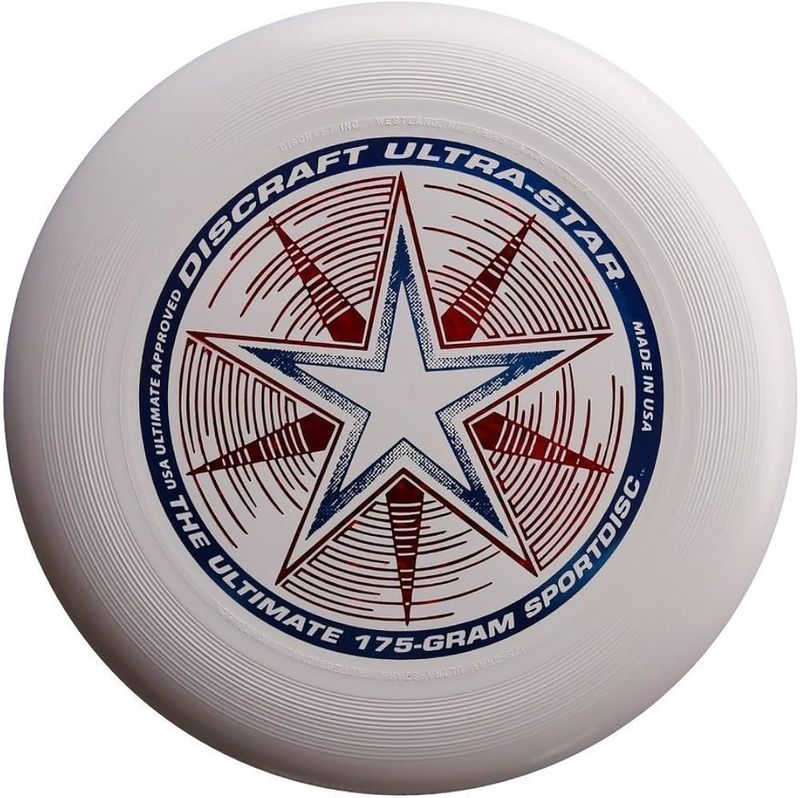
The 175-gram disc is not a footnote in ultimate. It is the thing that makes the game feel like one sport instead of a dozen local variations, because the thrower, the receiver, and the wind all have to answer to the same object. Once you understand that, the Ultrastar stops looking like gear nostalgia and starts looking like infrastructure.
The disc is the sport’s common language
USA Ultimate defines the game around the arc of the disc in flight and the equal contribution of each player to team success, which is exactly why standardization matters so much. In a sport built on precise timing, a few grams of weight or a small change in rim shape can change a backhand, a forehand, or a layout catch. That is not cosmetic. It affects whether a disc holds a line in the wind, how hard it can be driven, and how reliably a receiver can trust it in traffic.
That is also why the official benchmark is not “any plastic that flies.” WFDF’s discipline guidance identifies the official disc as the 175-gram Discraft Ultrastar, and USA Ultimate’s disc standards materials go further by setting a Disc Technical Standard for size and weight before a model is even considered for play. The point is not to satisfy a measurement sheet. The point is to make sure a disc is good enough for actual competition, from local leagues and tournaments all the way up to championship events.
Why 175 grams changed the feel of the game
The Ultrastar’s origin story starts in 1981, when Discraft says the 175-gram UltraStar was created and introduced to tournament play. USA Ultimate’s Hall of Fame history says Jim Kenner founded Discraft in 1978 and introduced the Ultra-Star for ultimate in 1981, giving the sport a disc that weighed about 10 grams more than what players were using then and measured 10.75 inches in diameter. That extra mass was a big reason players noticed it immediately.
Many players saw the UltraStar as easier to throw, more predictable in flight, and capable of greater velocity than the post-80-mold Wham-O discs it displaced. That matters because ultimate rewards repeatable touch as much as power. A disc that behaves consistently gives handlers a cleaner window to break marks, cutters a better read on their leading edge, and defenders a more honest target to contest.
The design did not stand still. When certain Wham-O patents expired in 1983, Kenner added flight rings to the UltraStar, improving stability. That detail sounds small until you remember what the disc is asked to do in real games: flatten out after a release, resist wobble in wind, and stay honest on long throws when pressure is rising. In ultimate, stability is not a luxury feature. It is part of the rulebook experience.
Approval is a system, not a tradition
USA Ultimate does not treat disc selection as a one-time blessing. Its approval process starts with the Disc Standards Working Group, which gives a candidate disc an informal look. If it shows promise, the disc moves to the Disc Approval Committee and then the larger Flight Test Pool, where real-world flight, grip, and catchability come into focus. That structure is deliberate: a disc can pass a measurement test and still be wrong for competition.

The approval system also separates levels of play. USA Ultimate materials describe both “USA Ultimate Approved” discs for general play and “Championship Approval” for the highest levels of competition. That distinction matters because not every disc needs to be a championship disc, and the sport leaves room for models that may be better suited to youth or novice players. The standard is firm, but it is not blind to context.
The process is also maintained over time. Approved discs must be resubmitted every three years, and if a manufacturer changes the mold or plastic, it has to apply again. Vendors must send 10 samples and pay a $1,500 testing fee. That is the opposite of a casual endorsement. It is a controlled system built to keep the disc field stable as materials and manufacturing change.
Why the standard reaches beyond the United States
WFDF’s current disc guidance matters because it links the American approval process to the international game. Its framework relies on discs approved through USA Ultimate’s system, so the same standards that shape league play in the United States also influence what can appear in WFDF competition. That creates a shared equipment baseline across levels and borders, which is exactly what a global sport needs if it wants its tactics and skills to travel cleanly.
That shared baseline is easy to underestimate until you watch how much ultimate depends on feel. A cutter’s read changes if a disc sails more neutrally. A handler’s break throw changes if the rim fits differently in the hand. A receiver’s confidence changes if the plastic catches cleanly at full speed. Standardization makes those variables legible, and that legibility is part of why the sport can be played the same way in a windy club semifinal and a youth league on a park field.
The Ultrastar became the default because it worked
Discraft says the UltraStar became the official disc of USA Ultimate in 1991, and that date matters because it marks the point when the disc stopped being just the leading option and became the sport’s standard. By then, the UltraStar had already earned its reputation through tournament play, improved stability, and a flight profile that players trusted more than the discs they were leaving behind.
The scale of the sport helps explain why that standard stuck. A widely cited participation figure said 5.1 million people played ultimate in the United States in 2012. Discraft claims there are 4.9 million players in the U.S. alone today and says virtually all of them throw the UltraStar, a manufacturer claim that still speaks to how dominant the disc has become. Even if you set the marketing aside, the underlying point holds: when millions of throws are happening across leagues, schools, and championships, the sport needs one disc that behaves like the sport itself.
That is why the Ultrastar matters more than it looks like it should. It is not just the object players throw. It is the reason the game can expect the same forehand to hold, the same pull to hang, and the same catch to mean the same thing from one field to the next.