Why USHL rosters are built around ages 16 to 20
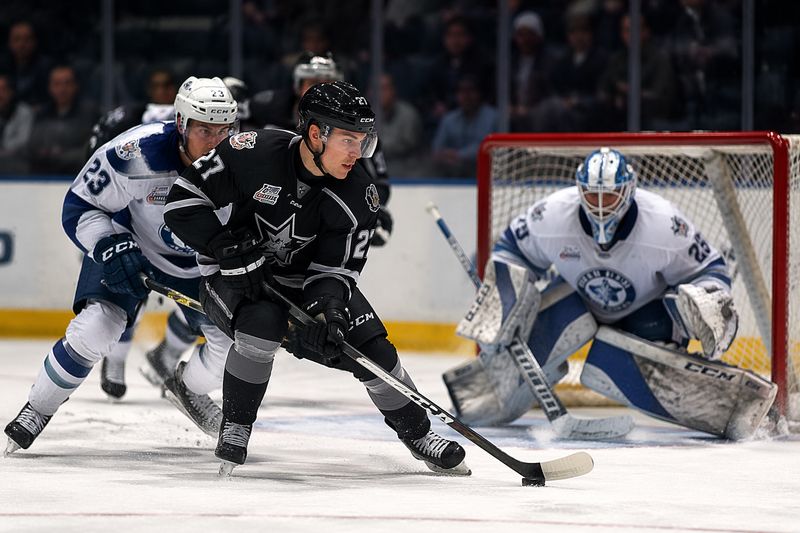
The USHL looks young because it is designed to be young. USA Hockey sets its junior hockey lane for players ages 16 to 20, and that age window is the simplest explanation for why USHL benches are packed with teenagers who are old enough for elite competition but still deep in the development pipeline. The league is built to produce the next step, not to mirror a college roster or a pro one.
Why the 16-to-20 band matters
USA Hockey’s junior program is available to athletes who are at least 16 and no older than 20 as of December 31 of the current season. That cutoff does more than set a birth-date rule. It creates a shared developmental stage where players can handle fast, structured hockey without being pushed into a professional environment too early.
That is why a USHL roster so often feels like a snapshot of a player’s transition years. A 16-year-old is still learning how to survive against older, stronger opponents; a 19-year-old is usually being asked to drive results and prove he is ready for the next level. The roster is built to hold both kinds of players at once.
How 15-year-olds can still appear
The exception proves how tightly the system is controlled. USA Hockey allows 15-year-olds to play junior hockey only if they are 15 on or before December 31 and their petition is approved. That is not a casual workaround. It is a formal approval process that keeps the age band intact while still making room for rare players whose talent is advanced enough to justify an exception.
For fans, that explains why a 15-year-old in the USHL is notable rather than normal. Those players are not there because the league is open-ended. They are there because the petition process identifies them as outliers, and outliers tend to become some of the most closely watched names on the ice.
Why amateur status shapes the roster
The USHL is not built like a pro league, and it is not built like college hockey either. USA Hockey defines junior hockey as a place to promote skill development, quality coaching, social maturity, educational advancement, recruiting exposure, advanced competition, and protection of amateur status. That last piece is central. The league sits in the space between youth hockey and college hockey, where players need visibility without losing the ability to play NCAA hockey later.
All three sanctioned junior tiers allow players to maintain NCAA eligibility, which is why the USHL’s roster rules matter so much. A team is not just assembling the best available talent; it is helping players stay on a path that keeps college hockey open. That is a very different construction challenge from the one faced by professional leagues, where contracts and salary cap issues dominate roster building, or by college programs, where scholarship limits and academic calendars are the big variables.
Where the USHL fits in the ladder
USA Hockey identifies the USHL as the only Tier I junior league in the United States. The NAHL is the only Tier II junior league, and the NA3HL is the only Tier III junior league. The tier system is based on level of play and operating procedures, and USA Hockey reviews it annually.
That pyramid helps explain why the USHL matters so much inside the domestic development system. Tier I is meant to attract the top 16-to-20-year-old players and give them the highest level of competition available in American junior hockey. The age band and the tier structure work together: the league needs players old enough to handle that pace, but young enough to remain in a development-first track.
What the structure means on game night
The USHL’s roster choices are not abstract. They affect who fans actually see on the ice every night. A team built under these rules usually carries a mix of first-year 16- and 17-year-olds, heavier 18-year-olds who are starting to impose themselves physically, and 19- and 20-year-olds who are often the engine of the lineup.
That balance changes the style of play. Younger players bring speed, upside, and raw skill. Older junior players bring strength, polish, and the kind of decision-making that comes from surviving multiple seasons in a league where everyone is chasing college or draft attention. The result is a roster that can look uneven on paper but is carefully designed to match the age and development curve of the sport.
Why the USHL is tied to the college game
The college connection is the engine beneath the whole system. USA Hockey’s U.S. National Junior Team is an under-20 program, which reinforces the same developmental window that defines the USHL. USA Hockey also runs player-development camps for 15-, 16-, and 17-year-olds, showing that age-group sorting starts long before a player reaches the league.
The pipeline is real. USA Hockey says more than 900 USHL alumni appeared on NCAA Division I men’s college hockey rosters. USHL material adds that more than half of NCAA Division I men’s hockey roster spots belong to players with USHL experience, and nearly 25 percent of NHL players have USHL experience. That is why the league’s age rules are so tightly linked to amateur status: the USHL is a major route to college hockey, and for many players it is the bridge to the NHL after that.
Why the league’s scale matters now
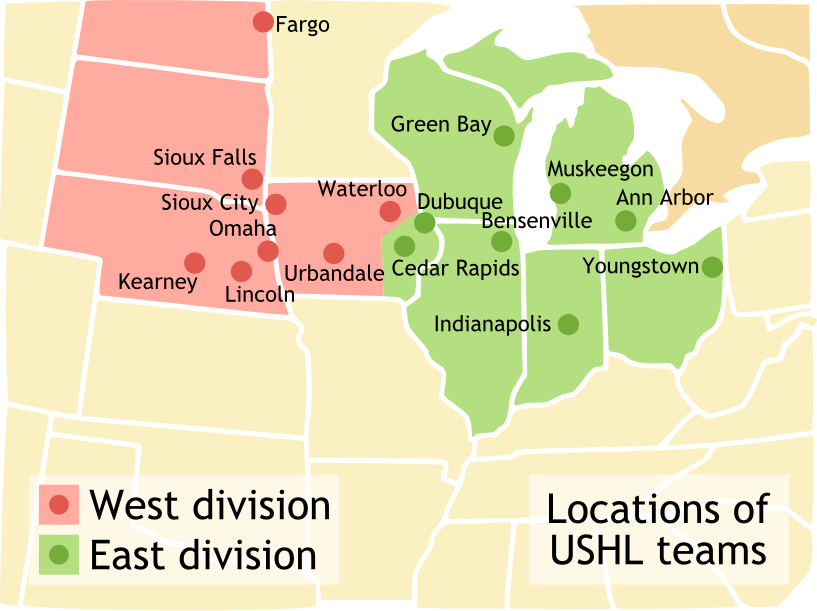
The USHL says the 2026-27 regular season will mark its 25th season as USA Hockey’s only Tier I junior league, and all 16 teams will play a 62-game cross-conference schedule. That kind of schedule only works if the league can reliably stock rosters with players in the same narrow age window, because the competitive balance depends on matching prospects at similar stages of growth.
USHL material also says the league has averaged more than 50 NHL draft selections over the past seven seasons. That steady draft presence is another sign that the roster model is not accidental. The age band, the petition process, the NCAA rules, and the tier system all point to the same goal: build a league where elite teenagers can be challenged without being rushed out of the amateur path.
For fans, that is the real answer behind every USHL lineup card. The league is not just fielding the best players it can find. It is building the right kind of team for a specific age window, a specific developmental mission, and a specific route to the next level.
Sources
- [1]ushl.sportngin.com
- [2]usahockey.com
- [3]ushl.com
- [4]teamusa.usahockey.com