Why wiffle ball still endures as a backyard classic
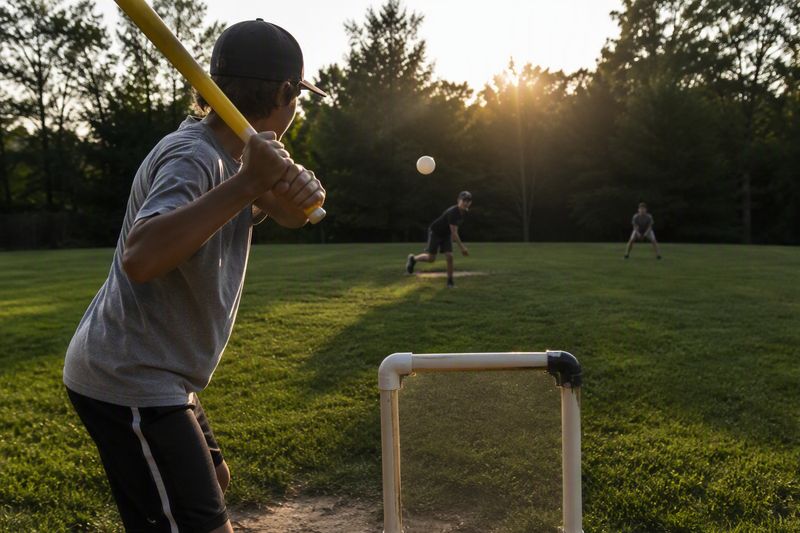
Wiffle ball survives for the simplest reason in sports: it is easy to start and hard to outgrow. A plastic bat, a slotted ball, and a patch of grass, sand, or driveway are enough to turn an ordinary afternoon into something that works for kids, parents, and the occasional former ace who still knows how to make the ball vanish late.
That accessibility is the story. Wiffle ball does not need a field crew, a ticket office, or a perfect budget. It fits into backyards, beaches, neighborhood tournaments, and improvised spaces where the stakes are low but the satisfaction is real.
A game built for any space
The best thing about Wiffle ball is that it scales to the space you have. In a narrow yard, a game becomes about placement and angles. On a beach or in a park, the same plastic ball can turn a few friends into a full afternoon of made-up rules, rough boundaries, and remembered arguments about what counts as fair territory.
That low-cost, homemade feel is not a side effect, it is the appeal. You do not need polished equipment to get a game going, and you do not need the same age, size, or skill level to make it competitive. That is why it keeps showing up across generations: one person is teaching another, someone older is trying to show off a curve, and everybody gets a turn.
The ball changes the whole game
Wiffle ball still feels like baseball, but the ball itself changes the terms. Its movement forces pitchers to care more about control than raw power, because the deception comes from the flight, not from how hard the throw comes in. That shift is what gives the game its edge: the pitcher has to create movement, and the hitter has to trust timing in a way that feels familiar but never quite stable.
That is also why the sport can look casual and still reward real skill. The lighter gear changes the rhythm, and the result is a game where a backyard pitcher can suddenly look brilliant if the ball cuts the right way. The Ringer captured that tension in 2019, describing competitive Wiffle ball as serious business for a segment of the sports-participation world, and that is exactly right. The gear may look like a childhood memory, but the decision-making can be sharp enough to keep scorekeepers busy.
From Fairfield backyard to American staple
Wiffle ball began in 1953 in Fairfield, Connecticut, when David N. Mullany watched his son play backyard baseball and set out to make a ball that could curve without breaking windows or overstraining young arms. Early prototypes were made from plastic perfume containers, a detail that still tells you almost everything about the sport’s DNA: cheap materials, practical invention, and a fix for a real backyard problem.
The name fit that same inventiveness. The Wiffle trademark reportedly came from dropping the “h” from “whiff,” turning a baseball word into something that sounded a little lighter and a little more playful. A WFSB feature later described the result as an American icon born from a backyard experiment in Fairfield, and the National Baseball Hall of Fame and Museum has published a history piece that places Wiffle ball within baseball’s broader cultural story. This is not just nostalgia talking. The game has earned a place in the sport’s memory because it solved a very specific problem and then outlived the problem it solved.
Why the Connecticut roots still matter
The product never drifted far from its home-state identity. NPR noted that the slotted plastic ball was still being made in Shelton, Connecticut, a detail that keeps the brand tied to a specific place instead of floating off into generic toy history.
That matters because Wiffle ball’s durability is not built on marketing gloss. It is built on a recognizable object that people can still picture in their hands, in a yard, or on a summer afternoon when somebody finds a bat and a ball and decides the game is on. The Connecticut roots give the sport a kind of authenticity that bigger, more polished products often lose when they scale.
The organized side of a backyard game
Wiffle ball is not only a nostalgia trip. By 2019, competitive play had grown enough to draw serious attention, and organized tournaments were already shaping a wider scene. Mid Atlantic Wiffle has hosted competitive tournaments throughout the greater Mid Atlantic and northeast since 2017, with its calendar built around a spring and summer season, while United Wiffleball has promoted linked events and a tournament pathway.
That is the useful contradiction at the center of the sport. Wiffle ball can begin as a game played with whatever space is available, then sharpen into something bracketed and regional without losing its original personality. One day it is a neighborhood toss-around; the next it is a tournament where the same deceptive flight and same low-cost equipment decide who advances.
The reason it lasts is not that it can beat bigger sports at their own game. It lasts because it never needed to. Wiffle ball can be set up almost anywhere, played by almost anyone, and passed from one generation to the next without losing the feeling that made it special in the first place.