Wiffle Ball began with a backyard experiment in 1953
Wiffle Ball was never an accident of nostalgia. It was a design answer to a very specific baseball problem: how to let kids throw movement pitches in a backyard without wrecking their arms or the windows around them. That simple brief, refined in Fairfield, Connecticut, produced a ball that still works because it solves the same problem every time it is tossed.
A backyard problem with a real baseball solution
The story starts in the summer of 1953, when 12-year-old David A. Mullany and a friend were improvising baseball with a plastic golf ball and a broomstick handle. The ball moved in strange, unpredictable ways, but the deeper breakthrough came from David’s father, David N. Mullany, a former semipro pitcher who understood the value of a pitch that breaks late. Out of work and, by the family’s account, forced to cash in his life insurance to keep mortgage payments current on the Fairfield home, he saw a product hiding inside the problem.
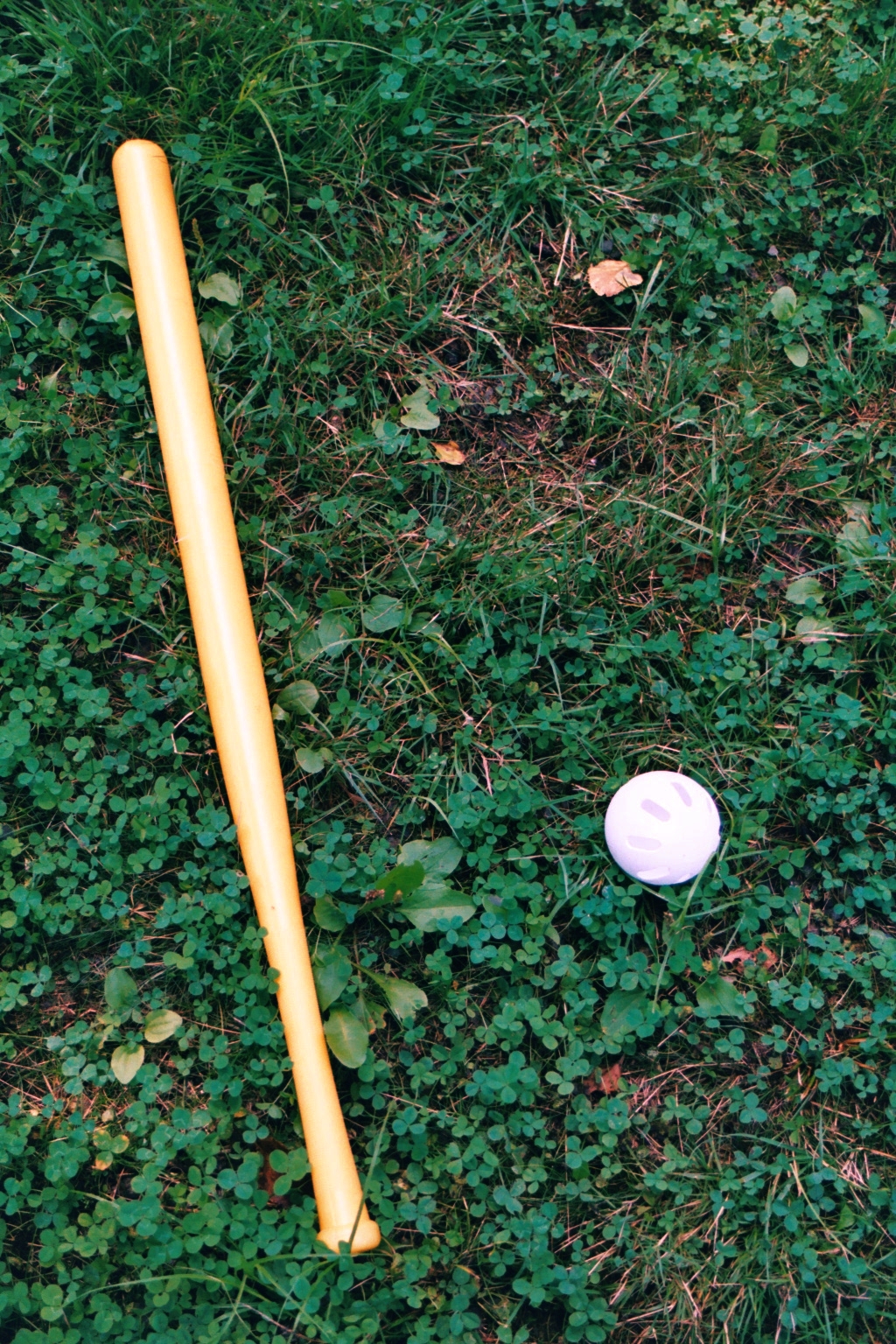
The early experiments used hollow plastic spheres originally intended for perfume packaging, and the Mullanys kept cutting different hole patterns until they landed on the familiar shape: eight oblong holes on one half of the ball. Even the name fit the invention’s plain purpose. David N. Mullany removed the “h” from “whiff” and turned a missed swing into a brand.
Why the design mattered immediately
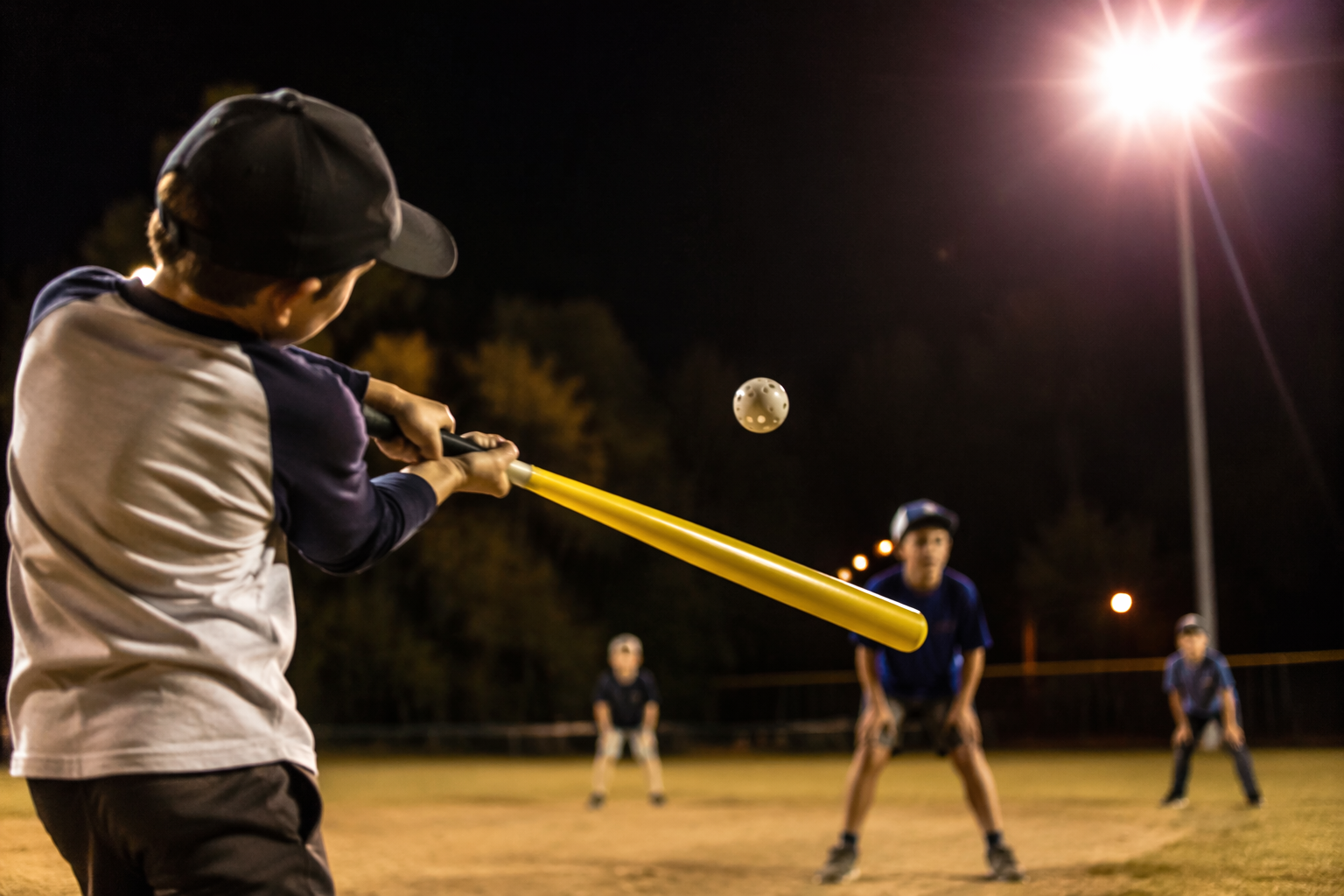
The finished ball weighed about two-thirds of an ounce, a fraction of a regulation baseball, which comes in at 5 to 5.25 ounces. That weight difference is not a footnote. It is the reason the ball is so easy to curve, lift, and fade in the air, and the reason a backyard pitcher can get sharp movement without major strain. The Strong National Museum of Play notes that the design made curve balls, sliders, and knuckle balls easy to throw, while the thin purpose-built bat helped produce more strikeouts.
That combination solved two problems at once. Suburban America did not have enough room for full baseball fields, and broken windows were a constant threat when games spilled into tight spaces. Wiffle Ball let players keep the craft of pitching without the full force of a hardball, which is why the game worked as both a toy and a serious version of baseball logic.
The patent trail matches that timeline. Google Patents lists US2776139A, titled “Game ball,” filed on February 18, 1954, with William F. Blamey Jr. and David N. Mullany as inventors. The patent was issued in 1957, locking in a design that had already proven its value in the backyard.
From a parking lot to a factory
The product’s early life was built on hustle as much as invention. The Baseball Hall of Fame says David N. Mullany financed the first run with a second mortgage, then sold the balls from a diner parking lot for 49 cents each. Sales moved to Canal Street in Manhattan before Woolworth began carrying them, a path that pushed Wiffle Ball from an improvised family idea into a retail item with national reach.
By 1959, the family was operating its own factory in Shelton, Connecticut, and that mattered as much as the patent. Wiffle Ball, Inc. had a product that could be made consistently, sold cheaply, and understood instantly the first time someone watched the ball dart out of the hand. That is how a backyard fix survives: the concept is simple enough to copy, but the geometry is hard to beat.
The marketing was small, but the message was huge
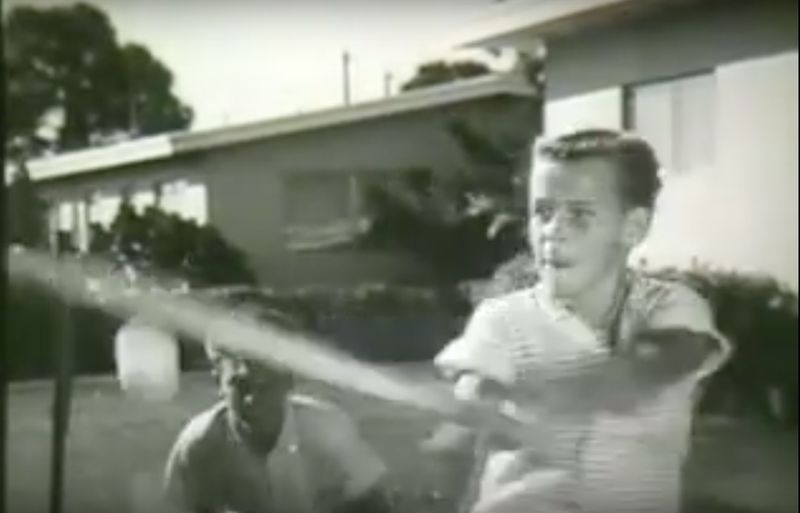
Wiffle Ball did not need a giant advertising machine to announce itself. The company’s biggest promotional push in the 1960s featured Whitey Ford in a black-and-white television ad, with the Yankees left-hander demonstrating how kids could throw a Wiffle ball “to throw a curve like a major leaguer.” That was the exact promise of the product, packaged in the credibility of a Hall of Fame pitcher.
The company also put old photos of Hall of Famers on packaging, using Lou Brock, Carlton Fisk, Tony Pérez, Jim Rice, Tom Seaver, Mike Schmidt, Willie Stargell, and Ted Williams to connect the toy to baseball’s biggest names. That move worked because it never asked the product to pretend it was something else. The ball did not imitate baseball. It distilled one of baseball’s most important skills, the breaking pitch, into a format any kid could use.
Why Wiffle Ball outlasted so many backyard games
Plenty of backyard games disappear because they depend on a temporary trend, a fad, or a patch of open space. Wiffle Ball endured because its design kept answering the same practical questions: how do you pitch without pain, how do you play without damaging the house, and how do you get enough movement to make the game interesting? The answer stayed the same from the first prototype to the production model.
The Strong National Museum of Play recognized that durability by inducting Wiffle Ball into the National Toy Hall of Fame in 2017. The honor fits, but it also understates the scale of the idea. A toy that teaches breaking pitches is not just a novelty. It is a stripped-down baseball system that can fit in a driveway, a backyard, or a small patch of grass and still feel like real competition.
How the game grew beyond the yard
The organized version of the sport followed the same logic as the original product. World Wiffle Ball says the first World Wiffle Ball Championship was held in the summer of 1980 in Mishawaka, Indiana, with eight teams. From there, the event grew into a five-person, miniature-field competition that has drawn thousands of teams over four decades, with regional stops in cities including Baltimore, Los Angeles, Eugene, Chicago, and Barcelona.
That path says more than the numbers do. The same design that helped one father get his son through a curveball became a framework for organized play because it still rewards movement, control, and deception. Wiffle Ball lasted because it did not try to be a bigger game. It stayed faithful to the problem that created it, and that is why the ball with eight holes is still here while most backyard games have already vanished.