Wiffle Ball championship built a hall of fame from sandlot roots
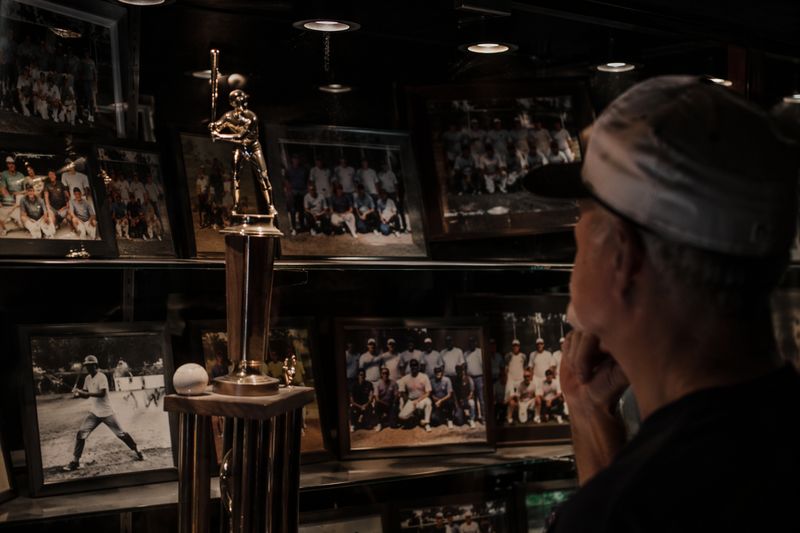
The World Wiffle Ball Championship turned a backyard pastime into a sport with memory, standards, and a Hall of Fame. What began in Mishawaka as a sandlot experiment now carries founders, charter members, honored figures, and a rulebook that gives the game a lineage as clear as its box score.
From sandlot roots to an organized championship
The championship was formally organized in 1980 at Mishawaka’s Bethel College Park, and its early shape came from a 1970s sandlot league at Strike’s Field. That origin matters because it shows the event did not simply borrow the look of organized sport; it built its own structure from informal play and then preserved that structure through institutions. Eight teams competed for the first world title in the summer of 1980, a small beginning that became the foundation for the championship’s long run.
Jim Bottorff is credited with founding the game and the tournament and with devising its rules and dimensions, while Larry Grau is listed as co-founder. Around them, the historical record names early champions and contributors who helped create the tournament’s identity: Steve “OB” Obren, Scott Ermeti, Mark “Gator” Waumans, Jim Wiesjahn, Dave Steinhilber, Perry Baert, Mike Schuster, Keith Hadary, and Dave Reed. Dan Reed also appears among the charter members, giving the championship a documented lineage rather than a loose nostalgia for summer games.
The Hall of Fame does more than remember names
The World Wiffle Ball Championship Hall of Fame is the clearest sign that this is not treated as a novelty act. It preserves a canon of founders, charter members, and contributors the way a serious sport preserves eras, styles, and signature figures. That gives players and fans a place to point when they talk about who built the game, who carried it, and who defined its standards.
One of the most vivid pieces of that institutional memory is also one of the simplest: Elaine Grau, Larry Grau’s mother, snapped a Polaroid of a young Larry taking his first poke at a Wiffle Ball. The tournament later made that image its iconic image for its first 35 years, a small family photograph elevated into a public emblem of the sport’s beginnings. That is what a Hall of Fame does at its best. It does not just decorate the past, it decides what the sport wants to keep seeing when it looks back at itself.
The rules keep the game recognizable
The championship’s legitimacy also comes from the way it protects the game’s core identity. WWBC games are played on miniature ball fields, and the rules page says teams may bat four or five players while four defenders are on the field at a time. That structure keeps the format lean and fast, but it also keeps Wiffle Ball distinct from baseball, even as it borrows the emotional logic of pitching, defense, and power.
The physical setup matters too. The championship’s own description of the event highlights a six-foot home run fence on a miniature field, where defensive players often leap high into the air and reach over the wall to rob home runs. Those are the kinds of plays that make the sport feel like more than a backyard echo of baseball. They create a specialized skill set, one built around timing, touch, positioning, and the athletic flair needed to turn a small field into a dramatic one.
A championship that spread far beyond Mishawaka
The tournament’s reach is one of the reasons it moved from local curiosity to a competitive institution. The official history says the championship has hosted thousands of teams over four decades, and regional stops have included Baltimore, Los Angeles, Eugene, Chicago, and Barcelona, Spain. That footprint shows a sport that no longer belongs to one town or one generation of players.
PBS Michiana has framed the event as a tournament that began in 1980 and still brings players together from all over, and the championship’s own current materials say it is now in its 47th year. The event is scheduled for August 15-16, 2026, at Crown Point Sportsplex in Crown Point, Indiana, after a 33-year run in Mishawaka. The move north of Chicago did not erase the sport’s roots; it showed that the championship could leave its birthplace and still carry its history with it.
The organization behind the event signals permanence
The World Wiffle Ball Commission gives the championship the kind of governance structure that helps a niche sport endure. Nate Hansen and Mike Baniak are listed as current commissioners, while Bottorff, Grau, Ermeti, Waumans, Baert, Rich Carrasco, and John Premetz are identified as commissioners emeriti. That list tells the story of continuity: the same network of builders and caretakers remains attached to the event’s present-day identity.
This matters because governance is part of legitimacy. A sport with commissioners, emeriti, a Hall of Fame, charter members, and archived history is not acting like a temporary stunt or a one-off festival. It is acting like a body of competition that expects to outlast any single season. The championship’s official materials reinforce that point by calling it the oldest, largest, and most prestigious plastic bat-and-ball event on the globe, a claim that may sound playful until you see the institutional scaffolding built behind it.
Mainstream attention followed the structure
The championship’s credibility did not stay inside the Wiffle Ball community. Its history says the event has been featured in ESPN The Magazine, Men’s Health, USA Today, and on Fox, CBS, ABC, and NBC-TV. That kind of exposure matters because media attention usually follows events that already know how to present themselves as durable, organized, and narratively rich.
Wiffle Ball did not become interesting to the broader public only because it was quirky. It became interesting because it had real personalities, real titles, real rules, and a real record of who came before. The Hall of Fame, the championship lineage, the commission, and the archived images all do the same job: they make sure the game remembers itself, and that memory is what keeps the sport legitimate.
Sources
- [1]worldwiffleball.org
- [2]pbs.org
- [3]enjoyillinois.com