Wiffle Ball’s strange design makes every pitch curve and dart
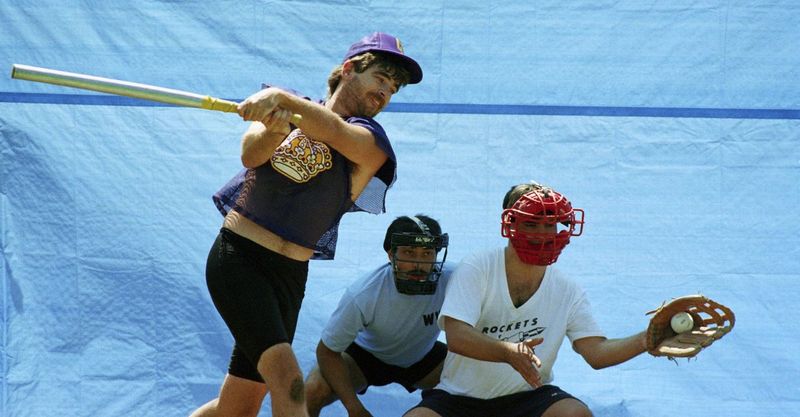
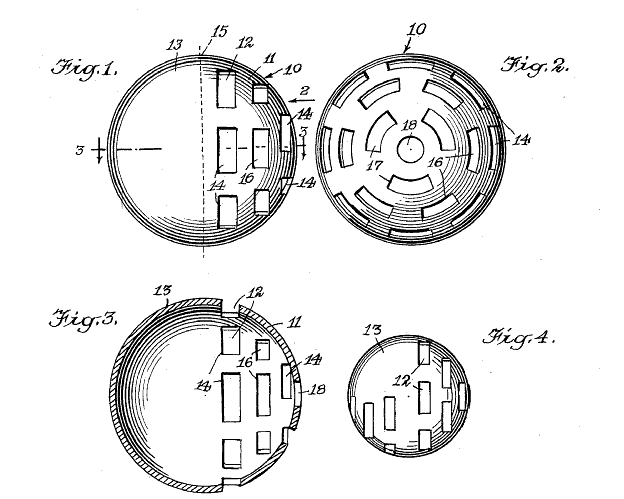
A Wiffle ball does not move like a baseball because it is not built like one. The classic ball has eight three-quarter-inch oblong holes on one half and a solid shell on the other, and that asymmetry is why the pitch can veer, dive, and buckle so violently. In Wiffle Ball, the equipment is the action: the ball itself creates the break hitters are trying to decode.
A backyard invention with a serious engineering problem
The ball traces back to 1953, when David N. Mullany is credited in historical accounts with inventing it in Fairfield, Connecticut. One Connecticut history account says the idea came to him one summer evening while he watched his son and his friends play baseball in the backyard, and William F. Blamey Jr. helped bring the product to market. The patent followed on February 18, 1954, and the name was spelled W-I-F-F-L-E to secure trademark protection.
That origin matters because the ball was never an accident of manufacturing. It was designed to be light, simple, and playable in a small space, then turned into a made-in-Connecticut icon as Wiffle Inc. continued production in Shelton. By the time a July 2008 Wall Street Journal video described the company’s hollow plastic ball as having spawned millions of backyard games, home run derbies, and leagues, the object had already outgrown its toy-store roots.
Why the holes make the pitch break so hard
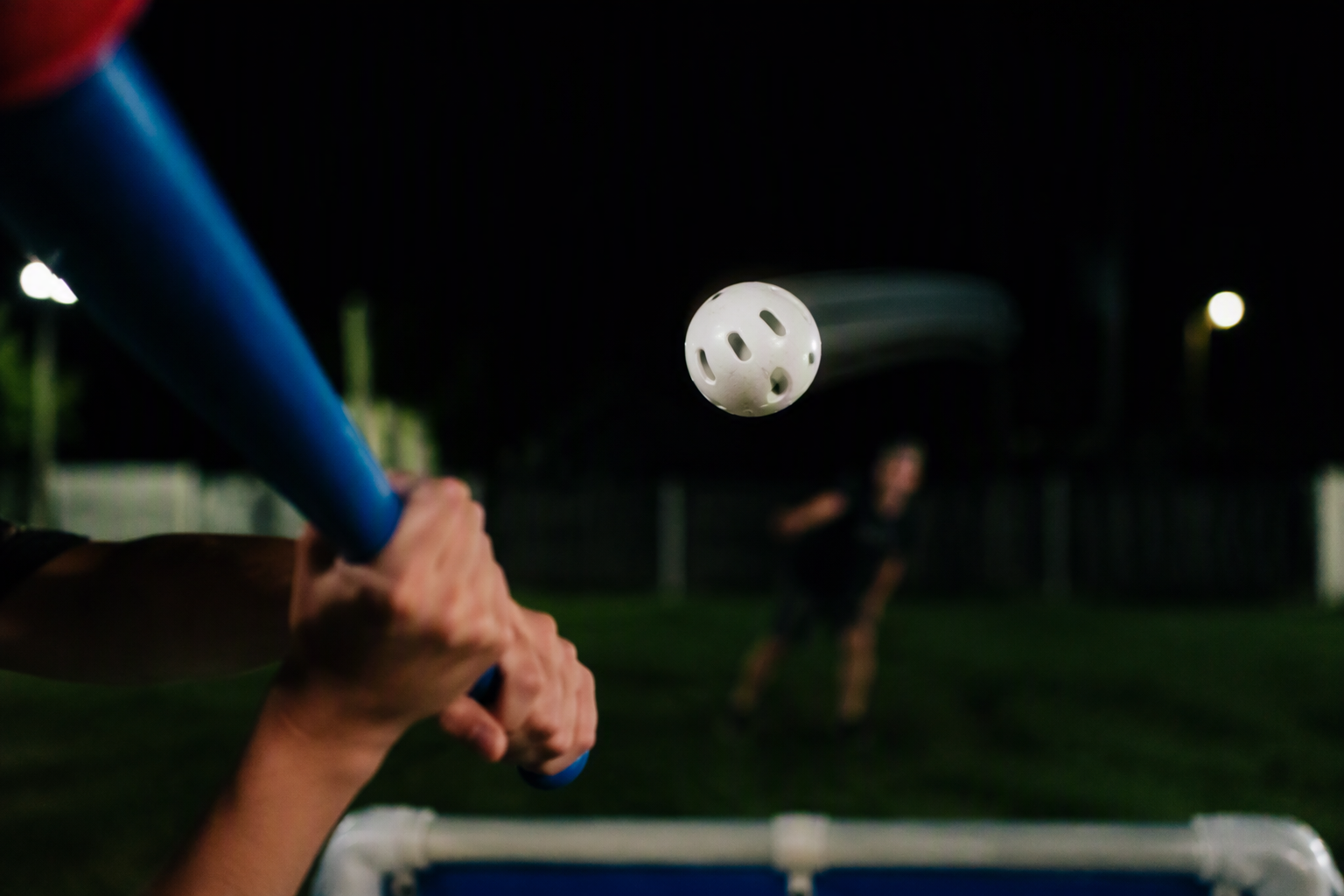
The physics starts with airflow. Jenn Stroud Rossmann’s September 2017 Atlantic piece on Wiffle Ball focused on how the hole-filled side and the smooth side do not interact with air the same way, and that difference is what gives the pitch its sharp movement. The ball is lightweight and hollow, so even modest changes in grip, wrist angle, or release point can create a huge difference in where it finishes.
A 2007 study, An experimental study of Wiffle ball aerodynamics, put numbers on that weirdness by finding airflow inside the ball at about 25 percent of the free-stream velocity outside it. The paper used Wiffle balls to teach boundary layer separation and transition to turbulence, which sounds technical until you watch the ball in flight: one side grabs air differently from the other, the flow detaches unevenly, and the ball snaps off course. That is the whole trick, and it is why a small plastic ball can appear to dart with almost cartoonish exaggeration.
What a pitcher is actually controlling
The shape of the break depends on how the holes face the air, how much spin is on the ball, and what angle it leaves the hand. In practice, that means Wiffle Ball pitching rewards command and repetition more than raw force. A pitcher who can keep the same release and orient the holes consistently can make the ball sweep, drop, or cut in ways that look impossible to anyone used to a conventional ball.
Rossmann’s later teaching work at Lafayette College showed how useful the ball is in a classroom, and an archived June 24, 2011 profile noted that she began using Wiffle balls in her classes to teach fluid dynamics. NPR’s Short Wave also featured the subject on March 30, 2022, calling it a lightweight alternative to baseball suited for back yard romping. The ball is easy to throw, but hard to master, and that gap is exactly why it keeps showing up in both science labs and sandlot games.
Why Wiffle Ball is not just baseball with less force
Baseball movement depends on seam-driven effects, including the Magnus effect and seam-shifted wake concepts, which are built around stitching, spin, and a more uniform sphere. Wiffle Ball goes bigger and weirder: the perforations create much larger airflow differences, so the motion is less subtle and often more dramatic than a baseball curveball. The low mass also means drag matters more, and the pitch can change character depending on speed or arm slot in a way that would barely register on a baseball.
That is why Wiffle Ball has developed its own ecosystem of specialist pitchers, strike-zone-based leagues, and backyard tournament formats. The game does not borrow baseball’s movement, it exaggerates the physics into something that looks familiar at the release point and then suddenly falls apart. Popular Science, Forbes, NPR, and other physics-minded outlets have returned to the pitch for the same reason: it is a clean, visible demonstration of fluid dynamics that anyone can watch from ten feet away.
A sport that stayed because the design stayed strange
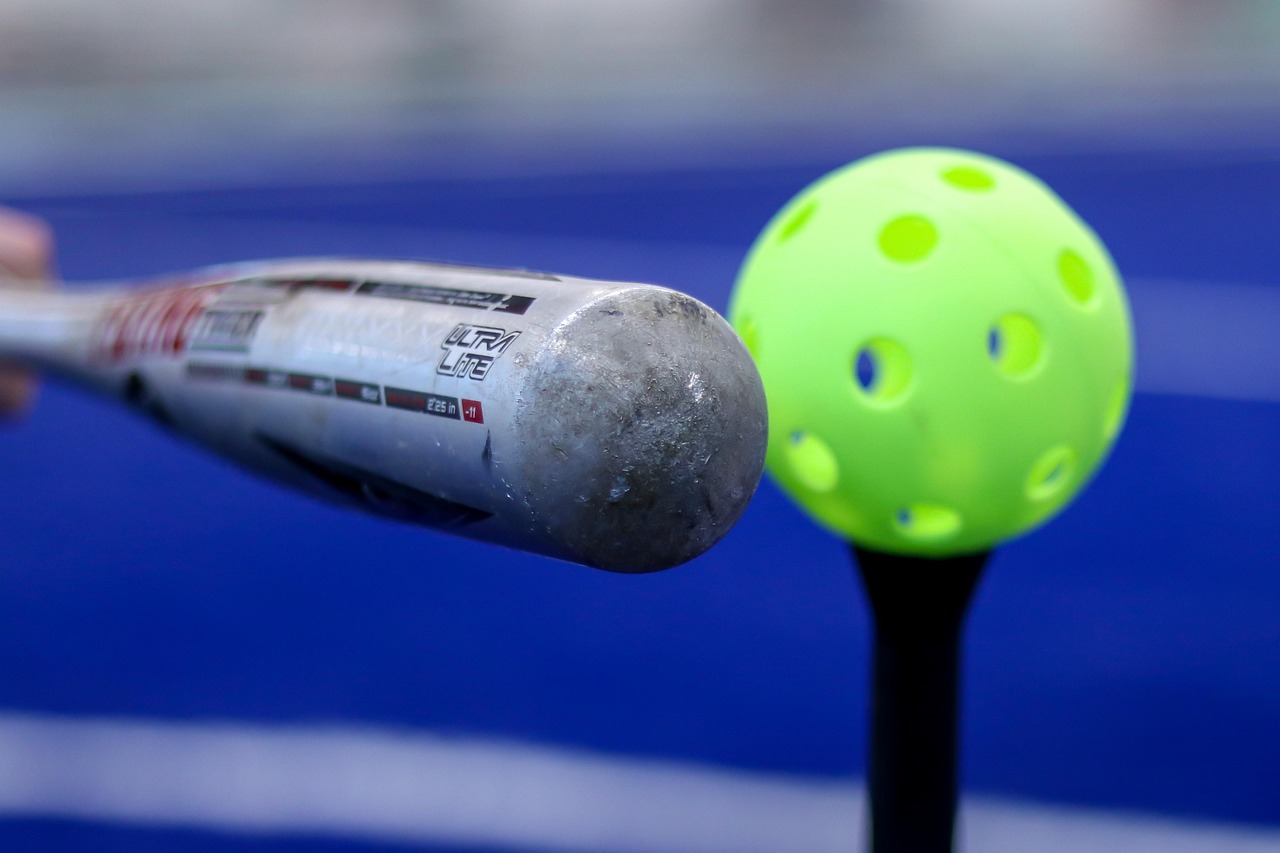
The organized side of the game is older than many people realize. Rossmann’s Atlantic article referenced the 1991 World Wiffle Ball Championships, a sign that the sport had already built tournament culture by then. That same durability shows up in the product history: Wiffle Inc. kept making the ball in Shelton, Connecticut, and the hollow plastic design remained almost untouched while the culture around it kept growing.
The reason the sport endured is the same reason the pitch still surprises hitters. A Wiffle ball is simple enough to be thrown in a backyard and peculiar enough to reward obsessive feel. The holes, the low mass, and the spin do not just make it curve and dart, they make the entire game a test of how well a pitcher can control a tiny object that never really wants to fly straight.
Sources
- [1]theatlantic.com
- [2]news.lafayette.edu
- [3]npr.org
- [4]pubs.aip.org
- [5]popsci.com
- [6]forbes.com
- [7]news-herald.com
- [8]todayincthistory.com
- [9]youtube.com