Winona State women’s ultimate survives on grit, smiles and small wins
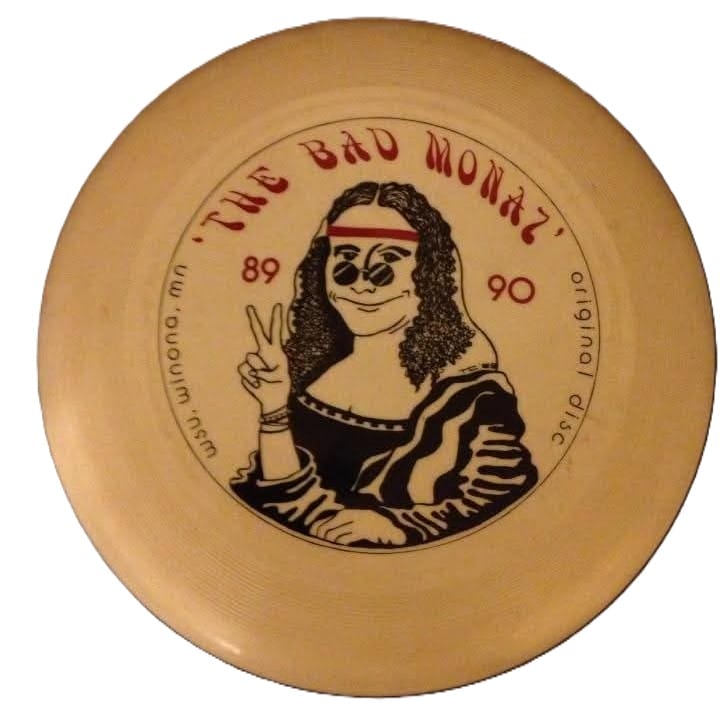
Winona State’s Bad Monaz do not survive on depth. They survive by making a 10-player roster feel bigger than it is, by stretching weekends into something manageable, and by treating positivity as part of the competitive toolkit. In a Division III landscape where a few injuries or one bad travel week can unravel a season, the Monaz have built a program that keeps showing up, keeps laughing and keeps playing.
A program built to last
The team’s roots go back to 1988, when Angie Ogren founded the Winona State women’s ultimate program. That history runs alongside the men’s Mississippi Valley Kling-Onz, which Tim Mackey started in 1978, giving Winona State one of the deeper ultimate lineages in Division III. In September 2018, more than 100 members of the university’s “Ultimate Family” returned to campus for the clubs’ 40th anniversary, and an Ultimate Scholarship launched in 2008 had raised more than $125,000 by April 2019.
That kind of institutional memory matters because Winona State has never had the luxury of looking like a fully funded, comfortably stocked powerhouse. The program’s identity is tied to continuity: players come and go, but the expectation that the team will exist, practice and travel remains. For a small college program in Winona, Minnesota, that is not just tradition. It is infrastructure.
What a 10-player roster really means
Ultiworld’s April 9, 2026 regionals preview captured the reality plainly: Winona State had ten rostered players, and it often played full weekends with only seven, sometimes choosing to play points with only six to save legs. That is a brutal setup even before the summer heat, travel fatigue or a single nagging injury enter the picture. In ultimate, where bodies and stamina shape every possession, a roster that thin can turn a tournament into a test of damage control.
The Monaz still managed to stay in the national conversation. Ultiworld ranked Winona State No. 14 in its College D-III Women’s Power Rankings on May 7, 2026, a reminder that this is not merely a novelty roster. It is a team good enough to matter despite the math working against it. By the time the North Central D-III Women’s Conferences field came together, Winona State was in it alongside Wisconsin-Eau Claire and Wisconsin-Stevens Point, still fighting for results in a bracket that does not bend for roster size.
Smiles are part of the system
The most revealing detail in the profile is not tactical at all. Juliah Hahm describes the group as almost always positive at practices and games, with fun treated as a deliberate part of how the team gets through difficult stretches. That sounds simple, but for a squad that has to squeeze value out of nearly every point, joy is a work habit, not a luxury.
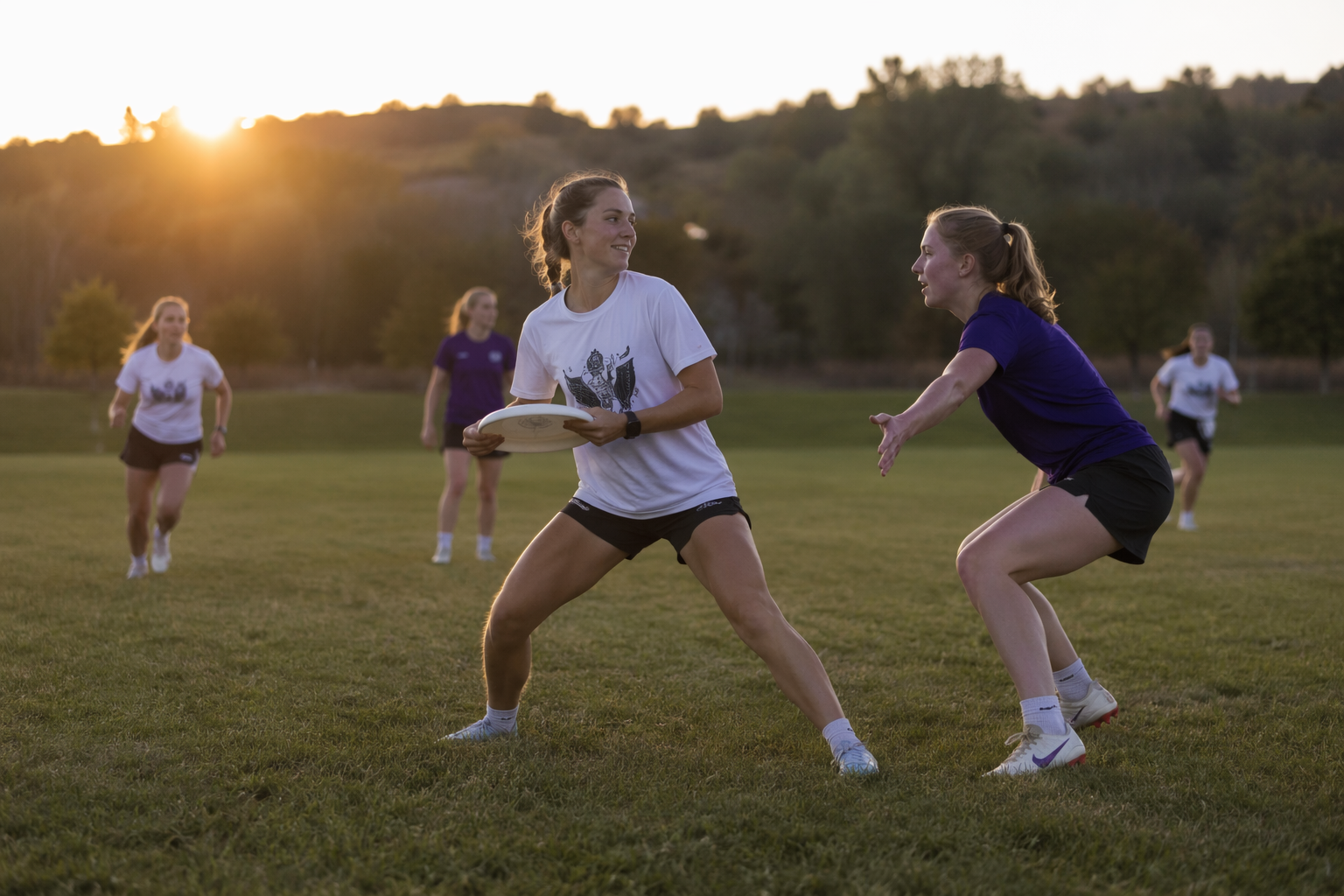
That is what makes the “smiles” part of the story feel earned. On a roster this small, the usual sources of program stability, deep lines, easy substitutions, built-in rest, are missing. What replaces them is an everyday culture where players keep each other loose, keep each other invested and keep the mood from collapsing when the legs get heavy. Small wins matter here because small wins are often the only kind available: a clean hold, a survived point with six bodies, a road weekend finished intact.
Scrappy is not the whole story
The obvious labels for Winona State are gritty and scrappy, and they fit. But those words only describe the surface. What actually keeps the program alive is the human infrastructure underneath: the friendships, the shared memory of alumni, the willingness to travel and compete under conditions that would break a less bonded team. The Monaz are a case study in what happens when belonging is strong enough to substitute for resources.
That broader Division III context is part of the point. USA Ultimate held the 2026 D-III College Championships from May 16 to 18 in Waukegan, Illinois, where Middlebury won both the men’s and women’s titles and completed the first-ever sweep of both divisions. In a field like that, bigger programs can lean on depth, while smaller ones like Winona State have to create durability from culture. The gap is real, and the Monaz make their answer to it just as real.
Why Winona State still travels well
The Monaz matter because they show what a small program can still do when it commits to staying recognizable to itself. The roster is tiny, the weekends are long and the margin for error is thin, but the team’s identity has lasted for decades because it is built on habits that can be repeated: show up, stay positive, celebrate what you can and keep moving.
That is the competitive value of the Winona State model. It does not promise a fairy tale season, and it does not need one. It proves that in Division III ultimate, survival itself can be an achievement, and that a team held together by history, smiles and small wins can remain genuinely dangerous.