World Dodgeball Federation explains why cloth and foam use different rules
World dodgeball is no longer being managed as one sport with cosmetic tweaks. The World Dodgeball Federation now treats cloth and foam as distinct competitive codes, each with its own rulebook, its own flow, and its own tactical demands. That split reaches beyond the page: it changes how teams build rosters, how officials manage a match, and how players approach risk in the final seconds of a set.
Two codes, one federation
The WDBF’s rules hub says the active rules document is the one carrying the latest revision date, and it keeps earlier major rulebooks available for viewing and comparison. That matters because the federation is not just publishing edits, it is managing a transition between two live competitive identities, with cloth and foam now moving on related but separate tracks.
In May 2026, the federation said the revised framework was built through consultation with athletes, referees, continental confederations, national federations, and technical leaders. The aim was clear: better officiating consistency, stronger athlete safety, cleaner match flow, and tighter alignment between international and continental competition. Those goals explain why the split is more than administrative housekeeping. It is the federation’s way of acknowledging that cloth and foam ask different questions of teams from the opening throw to the final whistle.
Why foam plays like a sprint
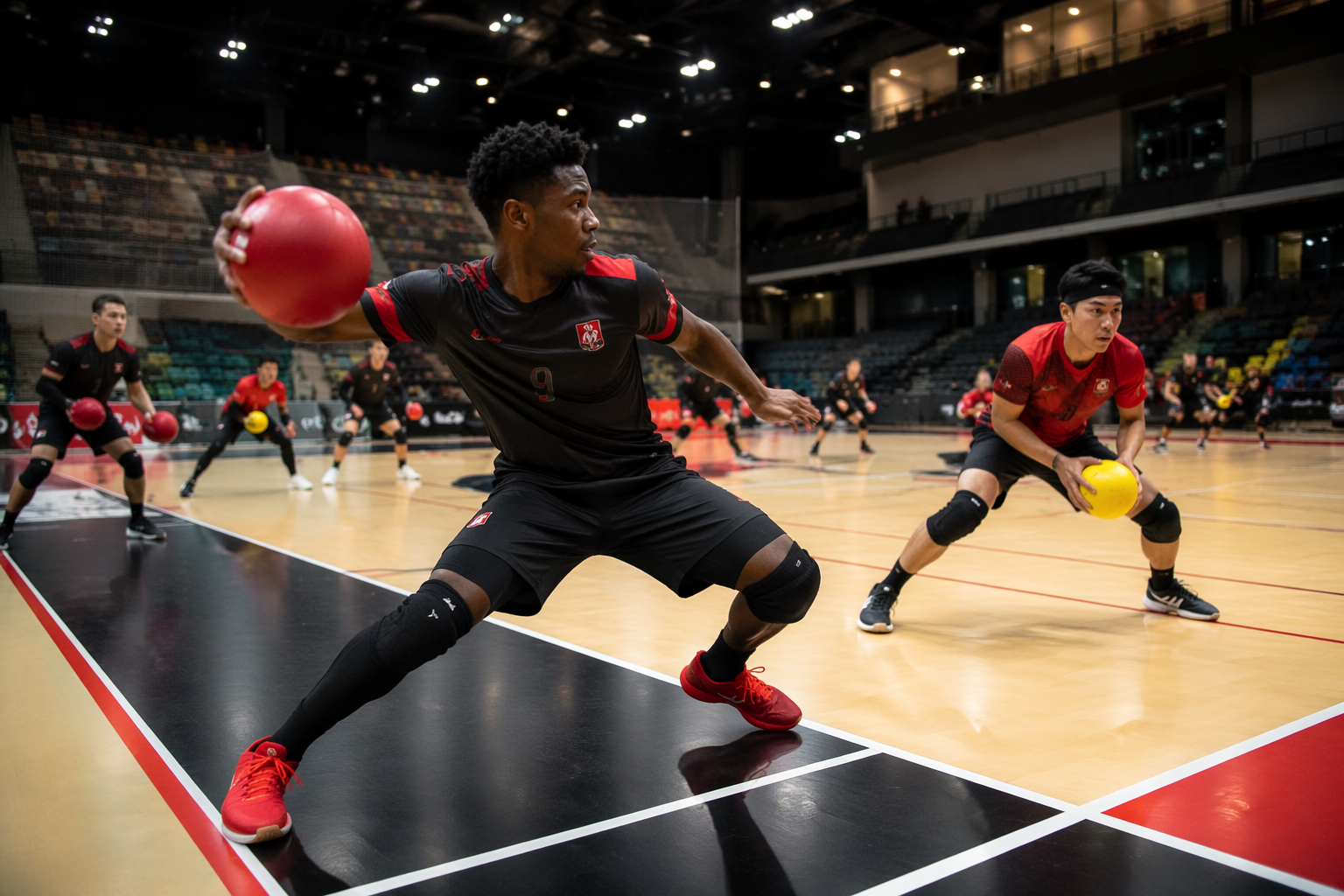
The 2026 foam rulebook leans into speed. Each set runs up to three minutes, and the rules explicitly define both the half clock and the set clock. Even the Start Signal is flexible, since it can be a whistle, a visual signal, or both. That structure compresses decision-making and gives foam matches a sharper, more urgent rhythm than a format built around longer possessions.
The foam change log also points to tighter match-flow structure and clearer no-blocking behavior near the end of a half. In practical terms, that pushes players to throw earlier, catch under more pressure, and reset faster after each exchange. When a format is built around short, time-managed sets, every clean catch or missed lane changes the entire feel of the game, not just the scoreline. The result is a code that rewards quick hands, disciplined spacing, and immediate recognition of when a possession has turned.
Why cloth asks for different discipline
Cloth is being refined in a different way. The 2026 cloth rule changes include clearer wording for side choice, a rule allowing players to act as team leaders when they are not active, and a blue-card mechanic that can keep a team short-handed for the rest of the current set and the entire next set. Those are not cosmetic revisions. They directly affect substitution timing, endgame urgency, and how coaches balance aggression against the cost of a disciplinary mistake.
That blue-card penalty is especially consequential because it stretches punishment across set boundaries. A team cannot simply treat a late foul as a momentary setback if it risks carrying a manpower disadvantage into the next set as well. The cloth rulebook also spells out formal match-official roles, including head referees, line referees, scorekeepers, and timekeepers, which shows how structured the elite game has become. Cloth is not the casual, improvised version of dodgeball many people remember. It is a highly managed code with its own governance logic and its own pressure points.
The governance story behind the split
The federation’s September 2025 technical planning makes the split even clearer. For the 2025-2027 cycle, the Technical Committee was told to support a single ruleset for cloth while reviewing the foam ruleset for clarity based on member feedback from the previous two years. That tells you where the federation sees consensus and where it sees room for refinement: cloth is converging toward one international standard, while foam continues to be polished for consistency and readability.
This is part of a longer management cycle, not a one-off redesign. The WDBF says it first formed in July 2011, drafted its first mandate on July 20, 2011, and issued its first ruleset on August 10, 2011. By 2025, it said it was supporting dodgeball in more than 100 countries and across all seven continents. The organization has grown alongside the need to keep its codes distinct without letting them drift apart completely.
The federation’s decision to keep previous major rulesets available for comparison also helps national and territorial organizations manage changeovers. That is a practical detail, but it reveals the business of modern sport governance: if you want clubs, referees, and federations to shift cleanly between versions, you need a clear archive, not just a new PDF.
The world championship test case
The biggest proof of the split came at the 2024 World Championships in Graz, Austria, held from August 11-17, 2024. The WDBF said the event drew more than 1,300 participants from 123 teams and 35 countries, and later described it as the largest in the sport’s history, with more than 1,400 athletes and officials from 36 countries. It also said the tournament featured six divisions: foam men, foam women, foam mixed, cloth men, cloth women, and cloth mixed.
That six-division structure is the clearest sign that cloth and foam are now functioning like separate competitive ecosystems. The championships also featured representation from all six continents, which the federation called a first for international dodgeball. That is a genuine milestone for a sport that once sat on the margins of organized competition. It now has enough reach to stage parallel elite pathways within one world event.
The 2024 championships also build on Edmonton 2022, which the federation identifies as the previous major benchmark and the first World Championships to feature cloth and a mixed division. The 2022 update placed cloth and foam in a single rules document, which shows how the two-code structure was once managed under one umbrella before the 2026 split became explicit. Graz made the separation visible at scale, not just on paper.
Modern dodgeball’s split identity is now official in practice as well as language. Cloth and foam share a federation, a global calendar, and a championship stage, but they no longer play like simple variations of the same sport. Their rulebooks shape pace, safety, officiating, and roster construction in different ways, and the WDBF is treating that difference as the defining feature of the game’s next chapter.