World Dodgeball Federation rulebook defines court, gear, and game control

The World Dodgeball Federation’s 2024 rulebook makes one thing clear fast: sanctioned dodgeball is not a loose schoolyard free-for-all. It is built on formal sections for facilities and equipment, participants, playing formats, timing, scoring, opening rush, throwing, outs, and attempts, and every one of those categories affects how a match is played, officiated, and watched.
The court is smaller than the chaos suggests
The official WDBF court measures 18 meters long by 9 meters wide, a fixed rectangle that gives the game its speed and its edges. That size matters because every inch of space is under pressure from the opening rush onward, and the reduced floor area forces quicker throws, tighter dodges, and fewer dead possessions than a casual pickup game on a random gym floor.
The rulebook’s definitions are just as important as the dimensions. A catch is complete only when the catching player has control of the ball, and a ball is considered in a team’s possession when it is on that team’s half of the court. Those sound like small wording choices until a match gets messy: they help officials decide disputed catches, simultaneous touches, and whether a team is still legally applying pressure after a transition. In a fast invasion sport, that kind of precision is the difference between a clean ruling and an argument that stalls the game.
Foam and cloth are official, but they do not play the same
The federation publishes official rules for both foam and cloth dodgeball, which is one reason the sport has more depth than it gets credit for. The same governing body is in charge, but the ball type changes the shape of the match: handling, flight, catching, and risk all shift depending on the format. That means sanctioned dodgeball is not one universal style with different uniforms on top; it is a family of formats with the same competitive spine and different tactical rhythms.
That split also explains why the rules spend so much time on equipment instead of pretending the ball is just a ball. Foam and cloth create different bounce, grip, and catch profiles, so the sport has to standardize the rest of the environment if it wants fair competition across leagues, countries, and event sites. Once you know that, the variety of sanctioned matches makes sense: the federation is not trying to flatten the sport, but to control the variables that would otherwise turn every court into its own private game.
Gear rules are where safety meets fairness
The WDBF equipment rules cover headgear, casts and prostheses, gloves, jewelry, goggles, shoes, and other equipment or substances. That list tells you exactly what the sport is trying to manage: safety, consistency, and no hidden edge from hard or distracting accessories. It is also a reminder that dodgeball has moved far beyond the classroom dodge-and-throw version most people remember.
Safety guidance in Ontario for school dodgeball points in the same direction. That guidance recommends soft objects such as foam balls, sponges, beach balls, elephant-skin balls, or utility balls, and it says not to use under-inflated balls, beanbags, or hard flying discs. The logic is simple: if the object can sting, wobble unpredictably, or create unnecessary impact risk, it does not belong in a setting that is supposed to keep play controlled.
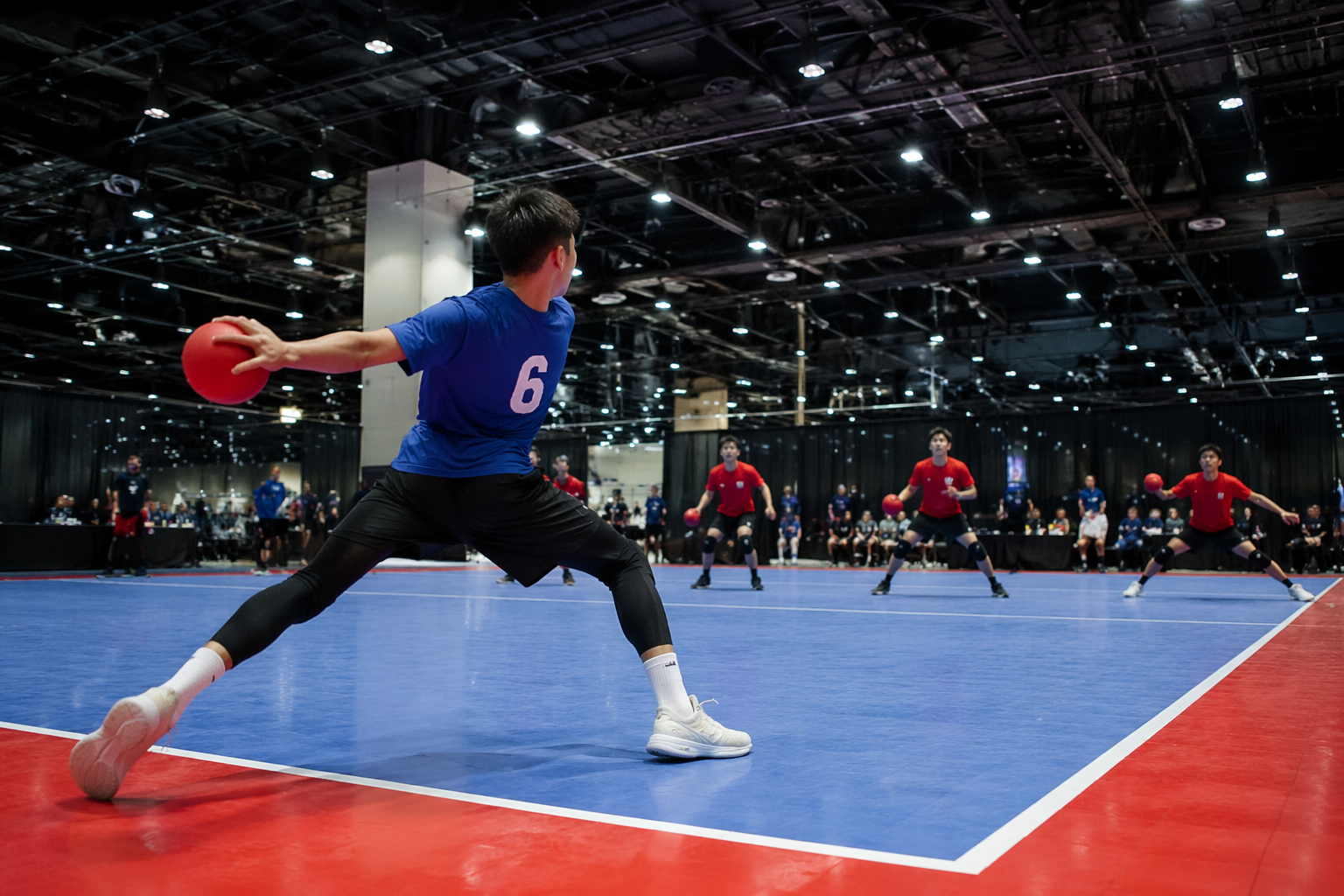
Uniformity matters too. When one athlete shows up with rigid gear, loose jewelry, or equipment that changes how a ball might hit or stick, the match stops being about throwing and catching skill. The federation’s list of controlled items keeps the focus on reaction, accuracy, and court judgment rather than improvised protection or accidental advantage.
The 2024 changes were built for cleaner officiating and easier viewing
The federation says its rules committee changed the 2024 rule set in response to feedback from the dodgeball community, and one of the clearest goals was to spell out penalties for violations more explicitly. That kind of revision is not cosmetic. In a sport built on quick call-and-response decisions, clearer penalties reduce the gray area that slows officials down and frustrates teams.
The same update moved team areas to the same side of the court so one timing and scoring device can be used and both teams can see it clearly. That is a practical fix with real competitive consequences: fewer sightline disputes, less confusion over the clock, and a cleaner game state for players and spectators. The reset time between sets was also standardized to 30 seconds, which makes the rhythm of a match more predictable and easier to present in broadcast form.
Those changes show where the sport is headed. The rulebook is not just trying to settle arguments at the line; it is trying to make dodgeball easier to run live, easier to officiate consistently, and easier to follow on television. When the clock, the reset, and the bench setup all work the same way every time, the match feels faster because the stoppages are shorter and the structure is clearer.
The federation’s footprint explains why the details matter
The World Dodgeball Federation says it is the international governing body for the sport, and its LinkedIn profile says it was formed in 2012 and is headquartered in Edmonton, Canada. It also says the federation is active on six continents and in more than two dozen countries, which is exactly why standardized rules have to do more than make one local league happy. A court in one country has to mean the same thing as a court in another if rankings, championships, and cross-border competition are supposed to be real.
That global push has history behind it. The first WDBF World Championships were held in 2012 in Kuala Lumpur, Malaysia, and the federation maintains global rankings as part of its competitive structure. Once a sport has world championships, rankings, and international governing language, the little things stop being little. Court size, possession, control, gear restrictions, and reset timing become the backbone of comparability from one event to the next.
The federation’s own phrase captures the transition: “We’re from your playground, in your gymnasium, on your TV.” That is the whole story in one line. Sanctioned dodgeball still borrows its basic instinct from the playground, but the WDBF rulebook is what turns that instinct into a sport with measured space, defined control, regulated equipment, and a broadcast-friendly pace that can hold up under pressure.