World Games gives ultimate its biggest global stage
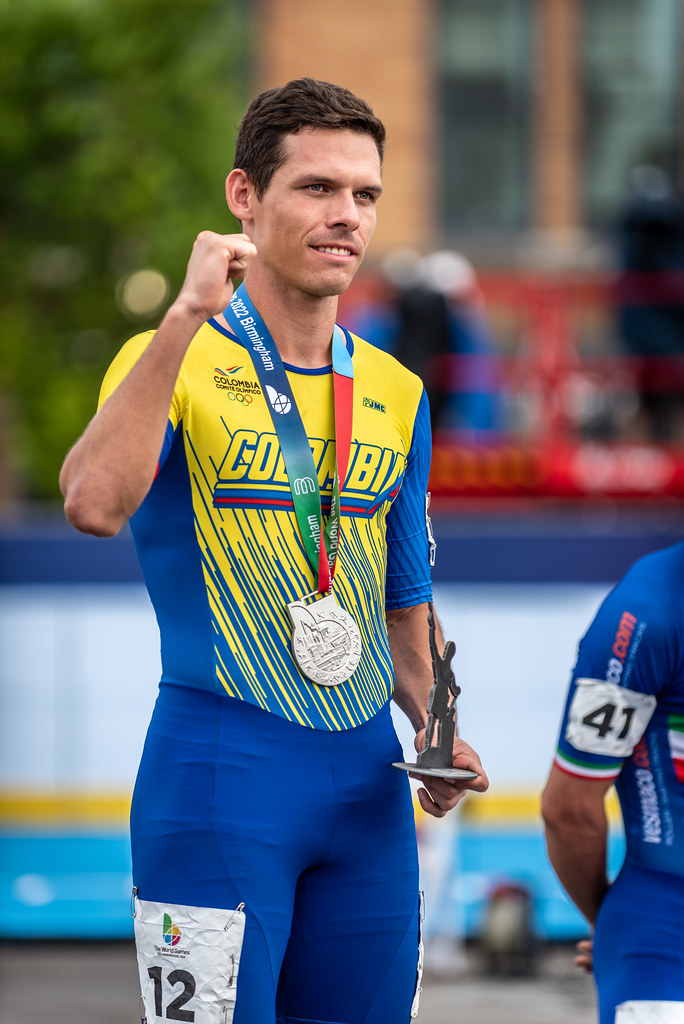
The World Games gives ultimate a rare advantage: a short, medal-driven tournament that even casual sports fans can decode in one glance. In Birmingham, the sport sat inside an 11-day festival with 34 sports, 58 disciplines, 223 medal events, 3,457 athletes, and 99 nations, but ultimate itself came down to eight qualified teams and one mixed-gender title. That compact setup is why the event feels bigger than a single championship and easier to explain than a long season.
Why the World Games reads so clearly
The International World Games Association stages The World Games every four years under IOC patronage, and its own framing says the event is meant to showcase the world’s best athletes while aiming to match or even exceed the importance of world championships for the sports involved. For ultimate, that is the entire selling point: the sport is pulled out of a calendar of league tables and dropped into a concise international contest where medals matter more than accumulated points.
Birmingham 2022 showed how large that stage really is. More than 2,000 entries were on the qualification database, including 1,500 quota places and 553 entries by name, which makes the eight-team ultimate field look even more selective. The gap between the overall festival and the sport-specific bracket is exactly what makes the World Games so legible: viewers can understand immediately that this is not every team in the world, only the one compact field that survived qualification.
What makes ultimate fit the event
Flying disc has been a medal sport at The World Games since 2001, and that history gives the competition real institutional weight. The Birmingham field was the United States as host, plus Australia, Canada, Japan, Colombia, Great Britain, France, and Germany, all playing ultimate in the mixed gender team discipline. That format matters because it presents the sport in the form most recognizable to many of its best national programs, and it does so in a way that is easy to explain on a broadcast.
The competition ran July 12-16, 2022, at John Carroll Catholic High School in Birmingham, Alabama. WFDF framed Birmingham as the competitive pinnacle of ultimate, and president Robert “Nob” Rauch said the event felt especially meaningful after pandemic lockdowns had limited international competition. That context sharpened the tournament’s value: a brief, high-level gathering where national teams could finally meet in one place under medal pressure.
The broadcast package also helped make the event feel bigger than a niche championship. Coverage was free on the Olympic Channel, twelve preliminary and consolation matches were produced by Ultiworld, and Evan Lepler anchored the commentary. For a sport that often asks new viewers to learn its rhythms quickly, that kind of presentation matters. It gave ultimate a familiar media frame while keeping the international emphasis front and center.
Why the format carries the story

The mixed gender setup gives The World Games a cleaner hook than many other elite ultimate events. A casual viewer does not need to follow a months-long league race to understand what matters here: country against country, one bracket, one set of medals, one champion. That simplicity is powerful in a multisport festival, where the sport has only a short window to introduce itself to people who may be sampling it between other events.
The results in Birmingham underline how sharp the competition was. The United States beat Australia 13-11 in the gold-medal game, while Colombia defeated Germany 13-11 for bronze. The semifinals were just as tight, with the United States edging Colombia 13-11 and Australia slipping past Germany 13-12. Those scores tell the story of a field that was small, elite, and close enough that every possession mattered.
That kind of drama translates well because the World Games offers built-in hooks that are not always available in a season-long competition. There is a host city, Birmingham; a short run of dates, July 12-16; a recognizable venue, John Carroll Catholic High School; and medal races that can be summarized in one line. The event also uses existing venues and rotates sports around host-city infrastructure, which helps explain why ultimate can appear as a polished showcase without needing a permanent global circuit of its own.
The lineage behind the stage
Birmingham was not an isolated showcase. The World Games debut for flying disc ultimate came in Akita, Japan, in 2001, where Canada won gold, the United States took silver, and Japan earned bronze. That result establishes a 20-plus-year World Games lineage for the sport, and it shows that the event has long been more than a one-off stop on the calendar.
The broader structure around flying disc also reinforces that point. The IWGA lists Flying Disc as a World Games sport with two disciplines, Disc Golf and Ultimate, and WFDF has been an IWGA member federation since 1995. That institutional link matters because it keeps ultimate inside a recognized global sports framework, not floating as an exhibition or a novelty.
For ultimate, The World Games is not the only championship that matters, but it is the one that packages the sport most cleanly for the widest audience. The four-year cadence, the mixed-gender format, the short eight-team field, and the medal stakes turn a complex sport into a clear international story. That is why the event remains ultimate’s biggest global stage and its easiest one to understand at a glance.