World Wiffle Ball Championship crowns dynasties since 1980
The World Wiffle Ball Championship looks like a backyard game until you read the ledger. Once you do, it becomes clear this is a sport with memory: champions are tracked from 1980 to the present, the Hall of Fame has its own page, and the event’s social bios call it the "oldest and baddest wiffleball tournament on the planet." That kind of record-keeping does more than celebrate winners. It gives the game a canon, the same way a true pro league builds history through repeat champions, recognizable eras, and names that keep coming back.
The champions page is the sport’s record book
The all-time champions list is the cleanest proof that the tournament has matured into an institution. It does not read like a random pile of summer results. It reads like a lineage, with recent titles attached to specific teams and repeat winners marked as multiple-time champions, including New Carlisle Newts (2) and Cult West Warriors (5). The top of the modern ledger alone shows the rhythm of the sport: Lombard Lightning won in 2025, Wiffle Dees in 2024, Clutch Players in 2023, New Carlisle Newts in 2022 and 2021, and Cult West Warriors in 2020.
That sequence matters because it separates one-off novelty from sustained excellence. A championship list that stretches from 1980 forward lets fans trace the game the way baseball fans trace pennants and dynasties. It also tells new players where the standard lives: not just in one champion, but in repeat contenders who force the rest of the field to chase them year after year.
Dynasties define the middle of the timeline
The clearest evidence of competitive eras comes from 2004 through 2015, when the balance of power shifted hard. A 2019 Skokie Park District account of the sport’s "power shift" said Club Ripped knocked off seven-time champion Blue Ribbon Builders in 2004, a result that cracked open the old order. After that, Club Ripped, Funky Plastic Offspring, and the Balco Boys became the "Power Three," and those three teams won every World Wiffle Ball Championship between 2006 and 2015.
That stretch gives the tournament the kind of folklore most amateur sports never get to claim. Blue Ribbon Builders set an early bar with seven titles, then Club Ripped broke through, and the next decade belonged to a closed circle of Indiana teams that kept trading the crown. When a competition can point to a single rivalry that changes the sport’s hierarchy, it has already crossed from casual pastime into defined championship culture.
The Hall of Fame turns winners into memory
The World Wiffle Ball Championship does not stop at the champions page. Its Hall of Fame page adds another layer of permanence, and the record is specific enough to feel almost ceremonial. A July 20, 2019 post from the event’s own history notes said Scott Soos became the 40th person inducted into the World Wiffleball Championship Hall of Fame, and that 1988 and 1993 t-shirts were enshrined during the ceremony.
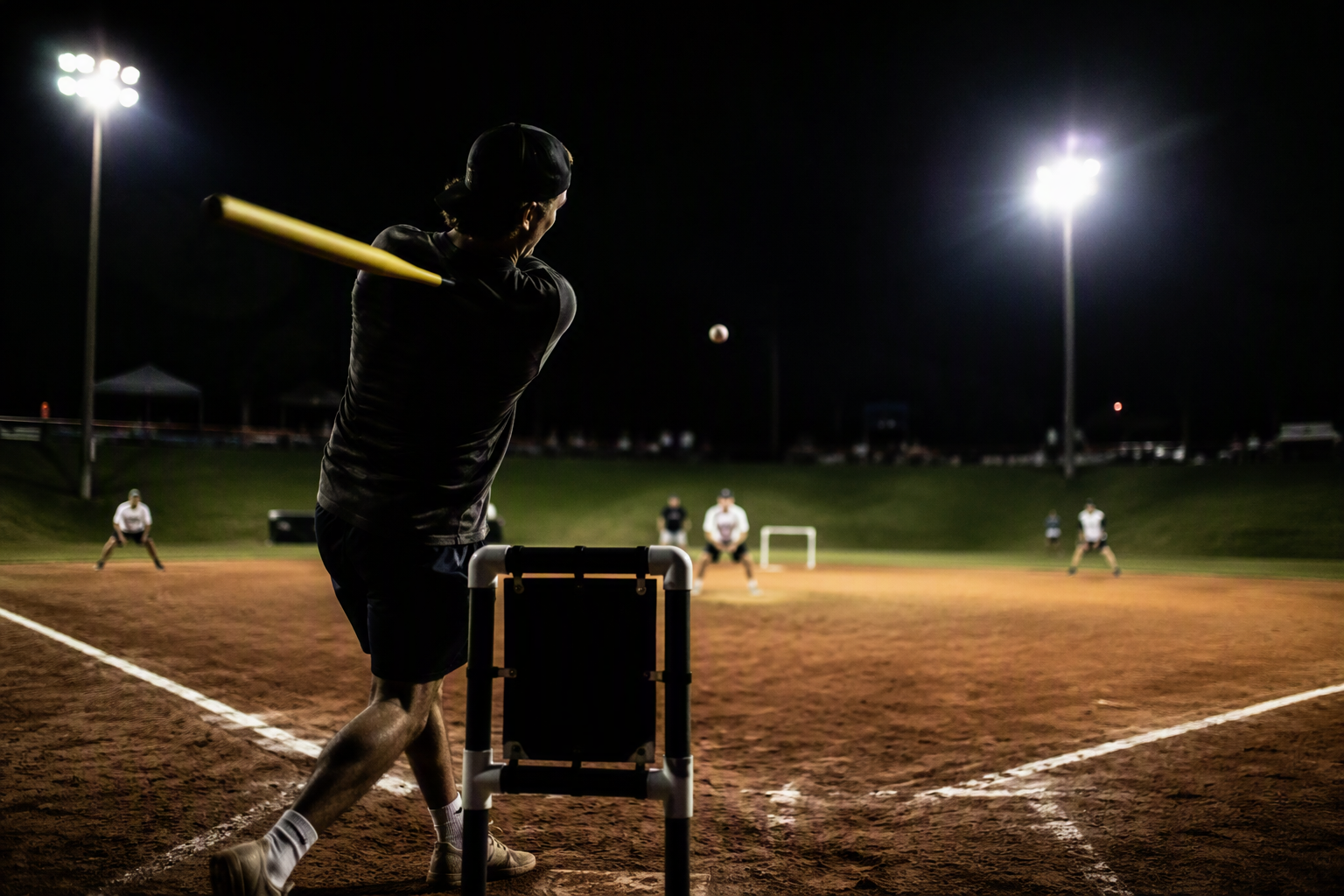
That detail is the difference between remembering scores and preserving identity. Most tournaments honor people; this one also preserves objects tied to its own past. The Hall of Fame and the separate "Super 10 Wiffle Ball Teams of All-Time" page show active curation, not just annual hype. The championship is building an archive of players, teams, and artifacts that lets the sport explain itself to the next generation without needing a translator.
From Hoboken to Mishawaka, the game claims a longer baseball family
The official history page places Wiffle Ball inside a broader baseball lineage and calls it "strange, but true." It points readers to the Baseball Hall of Fame’s account of Alexander Cartwright and the Knickerbockers, the story that links organized baseball back to Hoboken, New Jersey and Elysian Fields. That framing matters because it gives the championship more than a local origin story. It ties the game to baseball’s earliest mythology while still keeping the Wiffle Ball version rooted in its own separate culture.
At the same time, the tournament’s modern identity is firmly Midwestern. A July 2020 Cincinnati Enquirer Facebook post said the game as played in the World Wiffle Ball Championship was "hatched in Mishawaka, Indiana in 1980." Put those two ideas together and the sport gets a useful dual origin: one line reaching back into baseball’s early days, another planted in Mishawaka, where the championship began and never stopped keeping score.
The next chapter is already on the calendar
The championship’s current promotional materials say it is entering its 47th World Wiffle Ball Championship, and its public Facebook and Instagram profiles list the 2026 tournament for August 15-16 in Crown Point, Indiana. A 2025 PBS Michiana - WNIT segment described the 46th championship as an event that began back in 1980 and brings players together from all over, which is exactly what a lasting niche sport looks like when it has survived long enough to outgrow nostalgia.
That is the real story here. The World Wiffle Ball Championship has not just crowned winners since 1980, it has built a memory system around them. The champions page, the Hall of Fame, the artifact enshrinements, and the dynasties of Club Ripped, Blue Ribbon Builders, Funky Plastic Offspring, the Balco Boys, New Carlisle Newts, and Cult West Warriors all point to the same thing: this backyard game has earned its own canon, and it keeps adding names to it.
Sources
- [1]worldwiffleball.org
- [2]facebook.com
- [3]skokieparks.org
- [4]youtube.com
- [5]x.com
- [6]instagram.com