World Wiffle Ball Championship draws 60 teams in Midlothian
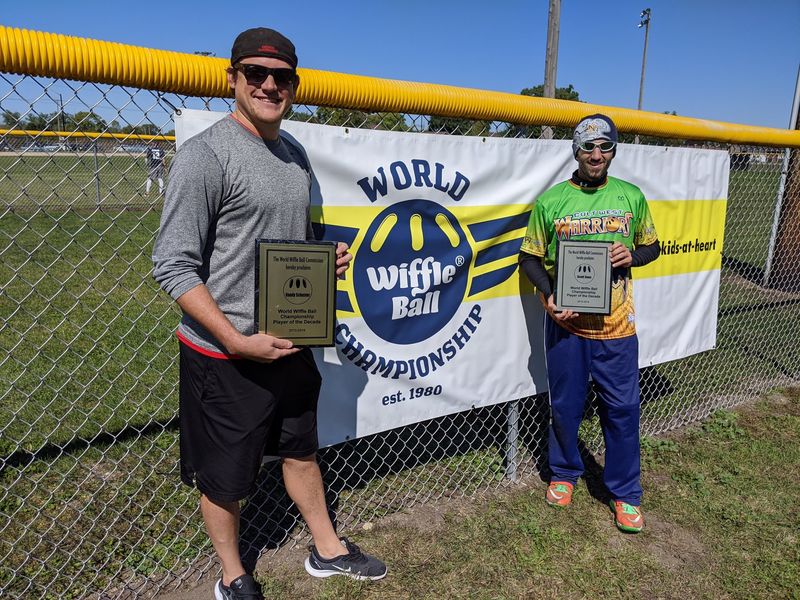
Sixty teams from 12 states packed Midlothian for the 40th World Wiffle Ball Championship, and Scott Soos and the Cult West Warriors held off the Maple City Magic in extra innings to win a fourth consecutive title. The event played out on miniature fields in extreme heat, with five-person lineups turning a backyard toy into a full tournament weekend.
The championship began in 1980 in Mishawaka, Indiana, before moving to Skokie, Illinois, and then settling in Midlothian. Its official history now bills it as the oldest, largest and most prestigious plastic bat-and-ball event on the globe, a claim backed by the scale of the field and the consistency of the competition. The small dimensions matter as much as the roster size: five-person teams, short fences and compact outfields put a premium on command, placement and how each pitcher uses the wind.
That formula explains why Wiffle Ball has grown well beyond casual neighborhood games. The National Wiffle League Association Tournament has operated since 2012 as a national championship between leagues, and a 2019 event in Morenci, Michigan, drew 18 teams. The pattern is familiar across the sport now: friends become rivals, local leagues become travel stops, and championship weekends start to look like a circuit instead of a one-off gathering.
The game’s staying power still traces back to its original design. David Mullany and his son created the Wiffle Ball in Fairfield, Connecticut, in 1953, building a perforated ball that would bend on command and make play easier in small spaces. The Strong National Museum of Play says that design slowed the game, shrank the field and helped with roster size, space and safety. Smithsonian notes that it can be adapted from an almost original backyard version to one that fits the smallest yard or whatever number of players the space allows.
That flexibility has also changed the equipment market around the sport. In the Golden Stick Wiffle Ball League, players use $200 carbon-fiber bats and work over plastic balls to change their movement. Moonshot Bats sells handcrafted models built with carbon fiber, Kevlar, Spectra, nyglass and fiberglass for competitive leagues and tournaments, showing how far the game has moved from a simple plastic bat and ball set.
Midlothian’s 60-team field made the point again. What starts as an easy game for two can now fill a championship calendar, fuel road trips and keep repeat winners like the Cult West Warriors at the center of a growing adult sports economy.