World Wiffle Ball Championship rules turn backyard game into formal competition
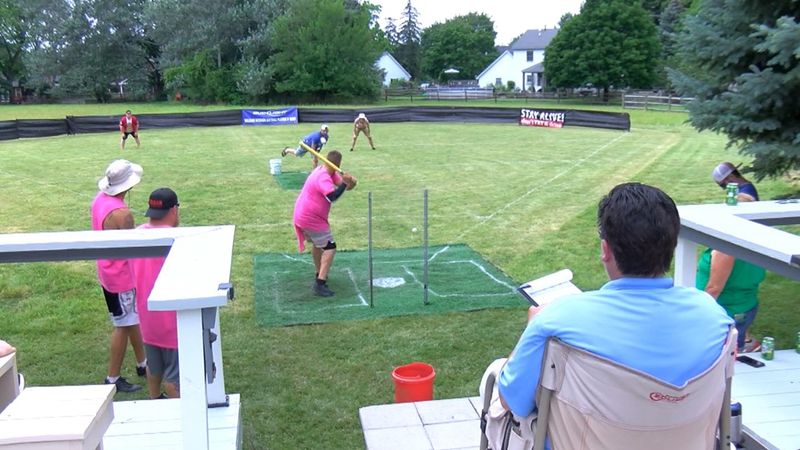
The World Wiffle Ball Championship does not treat Wiffle Ball like a toy version of baseball. It treats it like a compressed, self-governed sport with its own boundaries, its own roster logic, and its own code of conduct. The rules borrow from Major League Baseball, but the exceptions are where the identity changes. That is where the backyard game stops being loose and starts becoming competitive.
Baseball is the template, but the exceptions define the sport
The first thing the rules make clear is that organized Wiffle Ball is not open-ended. It uses Major League Baseball rules as the foundation, then strips and adjusts them to fit a smaller, more controlled environment. That matters because the game is not just baseball with a plastic ball. It is baseball adapted for a confined playing space, where every rule has to work without the luxury of a full diamond, a full umpiring crew, or a traditional field.
That structure gives the sport its own rhythm. In casual play, a close call might be settled by argument, shrugging, or whoever is loudest. In championship play, the framework is tighter. The game still looks familiar to a baseball fan, but the logic underneath it is different because the format is built around simplicity, speed, and mutual responsibility.
Teams carry small rosters and play with limited bodies on the field
The roster rules are one of the clearest breaks from backyard freedom. Teams bring four or five players, but only four are allowed on the field at one time. A game cannot even begin unless a team has at least four rostered players ready to go, or it is a forfeit. That is a hard edge to the competition: if you are short-handed, you do not play around it, you lose by rule.
The defensive setup follows the same practical logic. Catchers are used behind the plate, and outfielders can position themselves anywhere in fair territory. That flexibility sounds loose, but it is actually a way of making a small roster cover more ground without creating chaos. The game is compact, but not casual. Every player has to handle more responsibility because there are fewer bodies to hide behind.
Substitutions are allowed, but there is a catch that changes bench management in a big way: once a player leaves a game, that player cannot return to that same game. That rule forces captains to think ahead instead of cycling people in and out like a recreational pickup run. One bad substitution decision can shrink your options for the rest of the contest.
Equipment rules keep the game standardized
The gear rules are just as specific. Players are required to use regulation yellow Wiffle bats and baseball-size Wiffle balls. Shoes are limited to flat-soled footwear, with no cleats allowed. Those details might sound minor, but they are part of what turns a neighborhood game into a standardized competition. The equipment is not just whatever happens to be in the garage or trunk of a car. It is regulated, and that regulation creates consistency from game to game.

This is one of the most important dividing lines between casual and organized Wiffle Ball. In the backyard, a bat can be borrowed, a ball can be scuffed, and shoes can be whatever someone happens to wear. In championship play, the equipment itself becomes part of the competitive structure. The standardized bat and ball shape how the game is pitched, fielded, and defended, while flat-soled shoes keep players planted for quick movement without the traction advantages of cleats.
Self-officiating changes how players think
The strongest sign that organized Wiffle Ball is its own sport is how it handles disputes. Teams umpire their own games. Captains settle calls. Tournament officials do not rule on judgment calls. That is not a minor administrative choice, it is the entire model. The players are not just competing against each other, they are managing the officiating environment themselves.
That creates a different kind of pressure. In a traditional sport, the umpire absorbs the argument. In this format, the responsibility sits with the captains, and everyone else is expected to stay out of the dispute. Fans and players watching are told to keep out of call arguments, and unsportsmanlike behavior can get someone removed from the park or facility. That rule does more than prevent noise. It protects the game from turning into a rolling debate, which is exactly how a small-format competition keeps its authority.
This is where Wiffle Ball starts to resemble something between baseball, pickup basketball, and tournament chess. There is the structure of baseball, the self-policing of a pickup run, and the strategic sting of a game where every call and every lineup decision matters. The result is not a more serious version of a kids’ game. It is a different competitive environment with its own etiquette.
Why the rules create real strategy
These rules do more than organize participation. They shape strategy from the first pitch. A four-player field forces each defender to cover more space, so positioning matters more than volume. If outfielders can play anywhere in fair territory, captains have real choices to make about how aggressively to defend gaps, lines, and angles. The same is true at the plate, where the regulation bat and ball define what kind of contact is possible and how pitchers can attack hitters.
The no-return substitution rule adds another layer. In a short-roster game, every decision has a cost, because once a player is out, that body is gone for good in that game. That changes how captains manage fatigue, matchups, and emergencies. It also rewards teams that understand the format instead of just trying to out-talent the other side. Organized Wiffle Ball rewards planning, communication, and discipline as much as it rewards arm strength or bat speed.
The cleanest way to understand the championship format is this: it keeps baseball’s basic language, then rewrites the grammar. The field is smaller, the rosters are leaner, the equipment is standardized, and the players police the game themselves. That combination is what turns Wiffle Ball from a pastime into a formal competition with a distinct tactical identity.