WUCC explains how club ultimate crowns the sport's best teams

WUCC is the cleanest way to explain what “world-class” means in club ultimate. The event started in Cologne, Germany, in 1989 with Philmore winning the inaugural Open title and Lady Condors taking Women, and by Prague in 2010 it had already become a 2,800-player, 136-team, 36-country monster. That is why insiders read WUCC differently from a domestic championship: it does not just name a best team, it measures whether a club program can survive the sport’s broadest test.
What WUCC actually measures
WFDF formed in 1985, and today it says it has 128 member associations representing flying-disc sports in more than 126 countries. That kind of structure matters because club ultimate is not concentrated in one place anymore. WFDF estimates ultimate is played by about 100,000 players in more than 50 countries, while USA Ultimate alone has more than 31,000 members, a reminder that one national scene can be huge without defining the whole sport.
WUCC is the event where those different ecosystems collide. A domestic title can tell you who ruled one country’s bracket, but WUCC asks a harder question: can that team handle unfamiliar throwing patterns, defensive schemes, travel, and roster depth from multiple continents? The answer depends on more than talent, because the deepest club systems are the ones that can field elite teams across Open, Women’s, and Mixed and still stay dangerous late in the week.
From Cologne to Prague, the tournament grew into the sport’s reference point
The first World Ultimate Club Championships ran in Cologne from 26-30 July 1989, and the winners were Philmore in Open and Lady Condors in Women. That origin matters because WUCC was never built as a niche showcase for one region; it was built as a world title from the start. The early winners came from the United States, but the structure already signaled something bigger than a national championship with extra branding.
Prague in 2010 turned that idea into a scale readers can actually picture. WFDF called it the largest ultimate meet to date, with more than 2,800 players, 136 teams, and 36 countries represented. The event also showed how broad WUCC really is, with separate Open, Women’s, Mixed, and Masters divisions, which makes the championship a snapshot of the sport across age, gender, and style instead of a single men’s or women’s bracket.
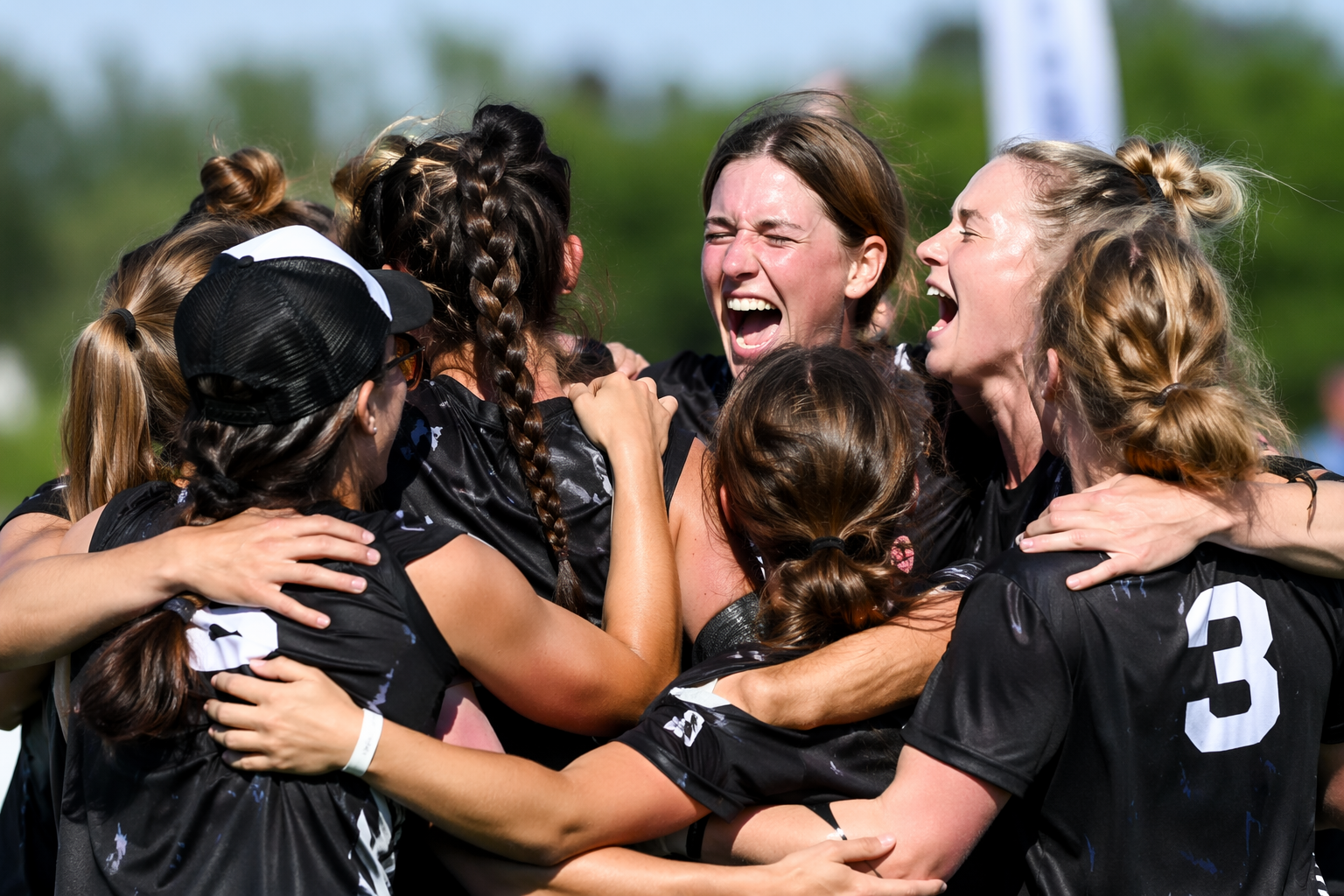
That structure is the key to understanding why WUCC is such a revealing championship. A club scene that can only produce one front-line team is not the same as a club scene that can support multiple divisions and age groups, and Prague made that difference visible on the field. When WUCC stretches from Open to Masters, it is not just handing out trophies; it is exposing how complete a country’s club pipeline really is.
Cincinnati showed the depth of the modern field
The 2022 finals in the Cincinnati, Ohio area made the scale even more concrete. WFDF’s finals page listed championship games in Mixed, Open, and Women’s on Saturday, 30 July, with the Mixed final at 10:00, the Open final at 12:30, and the Women’s final at 15:00. The matchups themselves carried weight: Red Flag against Seattle Mixtape in Mixed, Raleigh Ring of Fire against PoNY in Open, and Fury against Revolution in Women’s.
That weekend also came with a number that tells you how crowded the top of the sport has become. WFDF said Cincinnati drew a record 128 teams and nearly 3,300 athletes. Once a club championship reaches that size, it stops behaving like a tidy invitational and starts looking like a full-scale global tournament, with enough depth to separate teams that are merely strong domestically from teams built to handle a world field.
The 2022 bracket setup is useful because it shows how WUCC distributes prestige across the sport rather than concentrating it in one division. Mixed, Open, and Women’s each got their own final, which means the tournament’s top line is not a single champion but a set of champions who had to win through different tactical environments. That is also why club infrastructure matters so much: the countries that can consistently reach these finals usually have more than one program that knows how to travel, train, and peak on command.
Why geography matters as much as the trophy

WUCC has moved from Cologne to Prague to Cincinnati, and that geography is not a coincidence. It shows a sport whose elite club standard is no longer rooted in one country or one continent. WFDF’s own 2026 schedule puts the next championship at the University of Limerick in Limerick, Ireland, from August 15 to August 22, 2026, which keeps the event rotating through major ultimate regions instead of parking itself in a single stronghold.
The 2026 edition adds another useful marker. WFDF says it expects teams from as many as 55-60 countries, which would make it the largest gathering of countries any WFDF event has ever seen. That is the clearest possible proof that WUCC is not a domestic title with international dressing, but the sport’s most demanding club-world exam.
That global spread is also what makes the event so revealing about infrastructure. A nation with 31,000 members in its domestic governing body can still show gaps if that depth does not translate across divisions, age groups, and travel-ready club systems. WUCC exposes those gaps fast, because the teams that win there are usually the ones whose programs are broad enough to survive every layer of the tournament, not just the last game.
Why insiders trust WUCC more than a single national crown
The appeal of WUCC is that it compresses the sport’s biggest questions into one championship window. Can a club build for multiple divisions? Can it stay sharp after crossing oceans? Can it hold up against opponents from countries with different ultimate cultures, different roster sizes, and different development paths? WUCC does not answer those questions in theory. It answers them on the field, with teams from dozens of countries all trying to solve the same problem at once.
That is why the event has become the best shorthand for “world-class” in club ultimate. The winners are not just the best team in one federation, one league, or one domestic bracket. They are the clubs that can carry a full program into the deepest international field the sport can assemble, and still look like champions when the week ends.
Sources
- [1]wfdf.sport
- [2]results.wfdf.sport