Every Thanksgiving, two things are as certain as the turkey on the table: the Detroit Lions will play first, and the Dallas Cowboys will follow. That locked-in certainty wasn’t handed down from on high — it was engineered, deal by deal, by two ambitious men decades apart who each bet their franchise’s future on a single holiday gamble. Understanding how it happened reveals as much about American media economics as it does about football.
Detroit 1934: The Radio Stunt That Started Everything
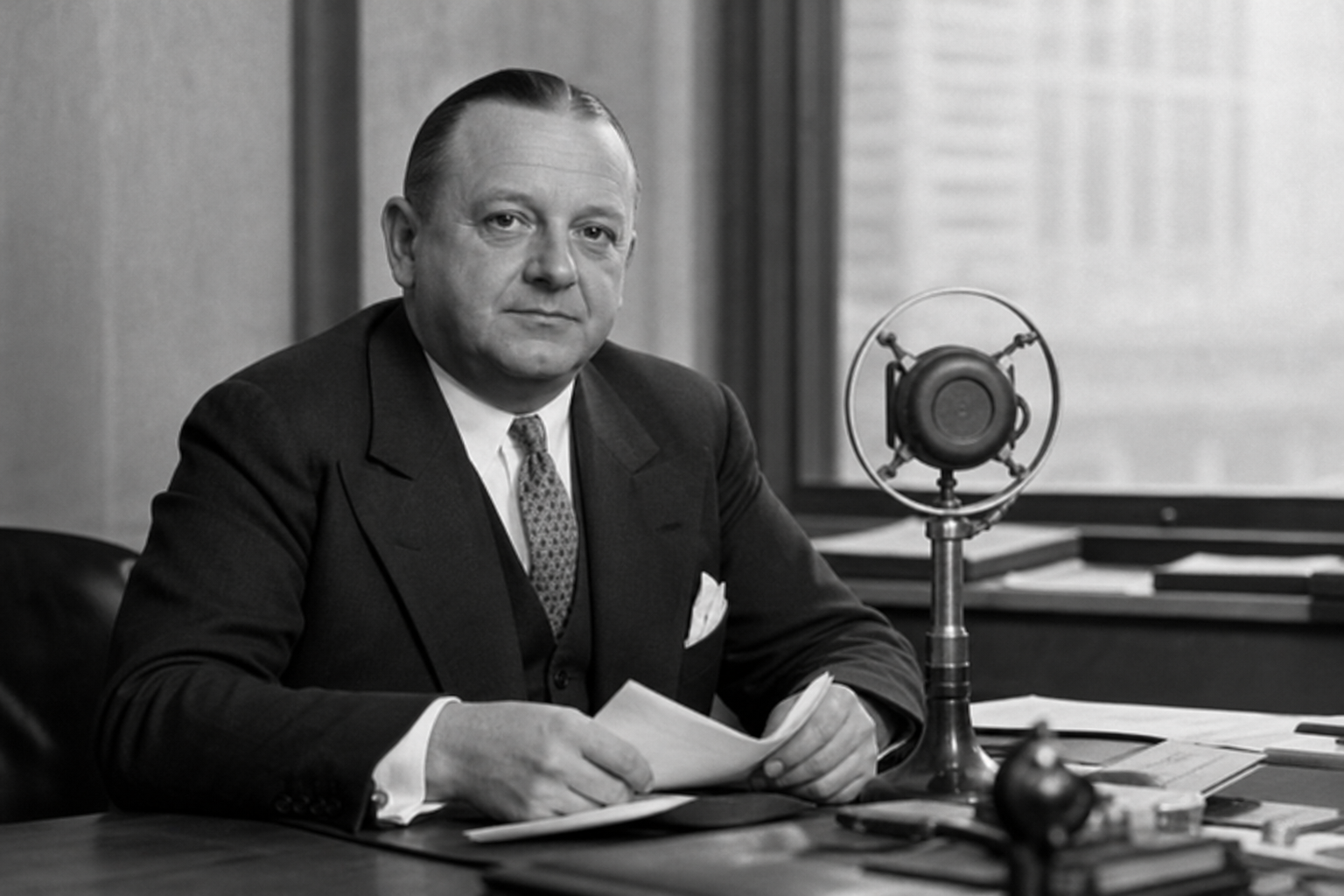
The story begins not with the NFL’s scheduling office, but with a radio executive who had a struggling franchise and a bold idea. When George A. Richards bought the Portsmouth Spartans and relocated them to Detroit in 1934, he inherited a team the city largely ignored. His solution was blunt: schedule a Thanksgiving Day game against the undefeated Chicago Bears and make it impossible to look away.
NBC Radio broadcast the game nationally across 94 stations, reaching an estimated 26 million listeners — a staggering number for the era, at a time when television did not yet exist as a consumer product. Richards understood something the NFL would spend the next nine decades proving: scarcity drives attention. One high-stakes game, one unmissable day, one national audience tuned in simultaneously.
The Lions lost that inaugural game 19–16, but they won something far more valuable — a permanent place in America’s holiday calendar. Detroit has hosted an NFL Thanksgiving game every year since 1934, with the exception of 1939 through 1944 due to World War II. That record, now stretching across nine decades, is the foundation on which the entire tradition rests. The full history of NFL Thanksgiving scheduling makes clear just how early Detroit established its claim — and how completely it has held it.
Dallas 1966: Tex Schramm’s Calculated Publicity Play
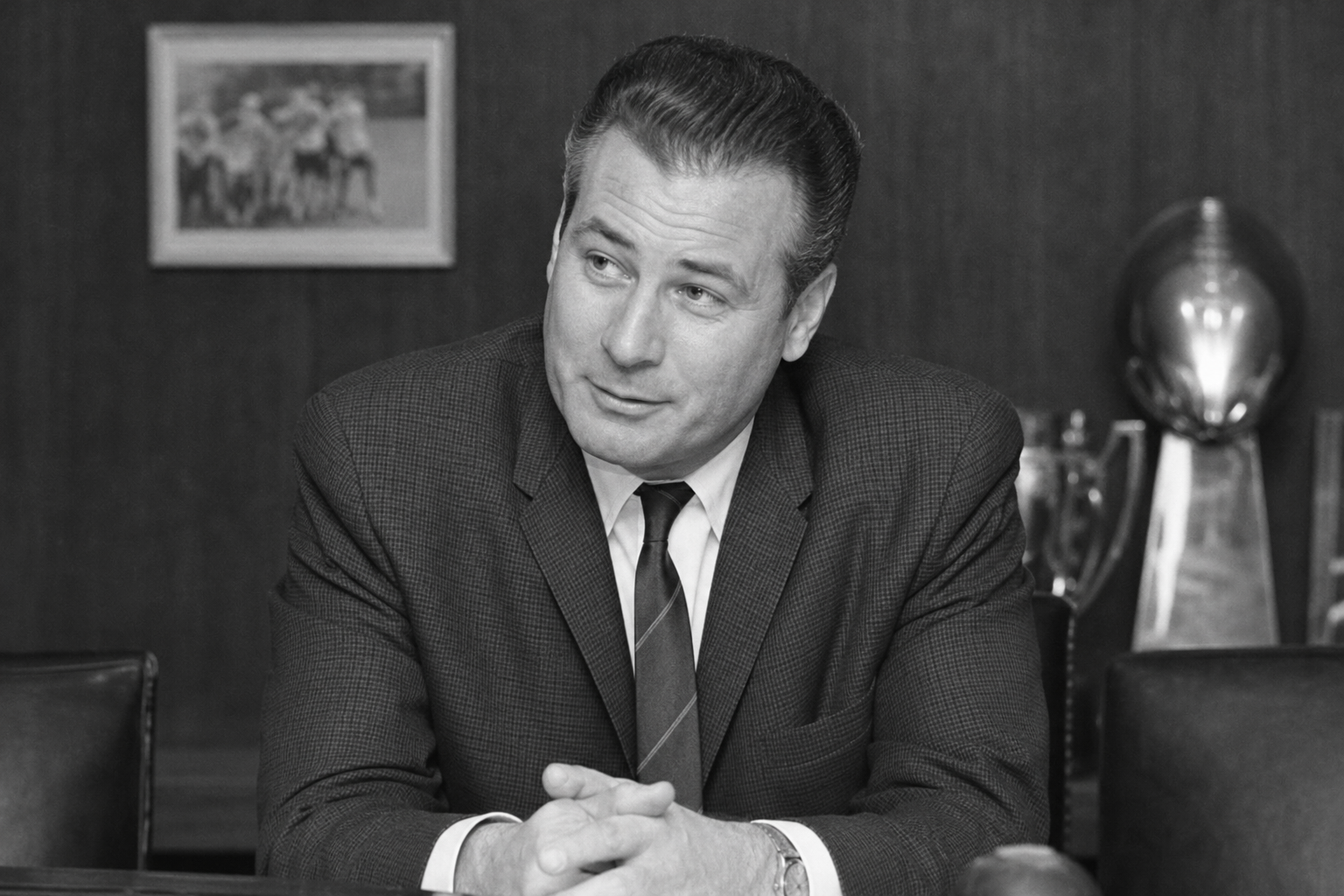
Thirty-two years later, Cowboys general manager Tex Schramm faced a different but equally urgent problem. Dallas was a young expansion franchise that needed national relevance fast, and the standard NFL schedule wasn’t delivering it quickly enough. His answer was to volunteer the Cowboys for a Thanksgiving game in 1966 — a move driven explicitly by the desire for greater national broadcast exposure.
The logic was straightforward: a Thanksgiving broadcast put Dallas in front of the country’s largest single-day television audience in a single stroke. The Cowboys defeated Cleveland 26–14 in that debut game, validating Schramm’s instinct immediately and planting the seed of what would become one of the NFL’s most commercially powerful annual events.
The arrangement wasn’t always secure. When Dallas briefly lost its Thanksgiving slot, replacement games held in St. Louis drew weak attendance and disappointing television ratings — outcomes that became a primary argument for restoring the franchise as a permanent host. The market had spoken clearly: neutral-site experiments could not replicate what a Cowboys home game on Thanksgiving delivered. CBS Sports details the Cowboys’ and Lions’ full Thanksgiving records and the competitive history behind both franchises’ holiday standing.
Why the NFL Never Moved Them: The Television Argument

The most direct explanation for why a tradition approaching its centenary has never been seriously threatened is financial: disrupting it would cost the NFL an enormous amount of money.
The NFL is, before anything else, a television business. Thanksgiving delivers its single largest regular-season viewing window of the year. The Cowboys’ Thanksgiving game has regularly ranked as the most-watched NFL regular-season game of a given year. The Lions’ game consistently ranks among the top five. Replacing those established brands with unknown matchups on the highest-stakes viewing day in American sports broadcasting is a risk no network executive or league official has been willing to accept.
Continuity itself has become a commercial asset. Advertisers build holiday campaigns around the expectation of those specific matchups. Broadcast partners structure their Thanksgiving inventory knowing Detroit opens the day and Dallas follows. The arrangement also amplifies franchise-level revenue — Thanksgiving exposure drives merchandise sales, national sponsorship value, and brand recognition well beyond what a standard Week 12 home game could generate for either team.
As DAZN’s breakdown of the NFL’s Thanksgiving structure explains, tradition and commercial self-interest have become indistinguishable here — which is precisely why neither force is likely to weaken.
The Third Game Slot: How Everyone Else Gets In

Since 2006, the NFL has added a third Thanksgiving game in a primetime slot, rotating the matchup among other franchises each year. This is the only Thanksgiving berth that is genuinely competitive — open to any team, subject to standard scheduling logic, and guaranteed to no one.
The rotating slot was introduced partly to give other markets a holiday showcase, and equally to create a third advertising inventory block for the league and its broadcast partners. It is a commercial expansion layered on top of the existing structure, not a replacement of it.
The distinction matters. Detroit and Dallas do not apply for their slots, do not negotiate for them season to season, and do not rotate out. Their games are fixed points in the NFL’s scheduling framework around which everything else — including that third game — is organized. The three-game Thanksgiving is really two distinct products: the locked-in legacy games with more than 90 years of institutional weight behind them, and an open primetime slot that any franchise can earn on merit.
What It Means Now — and Whether It Can Ever Change

The Lions and Cowboys hosting Thanksgiving is no longer tradition in only the sentimental sense. It is commercial and contractual infrastructure. Broadcast deals are negotiated with their presence assumed. Sponsor commitments are structured around it. The two franchises’ Thanksgiving identities are baked into the economic architecture of the NFL’s most lucrative regular-season window.
Could the league theoretically remove one of them? Yes. Would it? The ratings risk alone makes it nearly inconceivable, and that is before accounting for the response from two of the NFL’s largest and most historically engaged fan bases. The Lions, despite long stretches of losing records, draw massive Thanksgiving audiences year after year — proof that the tradition transcends any single season’s standings.
The layered answer to why the Lions and Cowboys always host Thanksgiving runs like this: it started with a radio stunt designed to put a struggling Detroit franchise on the map, was reinforced three decades later by a Cowboys executive chasing primetime visibility, survived repeated pressure through sheer audience numbers, and is now self-reinforcing in the most durable way possible. Tradition creates expectation. Expectation creates ratings. Ratings justify tradition. Quartz’s examination of why the Lions and Cowboys own Thanksgiving captures how thoroughly sporting ritual and media economics can fuse into something that feels permanent — because, at this point, it effectively is.
What George Richards improvised in a Detroit radio booth in 1934 and what Tex Schramm calculated in a Dallas front office in 1966 together produced something neither man could have fully planned: a sporting ritual as fixed in American life as the meal it accompanies. The backroom deals are long settled. The tradition, at this point, is simply part of the schedule.