Kickball’s many names show how schools and leagues adapt it
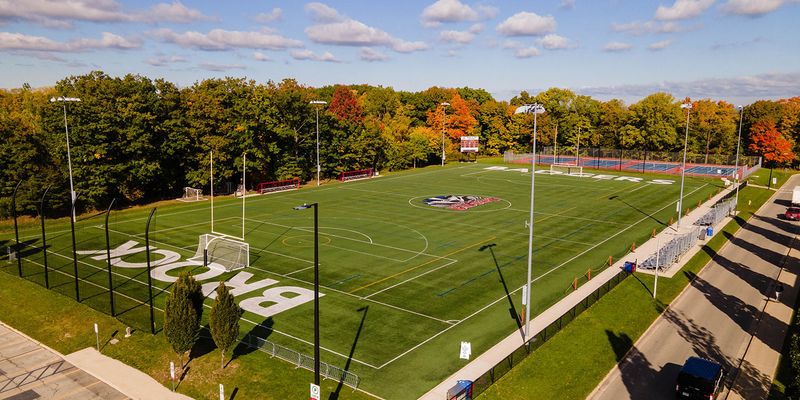
Kickball keeps its rhythm even when the name changes. In schools, it can be Football Rounders; on a university campus, it becomes soccer-baseball; in adult rec leagues, it still feels like the same game, but with tighter roster rules, set time limits, and a more social frame.
The same game, rewritten for different rooms
That portability is the story. Your School Games presents Football Rounders as a simple rounders-based game played outdoors on a rounders pitch with four posts, bases, and a soft ball, which makes it easy to drop into a school setting where movement and accessibility matter. Brock University Recreation takes the same broad format and turns it into an intramural sport with a defined roster structure, while Calgary Sport and Social Club uses the soccer-baseball label for a co-ed adult league built around fun, pace, and weekly play.
The names are doing more than decorating the rules. They tell you what each setting values most: the school version prioritizes ease of teaching and physical activity, the university version emphasizes structure and balanced participation, and the adult league leans into social play and a dependable game-night rhythm.
What Football Rounders looks like in a school setting
Your School Games frames Football Rounders as a rounders-based activity designed to introduce players to rounders rules in a fun way. It is played outdoors, on a rounders pitch, with four posts, bases, and a soft ball, which keeps the equipment simple and the setup familiar for teachers and pupils.
That simplicity matters. The format is built to increase pupil physical activity and make it easy for teachers to run, so the game functions less like a specialized sport and more like a flexible school activity. The core idea is still kickball logic, but the school version trims away anything that would slow down a class period or make the rules hard to follow.
How university soccer-baseball standardizes the sport
Brock University Recreation’s soccer-baseball rules show how quickly the game becomes more formal once it moves into intramural sport. The game is played between two teams of 8 players, with at least 3 females on each team. A minimum of 6 players is required to start and finish a game, and the contest runs for 9 innings or 45 minutes.
Those details reveal a different priority set. Brock’s format is not just about whether the game can be played; it is about whether it can be administered consistently, with enough players to keep the match moving and enough structure to fit a campus recreation schedule. The gender requirement, the team size, and the time cap all turn a loose playground game into a regulated event.
What changes in the adult league version
Calgary Sport and Social Club uses the soccer-baseball label for its kickball offering, but the feel is different again. The club describes itself as a premier destination for co-ed adult sports in Calgary and says it offers more than 25 sports, while its kickball league is marketed as a fun-first, social adult recreation experience.
Its soccer-baseball format uses 10 players on the field, requires at least 3 female players, and runs 9 innings or 90 minutes. Compared with Brock’s 45-minute campus version, the longer clock gives the adult league a more relaxed weekly-event feel. The game is still recognizable, but the league structure favors social time, fuller benches, and the kind of steady evening play that helps keep recreational sports viable for adults.
Why the rulebook shifts tell the whole story
These three versions show how kickball adapts without losing its identity. The school model is built around a soft ball, an outdoor pitch, and a low barrier to entry. The university model adds roster requirements and a strict time limit. The adult league stretches the game into a longer, more social product with a bigger on-field number and a fun-first tone.

That is the portability story in practical terms. The ball is kicked, runners advance, fielders chase, and the rules still orbit the same basic action. What changes is the institution around the game, and each institution rewrites the format to match its own priorities: ease of play, inclusivity, pace, or the social life of the league.
Where kickball came from, and why the history still matters
Kickball’s origins are contested, but several histories place its early development around 1917 in Cincinnati, Ohio. In some accounts, Nicholas C. Seuss, the city’s supervisor of park playgrounds, is tied to the early invention story. Another line of history points to Daniel C. Angell and a 1910 published description that included rules and diagrams for a kickball-like game.
Britannica defines kickball as a children’s game like baseball, played with a large rubber ball that is kicked instead of hit with a bat. That description helps explain why the sport has traveled so easily across settings: the action is easy to recognize, the equipment is simple, and the basic logic is close enough to baseball and rounders to feel familiar almost anywhere.
Why rounders keeps showing up in the background
Rounders England helps explain the naming overlap. The organization says it was formed by a small group of teachers in 1943 to standardize rounders rules, and it now presents rounders as a structured, modern, inclusive sport. Its Rounders: Reconnected project aims to document and celebrate the game’s history and regional variations.
That heritage makes the school labels feel less random. Football Rounders is not just a renamed playground game; it sits inside a larger family of bat-and-ball formats that have long been organized, adapted, and standardized for different communities. Rounders’ long-standing English play and later rule standardization give kickball’s school and university versions a clear ancestor in spirit, even when the names diverge.
The governing body and the adult-game turn
The World Kickball Association says it is the sport’s governing body and traces its own evolution from World Adult Kickball Association, or WAKA. It later dropped “Adult” from its name as it expanded into youth play and other recreational sports in the early 2010s.
That shift shows how kickball moved from being treated as a niche adult pastime to something with broader institutional reach. Once a governing body starts standardizing the game across age groups and settings, the sport begins to look less like a casual throwback and more like an organized recreational product with rules, identity, and enough flexibility to keep traveling.
What to notice when the label changes
When the sport is called Football Rounders, look for a school-friendly setup: a rounders pitch, four posts, bases, and a soft ball. When it becomes soccer-baseball at Brock University, the details tighten around 8-player teams, at least 3 females, a minimum of 6 players, and a 45-minute or 9-inning cap. When Calgary Sport and Social Club uses soccer-baseball for its adult league, the field grows to 10 players, the game stretches to 90 minutes or 9 innings, and the social tone becomes part of the product.
That is why kickball survives so many labels. It does not need to become a different sport to fit a new setting. Schools, campuses, and rec leagues keep remaking the shell around the same game, and the result is a format that stays recognizable even as the rulebook changes shape.