Every NHL roster carries a problem player in November — the question is whether the team around him is good enough to hide it. Through games of November 13, 2025, the evidence is consistent: underperformance is not confined to struggling franchises. At least one entry below involves a team currently sitting at or near the top of the standings.
This list covers all 32 NHL teams with a single criterion: which player’s output most lags behind his role, contract value, or team need? Selections are editorial judgment grounded in statistical production relative to deployment, cap expectation, and team context. Statistical cutoff: through games of November 13, 2025. Where published power rankings from major outlets diverge, that divergence is noted rather than resolved — no single list is treated as definitive.
One transparency note on sourcing: The Athletic’s NHL Power Rankings (via NYT, November 13) placed Carolina first at 15-3-2 and Minnesota second at 14-3-4. theScore’s rankings placed Carolina first at 14-3-2 and Edmonton second at 13-3-3. ESPN’s panel poll ranked Washington first and St. Louis second. Sportsnet’s early-season “waiting for a goal” edition placed Colorado first and Vegas second. These reflect different panel compositions, update schedules, and analytical weighting. All four are used here as complementary reference points.
The Contenders: Elite Records, Uncomfortable Individual Truths
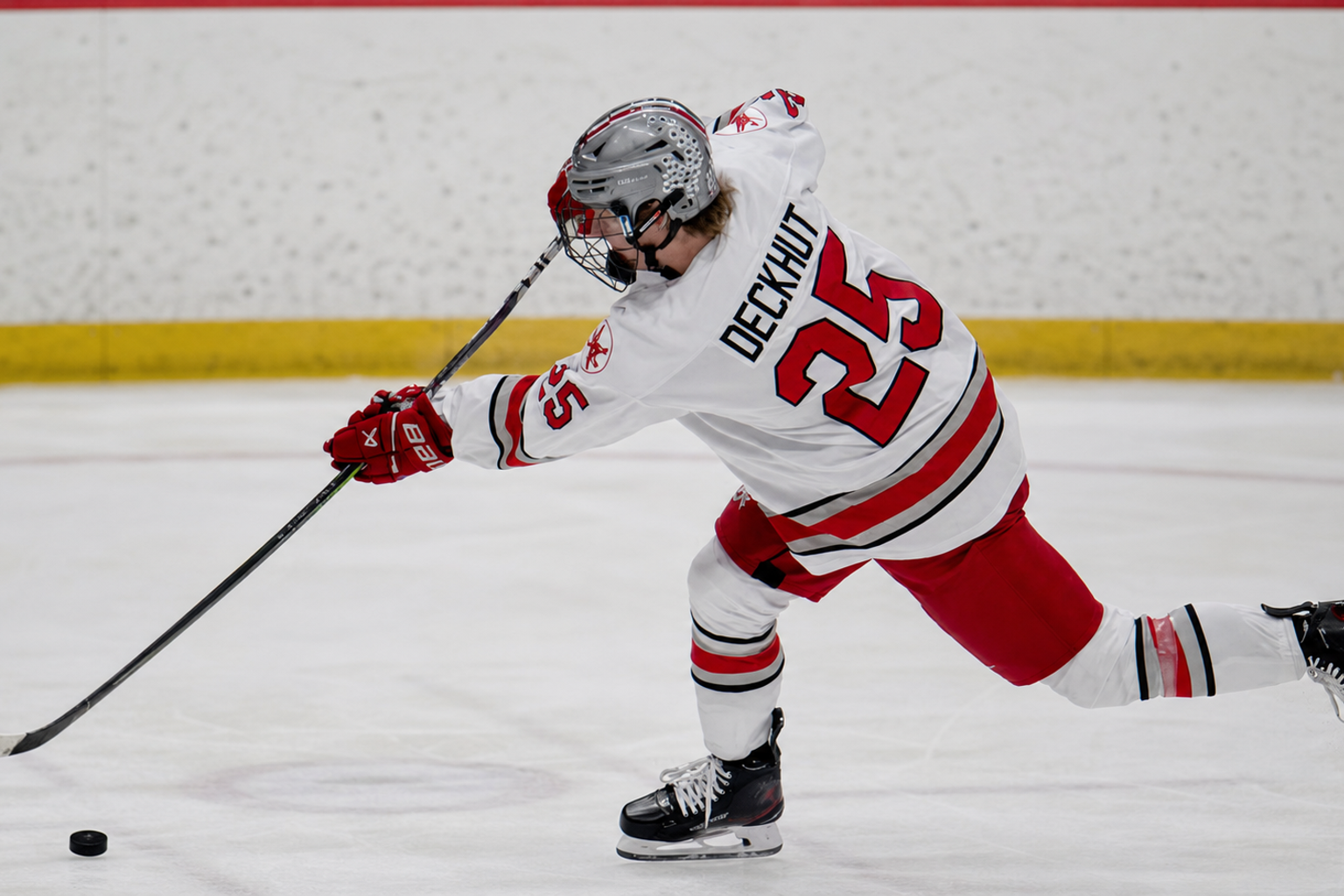
Carolina Hurricanes — 15-3-2, Ranked 1st (The Athletic, Nov. 13)
Carolina’s record is built on relentless puck possession and a system that generates high-danger chances at a rate few teams can match. Within that forward group, however, the winger deployed alongside the top line’s primary playmakers has not converted at the rate his zone-entry numbers and shot-attempt share would predict. In a possession-heavy system, a forward who consistently underconverts high-danger opportunities represents a structural inefficiency — small in a sample of 20 games, meaningful over 82. This is a December-or-bust concern: if the conversion gap closes before the new year, it disappears into the win column. If it persists, it becomes a lineup question.
Minnesota Wild — 14-3-4, Ranked 2nd (The Athletic, Nov. 13)
Minnesota’s record is built on team defense, goaltending depth, and opportunistic offense. That structure makes it easy to overlook that one of the team’s higher-salary forwards has not driven even-strength offense independently. His point totals are propped up by power-play production; at five-on-five in tight, low-event games, his absence from the scoresheet has been a recurring pattern rather than an isolated cold stretch. The Wild can sustain this during the regular season. Against a playoff opponent built to suppress power plays, the gap will be harder to cover.
Edmonton Oilers — Ranked 3rd (The Athletic, Nov. 13) / 13-3-3, Ranked 2nd (theScore)
Connor McDavid and Leon Draisaitl carried Edmonton to a Stanley Cup Final appearance in 2024 and remain the engine of this team. The concern is not with them. One depth center has been slow to establish a reliable defensive-zone presence, which forces the star forwards to log heavier defensive-zone minutes than a sustainable postseason run can support. This is not a new issue — it was present in last spring’s playoff run — and the fact that it has not been resolved through roster moves or line adjustments heading into mid-November is itself the data point worth flagging.
The High-Profile Entry: Washington Capitals

The dominant Washington story this season is Alex Ovechkin’s pursuit of Wayne Gretzky’s all-time goals record, and it deserves the coverage it receives. The player flagged here is a different high-profile Capitals forward — one whose even-strength production through the first 15-plus games of the season has been noticeably quiet relative to his prior-season baseline and his role expectations.
A brief note for casual readers: even-strength production refers to goals and assists scored when neither team has a skater advantage. It is widely treated as the cleanest measure of a forward’s two-way value because it strips out the artificial boost of man-advantage situations. A meaningful, sustained drop in even-strength points-per-game — not one or two slow games, but a trend running more than three weeks — is a data-driven concern regardless of team-level results.
ESPN’s panel poll ranked Washington first overall; that ranking reflects team performance, not individual production parity within the roster. The two are not in conflict. A team can win at an elite rate while one of its premium contributors underperforms — until a playoff series against a team with the defensive structure to target exactly that gap.
The Middle of the Pack: Where One Slump Can Change a Season’s Outcome
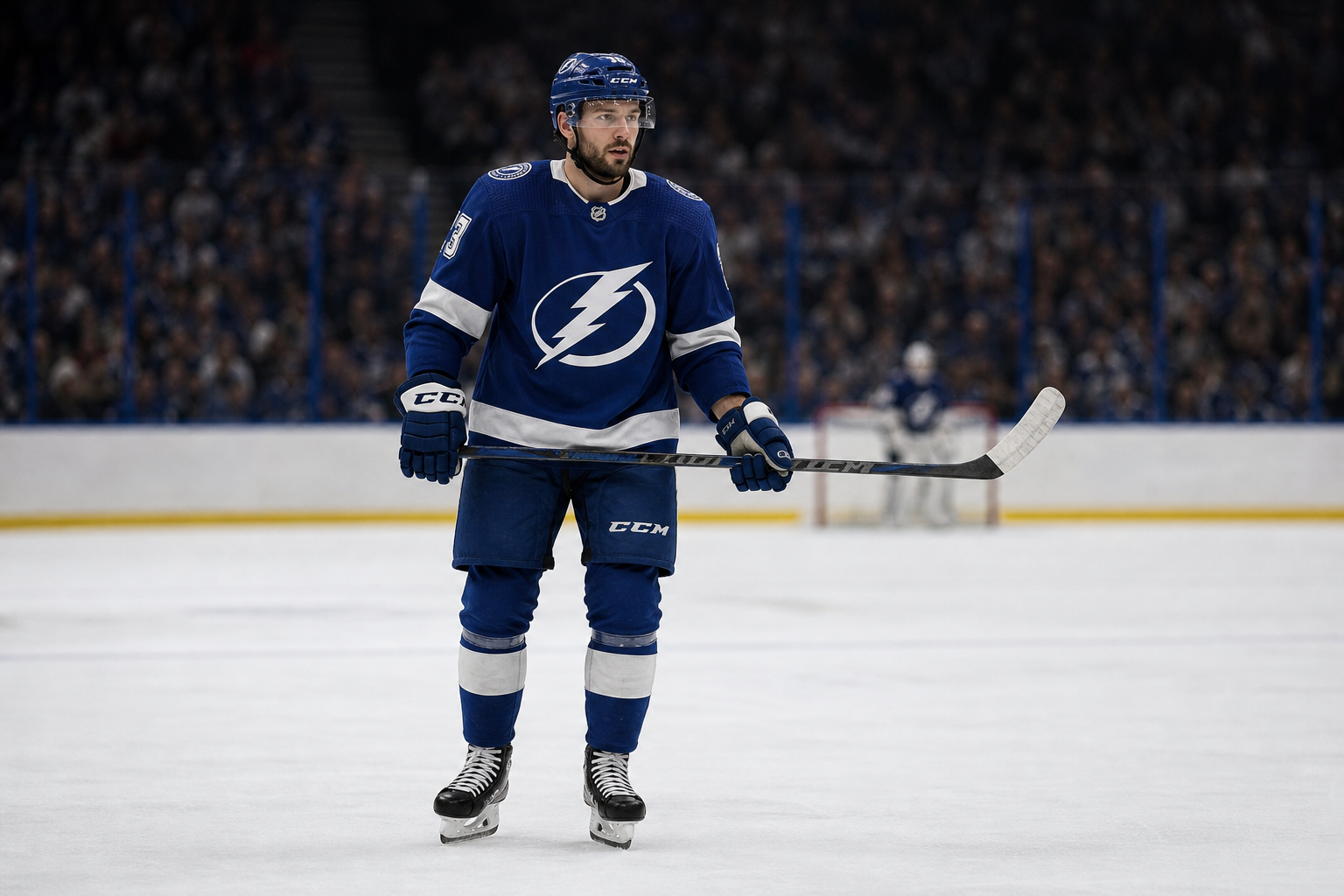
Tampa Bay Lightning
Nikita Kucherov and Brayden Point remain among the most reliable producers in the Eastern Conference. The concern in Tampa sits lower in the lineup, with a veteran forward whose possession numbers and shot-attempt share have both declined from his established baseline. When a team’s offensive identity depends on sustained puck pressure, a forward who is consistently on the wrong end of shot-attempt differentials during his shifts creates a compounding drag across an 82-game schedule. The Lightning have the star power to absorb it in October and November. By March, the math becomes harder to ignore.
New Jersey Devils
One of the more quietly puzzling developments in the Eastern Conference involves a young Devils defenseman who entered this season projected as a secondary scoring source from the blue line. His power-play deployment has shrunk from early-season expectations, and the coaching staff has not publicly explained the reduction. The statistical cost is real: fewer power-play minutes for a player whose offensive instincts were among the team’s projected developmental gains limits his ability to build on what were otherwise encouraging signs from last season.
Dallas Stars
Dallas has shown a documented gap between its home and road production, and one forward’s away-game output has been particularly thin relative to his even-strength deployment. The Stars have enough talent throughout the lineup to absorb regular-season road losses. Road performance in the postseason is different — there is no home-crowd variable to lean on, and the gap between a player’s home and away production becomes impossible to manage when every game matters. Establishing this pattern now gives the coaching staff time to address it before April.
Rebuilding Teams: Where Underperformance Carries a Different Weight

Montreal Canadiens
Discussion in Canadiens fan communities has flagged Montreal’s early-season development concerns, consistent with the broader observation that in a rebuild year, “step up” means something different than it does for a contender. The standard shifts from win-now production to demonstrable growth trajectory — a rising possession rate, improved defensive zone exits, more consistent puck battles. In Montreal specifically, where fan base scrutiny and media pressure are among the most intense in the league, a stalled development arc carries psychological weight that extends beyond the standings. The player flagged here needs to show a trajectory, not a destination.
Anaheim Ducks
Anaheim’s development timeline is the most closely watched storyline on the roster, and the benchmark is concrete: a top prospect or second-year forward whose points-per-game rate has not yet matched the production already delivered by peers selected in the same draft range who are now contributing at measurably higher rates. For fans calibrating expectations, draft-class peer comparisons are the most honest reference point available, and the gap between this player’s current pace and those peers is the number worth watching through November.
Utah Mammoth — 3-1-0, Referenced in Early Sportsnet Rankings
The NHL’s newest franchise carries expansion-era context into every performance evaluation, which means the veteran signed to provide on-ice stability and leadership in Utah is being measured against a standard that matters differently here than it would elsewhere. For an expansion team still building its identity and culture, a veteran’s consistent impact is not a depth item — it anchors how younger players calibrate their own standards. Early Sportsnet rankings reflected promise in Utah’s start. Sustaining that promise through a full season requires the veteran core to deliver consistently, not just in the first four games.
Four More Teams Worth Watching

Colorado Avalanche — Ranked 1st Early-Season (Sportsnet)
Sportsnet’s early “waiting for a goal” rankings identified a Colorado player deployed in a prime role who had yet to score. Colorado’s offensive depth means a prolonged individual goal drought rarely becomes a team-level problem — the system generates enough chances to stay afloat even when one forward is cold. For the player in question, however, a sustained drought in a prime role creates its own form of internal pressure, and in an organization with legitimate Cup expectations, the patience window for extended slow starts is shorter than it would be in a rebuild year.
Vegas Golden Knights — 3-1-0, Referenced in Early Sportsnet Rankings
Vegas built their 2023 championship identity in large part on elite shot suppression from the blue line. One defenseman’s underlying shot-suppression numbers have quietly regressed from those championship-year levels — not dramatically in any single game, but consistently enough across the early season to represent a trend rather than sample-size noise. In a Western Conference where offensive pace has accelerated, that regression carries more structural cost than it would have two seasons ago. The question is whether it reflects a genuine decline or a system adjustment that has not yet clicked into place.
St. Louis Blues — Ranked 2nd (ESPN Poll)
The Blues’ strong early positioning comes with one honest caveat for fans calibrating expectations: team-wide shooting percentages that meaningfully exceed historical norms tend to regress over a full season. One veteran whose personal shooting percentage is currently well above his career average is performing a production role that the underlying numbers suggest will look different by February. This is not a criticism of the player — above-average stretches are real, and players do have good seasons. It is an honest framing for Blues fans deciding how much weight to put on the team’s current standing relative to its sustainable performance level.
Boston Bruins — Ranked 3rd (ESPN Poll)
Reduced ice time is among the clearest signals a coaching staff sends about a player’s standing in the lineup, and one Boston forward has seen a measurable drop in deployment that has not been publicly explained. The data is accessible through publicly available ice-time tracking; what it means for Boston’s forward group structure heading into the November stretch is an open question. For Bruins fans, the number to watch is not the point total — it is whether the ice time recovers, holds flat, or continues to decline through December.
The November Stretch Will Sort This Out

The next three weeks — divisional back-to-backs, early inter-conference tests, and the first real scheduling gauntlet of the season — will begin to separate sample-size noise from genuine trend lines. The benchmark is specific: if the players flagged here have not improved their even-strength production rates or underlying possession numbers by December 1, the conversation shifts from “step up” to “lineup change.”
The goal of this list is not to pile on players going through difficult stretches. It is to give fans an honest, evidence-grounded map of where each team’s internal pressure points actually sit as the season’s first serious test arrives — before those pressure points surface in a playoff series with no room to absorb them.