While Russian missiles continue to strike Ukrainian cities, a Gazprom-branded tennis exhibition has returned to court — and Western players are collecting the appearance fees. Ukraine’s tennis governing body has had enough of polite silence, and it is now calling players out by name.
The Sponsor That Never Really Left

Gazprom, the Russian state-controlled energy giant that has long served as one of the Kremlin’s most visible soft-power tools, is back in tennis. A Gazprom-backed exhibition event staged in Russia has drawn participation from French professionals Corentin Moutet and Adrian Mannarino, two ATP-ranked players who are not Russian and face no institutional prohibition on competing. That detail — no rule broken, no sanction available — is precisely what makes Ukraine’s governing body so furious.
The Ukrainian tennis federation has broken from the careful diplomatic language that sports bodies typically favour and issued a public statement naming specific non-Russian players it accuses of lending legitimacy to a company that funds the Russian state. It is a rare moment of direct confrontation in a sport that has generally preferred structural bans over public shaming.
The Exhibition and Its Regulatory Gap
The event in question is an exhibition — not an ATP-sanctioned ranking tournament. That distinction matters enormously. Players who compete earn no ranking points, and the ATP’s rulebook, designed around its official calendar, has limited purchase over what happens in the unregulated exhibition circuit. Appearance fees are negotiated privately, and no governing body pre-approves the guest list or screens sponsors for political associations.
The WTA addressed its position directly when asked about the event: it stated it would not support a Russian exhibition of this kind, but confirmed it would impose no penalties on players who chose to participate. That is a meaningful distinction — disapproval without consequence. As of publication, no formal ATP statement condemning the event or announcing any review of player participation has been reported. Their silence is institutional, and Ukraine’s federation is treating it as complicity by omission.
Ukraine’s governing body chose a sharply different register. Its statement named Moutet and Mannarino explicitly, framing their participation not as a neutral sporting decision but as a political act that benefits a wartime adversary’s propaganda machinery. The bluntness is deliberate: when regulatory tools are unavailable, language becomes the instrument.
Why Gazprom? The Context Fans Need

For fans who know Gazprom only as a logo on a stadium hoarding, some background is essential. Gazprom is not a private corporation that happens to do business with the Russian government — it is a majority state-owned energy company whose revenues flow directly into the Russian federal budget. At its peak international visibility, Gazprom was the principal sponsor of UEFA’s Champions League, one of the most-watched club football competitions on the planet. That partnership ended after Russia’s full-scale invasion of Ukraine in February 2022, with UEFA terminating the deal.
The company’s return to sports sponsorship — even in the contained format of a domestic Russian tennis exhibition — carries weight precisely because of that history. Western governments have sanctioned Gazprom. European energy markets have spent years working to cut dependence on its gas. Critics argue that every Western athlete who appears under its branding helps rehabilitate a corporate name that official policy has sought to isolate. Whether individual tennis players bear moral responsibility for that rehabilitation is a genuinely contested question — but it is the question Ukraine’s federation is now forcing into the open.
The Wimbledon Precedent and Its Uncomfortable Mirror
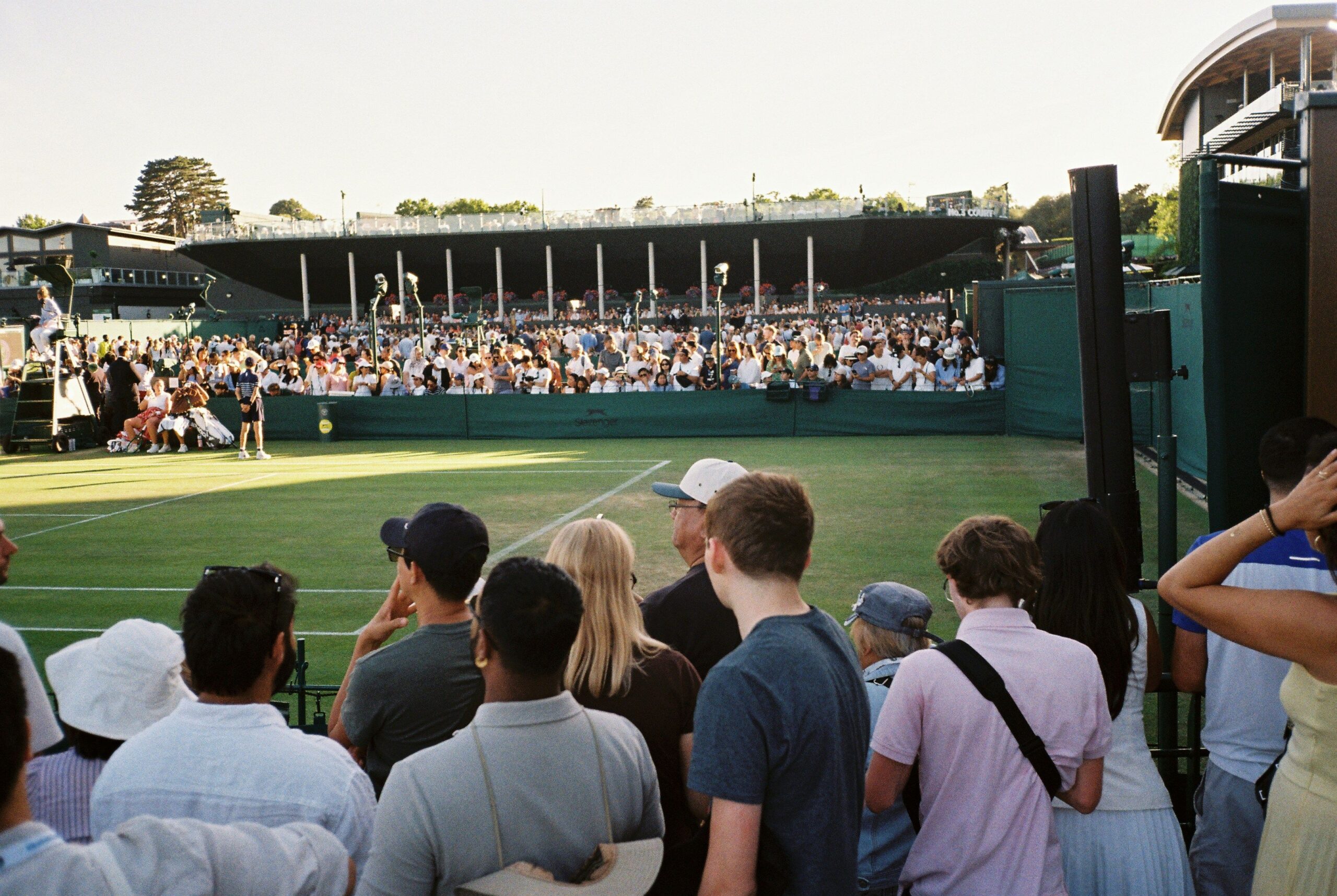
Tennis has drawn a hard institutional line before. In 2022, Wimbledon banned Russian and Belarusian players outright from competing at the All England Club, citing the invasion of Ukraine. The ATP and WTA responded by stripping Wimbledon of ranking points for that edition — punishing the tournament for making a political decision the tours characterised as discriminatory against individual athletes on the basis of nationality.
The precedent is instructive precisely because of how neatly the current situation inverts it. In 2022, the tours punished a tournament for its choices regarding who could play. Now, a tournament’s sponsor is the problem, non-Russian players are voluntarily choosing to participate, and the tours are declining to act. Ukraine’s governing body understands the logic that follows: if institutions will not move, the only remaining lever is public pressure. Name the players, attach the story to their profiles, and hope that reputational cost does what regulatory architecture cannot.
The inversion also reveals an inconsistency that is difficult for the tours to argue around. If the political context of a tennis event was serious enough in 2022 to strip ranking points from a Grand Slam, the question of why a Gazprom-sponsored event in wartime Russia falls outside institutional concern is one the tours have not publicly answered.
The Players’ Position: Agency, Finance and Silence
It would be unfair to present this story without acknowledging the strongest counterarguments available to Moutet and Mannarino. Tennis is structurally an individual sport. Both players are independent contractors, not employees of the ATP or any national federation. No current ATP regulation bars participation in unsanctioned exhibitions regardless of sponsorship. They have broken no rule.
Neither player has issued a public statement addressing the political dimension of their participation as of publication. This article will not speculate about their private reasoning or manufacture motivations they have not expressed. Their public silence is itself a reportable fact — it is neither endorsement nor condemnation on the record.
The financial context is also relevant to a complete picture. Mid-ranked ATP professionals — both Moutet and Mannarino operate well outside the top-ten earnings bracket — face significant annual costs in travel, coaching and equipment. A single well-paid exhibition can represent a substantial share of take-home income at that level of the tour. Acknowledging that reality does not resolve the ethical question, but it does explain why the unregulated exhibition circuit remains attractive and why moral condemnation directed at individual players, without structural action from the tours that govern their sport, is a complicated and arguably inequitable ask.
What Ukraine’s Governing Body Is Actually Demanding
Ukraine’s federation cannot unilaterally bar Moutet or Mannarino from Grand Slams or ATP events — it simply does not hold that authority. What it can do is exactly what it has done: use naming and shaming as a diplomatic instrument, generate international press coverage, and raise the reputational cost of future participation for any player weighing a similar invitation.
The core demand, as understood from reporting to date, is that the tours close the exhibition loophole: establish a clear standard that no event associated with Gazprom or other sanctioned Russian state entities falls within acceptable participation for players on the main tour. That ask, if met, would represent a significant extension of tour authority into territory it has not previously regulated and would almost certainly face legal challenge from players’ representatives.
The demand also fits a broader Ukrainian strategy that has been consistent since February 2022. Ukraine has campaigned systematically to isolate Russian sport internationally, achieving significant results through individual player bans and national team exclusions across multiple disciplines. Tennis largely complied in 2022 and 2023. The exhibition circuit — unregulated, privately financed, invisible to the tour calendar — is proving harder to seal off, and this episode illustrates exactly why.
What to Watch Next
The story’s next turn depends on whether the ATP issues any formal guidance on exhibition participation linked to sanctioned Russian entities — something it had not done as of this article’s publication. If the tours continue to offer no institutional response beyond the WTA’s carefully worded non-endorsement, the Gazprom tennis exhibition effectively establishes a template: Russian state-linked soft power can re-enter international sport through the exhibition backdoor, with enough Western names on the entry list to deflect accusations of insularity.
If the tours do move — issuing guidance, threatening sanctions, or formally reviewing the situation — they enter contested legal and precedent-setting territory. Players’ associations have previously demonstrated a willingness to push back hard against what they characterise as restraint-of-trade overreach, as the Wimbledon ranking-points dispute demonstrated clearly.
Whether other non-Russian players are considering participation in this or future Gazprom-linked events has not been confirmed by named sources at the time of writing, and this article will not speculate beyond what is on the record.
What is not in dispute is that Ukraine’s governing body has decided the cost of silence outweighs the diplomatic discomfort of confrontation. The tours now face a question with no comfortable answer: is a Gazprom logo on a tennis court the tours’ problem, or only Ukraine’s? The answer they give — or refuse to give — will define the terms of the exhibition loophole for years to come. This story is not resolved, and the match is very much still in progress.