Eddie Cicotte’s first pitch of the 1919 World Series didn’t miss — it was never meant to. The moment that fastball struck Cincinnati Reds leadoff batter Morrie Rath in the shoulder, gamblers watching from the stands knew the fix was live, and baseball’s most devastating corruption scandal had officially begun.
The Signal That Started It All
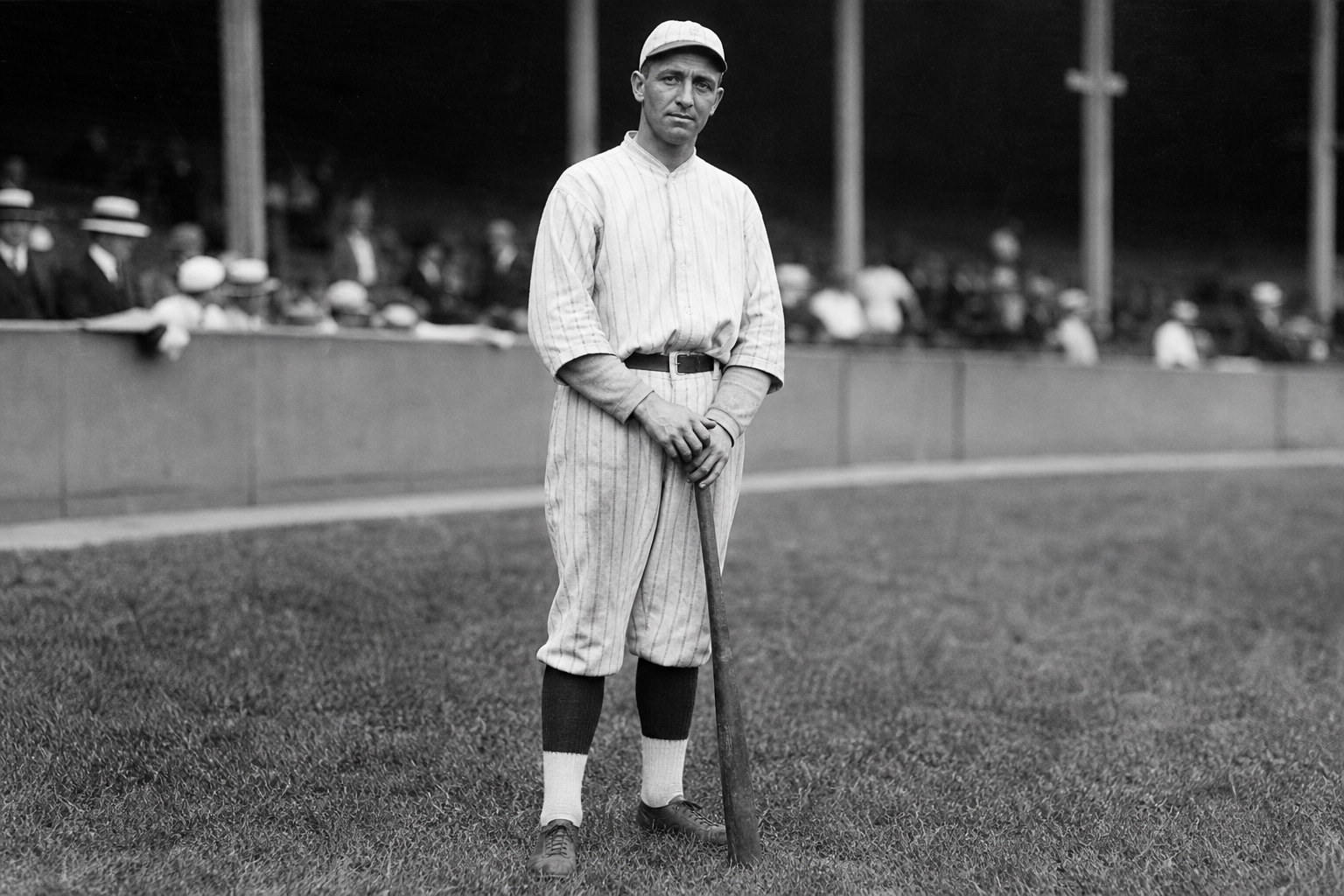
The Chicago White Sox entered the 1919 World Series as overwhelming favorites against the Cincinnati Reds. They were one of the most talented rosters in the American League, built around elite pitching, reliable defense, and a lineup that included one of the purest hitters the game had ever seen. Losing the Series five games to three didn’t just raise eyebrows — it lit a fuse that would burn for more than a year before the full story exploded into public view.
That hit batsman in the first inning of Game 1 was, according to testimony and later confessions, a pre-arranged signal: the conspirators were committed, the money had changed hands, and eight careers were already in the process of being destroyed. The 1919 World Series scandal would ultimately force a restructuring of professional baseball’s entire governance model — and produce one of sport’s most enduring moral arguments.
How the Fix Was Arranged

The conspiracy traces back to September 1919, when White Sox first baseman Chick Gandil met with Boston bookmaker Joseph “Sport” Sullivan at the Hotel Buckminster near Fenway Park on September 18, 1919. Gandil reportedly proposed that the World Series could be thrown, with gamblers compensating the players involved. He became the central organizer, recruiting teammates by exploiting genuine grievances: owner Charles Comiskey was widely regarded as one of the most tight-fisted bosses in the game, paying star players well below market rates.
The gamblers involved were not a single unified group. Multiple betting syndicates were approached simultaneously, creating a chaotic, overlapping web of promises and payments — a structure that would later make the case uniquely difficult to prosecute. Among those Gandil recruited: pitchers Eddie Cicotte and Claude “Lefty” Williams, outfielder “Shoeless” Joe Jackson, infielders Swede Risberg and Fred McMullin, outfielder Happy Felsch, and third baseman Buck Weaver.
Critically, the payments themselves were disorganized and bitterly disputed. As the Society for American Baseball Research documents, some players received less than promised and some received nothing at all. That breakdown of trust among the conspirators would eventually help unravel the whole scheme. The fix was not a tightly run criminal operation; it was an ad hoc arrangement held together by greed and grievance, and it showed.
Eight Men: What They Did — and Didn’t — Do
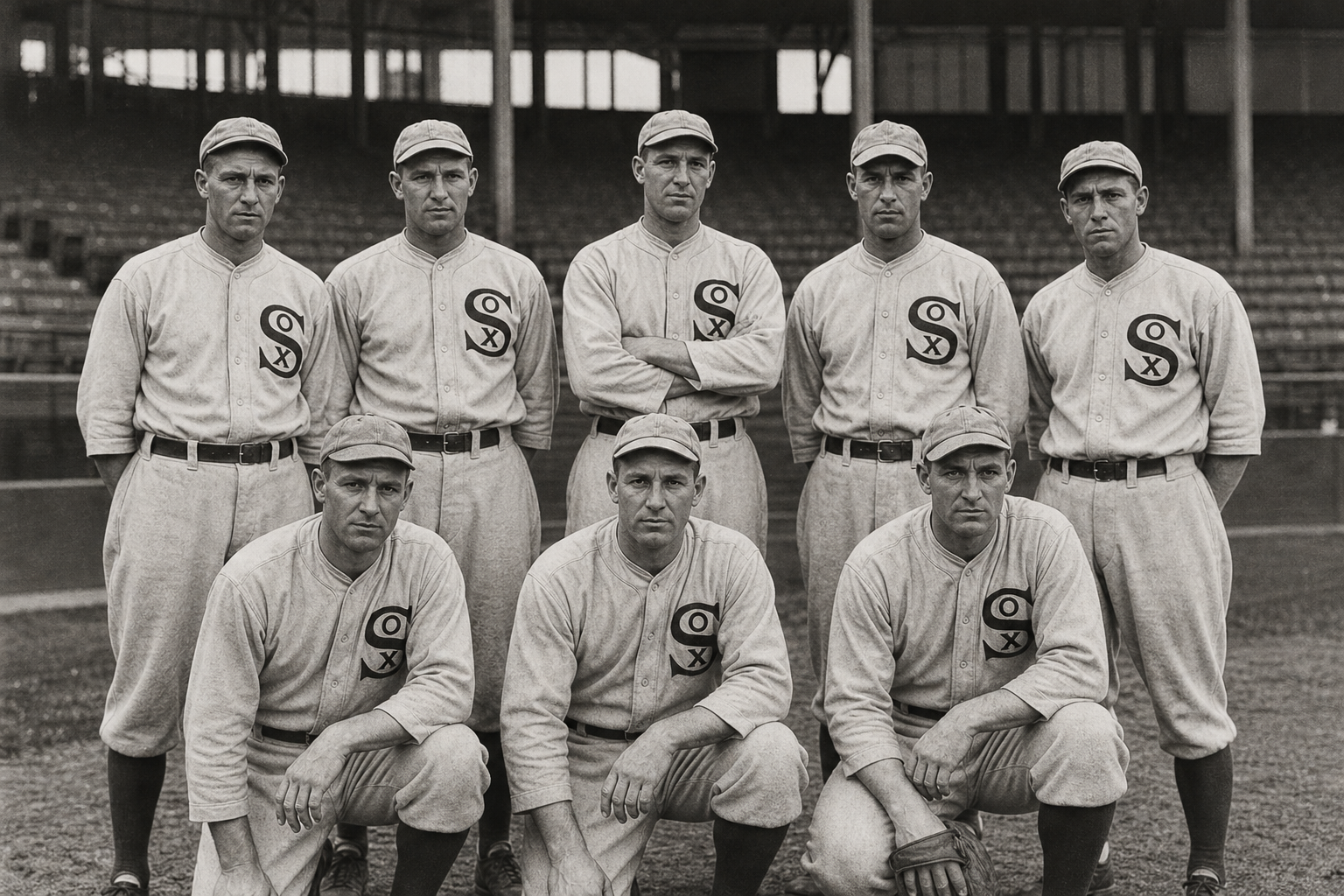
The eight players were not equally culpable, a distinction that gets lost when they are treated as a single bloc. Understanding the differences matters enormously, particularly in Jackson’s case.
Eddie Cicotte confessed fully. He admitted receiving $10,000 stuffed under his hotel room pillow, and his deliberate performance failures in Games 1 and 4 were among the clearest documented acts of throwing in the Series. His mechanics and pitch selection were visibly compromised.
Claude “Lefty” Williams lost all three of his Series starts — the most losses by any pitcher in a single World Series. His Game 8 performance, surrendering four runs before recording a single out, has been described by historians as the most conspicuous single act of the entire fix. According to some accounts, a gambler had threatened Williams and his wife the night before that game, adding a layer of coercion to his already compromised position.
Buck Weaver attended fix meetings but reportedly refused to accept money and batted .324 in the Series with no documented acts of deliberate failure. He was banned not for taking bribes or underperforming, but purely for “guilty knowledge” — knowing about the scheme and failing to report it. His case remains the most sympathetic in the entire affair, and petitions for his reinstatement have surfaced repeatedly across the decades.
Fred McMullin had the smallest role of any of the eight, reportedly participating on the fringes and making only two plate appearances in the Series. He was nonetheless indicted and banned alongside the others. His near-invisibility in the actual games has made him, alongside Weaver, a focal point for arguments about proportionality in Landis’s sweeping ruling.
Happy Felsch, Swede Risberg, and Chick Gandil occupied the middle ground. Gandil was the scheme’s architect and primary recruiter; Risberg was an enthusiastic participant; Felsch confessed to taking money and to deliberate errors in the field. The game-by-game Series statistics show a wide range of performances across the eight men, further complicating any uniform verdict on their guilt.
Joe Jackson: Star, Confessor, and Baseball’s Most Debated Exile
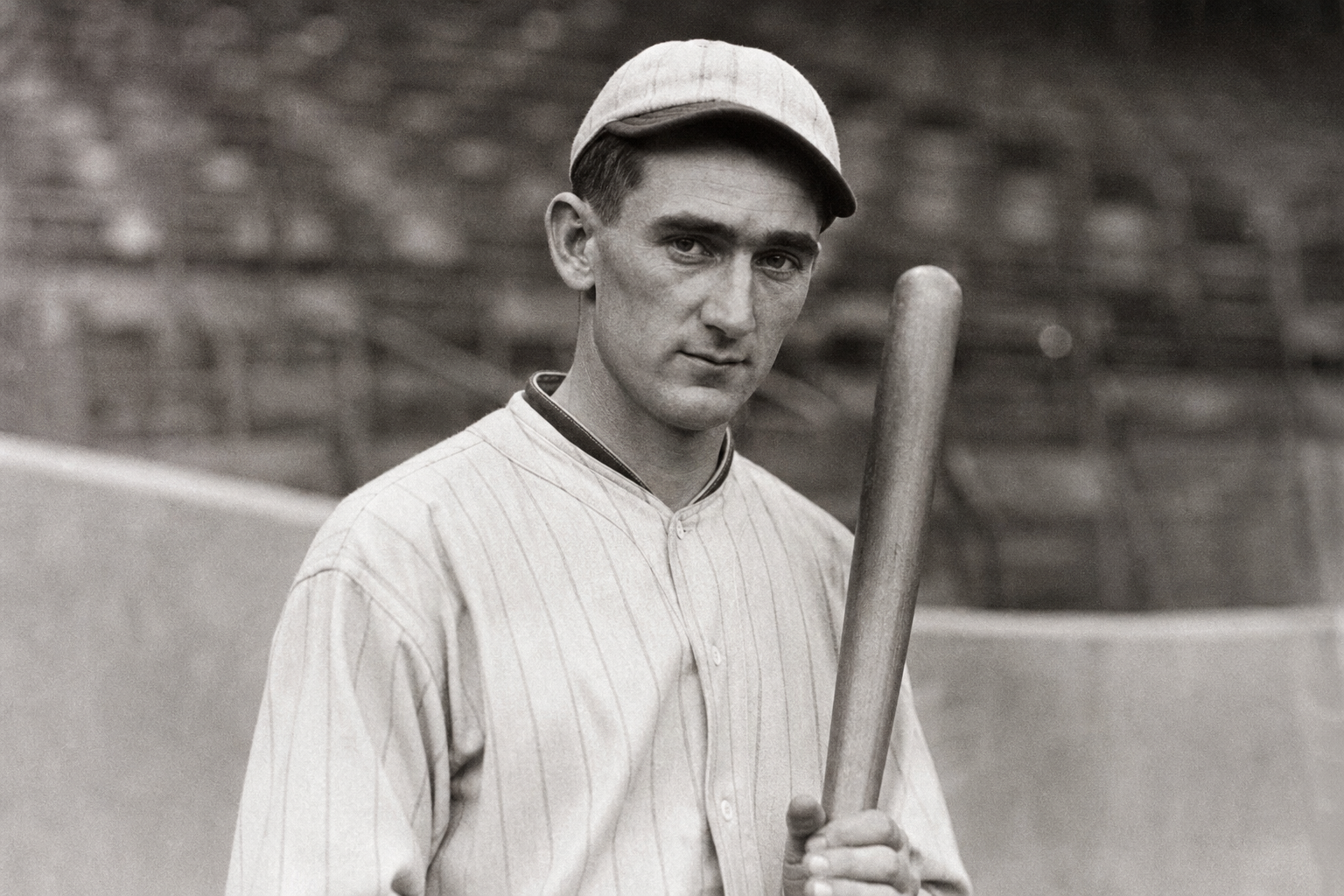
No figure in the Black Sox scandal has generated more sustained argument than Shoeless Joe Jackson. A career .356 hitter — third highest in MLB history — Jackson posted a .375 batting average with 12 hits and six runs batted in during the tainted 1919 World Series. His defenders have cited those numbers for over a century as evidence that he didn’t actively tank his performance.
In September 1920, Jackson appeared before a Chicago grand jury and signed a confession stating he had accepted $5,000 and had knowledge of the fix. That document became the most scrutinized piece of paper in baseball history. Jackson’s defenders argue he was functionally illiterate, that the confession was obtained under pressure and without adequate legal counsel, and that his on-field performance showed no deliberate failure. His detractors counter that accepting money and failing to report the scheme made him complicit regardless of his batting statistics.
What happened next only deepened the controversy. When the case went to trial in 1921, the grand jury confessions of Jackson, Cicotte, and Williams had vanished from the Cook County courthouse — reportedly stolen, though the full circumstances were never established. Without the confessions, the prosecution’s case effectively collapsed. The jury deliberated for less than three hours before acquitting all eight players on August 2, 1921.
The acquittal made no difference to Commissioner Kenesaw Mountain Landis. He issued lifetime bans for all eight players the following day, declaring — as cited in Eliot Asinof’s Eight Men Out — that no player who throws a game, or who sits in conference with gamblers discussing how to throw games and fails to report it, would ever play professional baseball again. The ruling was explicit: knowledge without disclosure equals guilt. It is the same principle that would underpin Pete Rose’s permanent ban more than six decades later.
The Trial, the Missing Confessions, and the Acquittal Nobody Expected
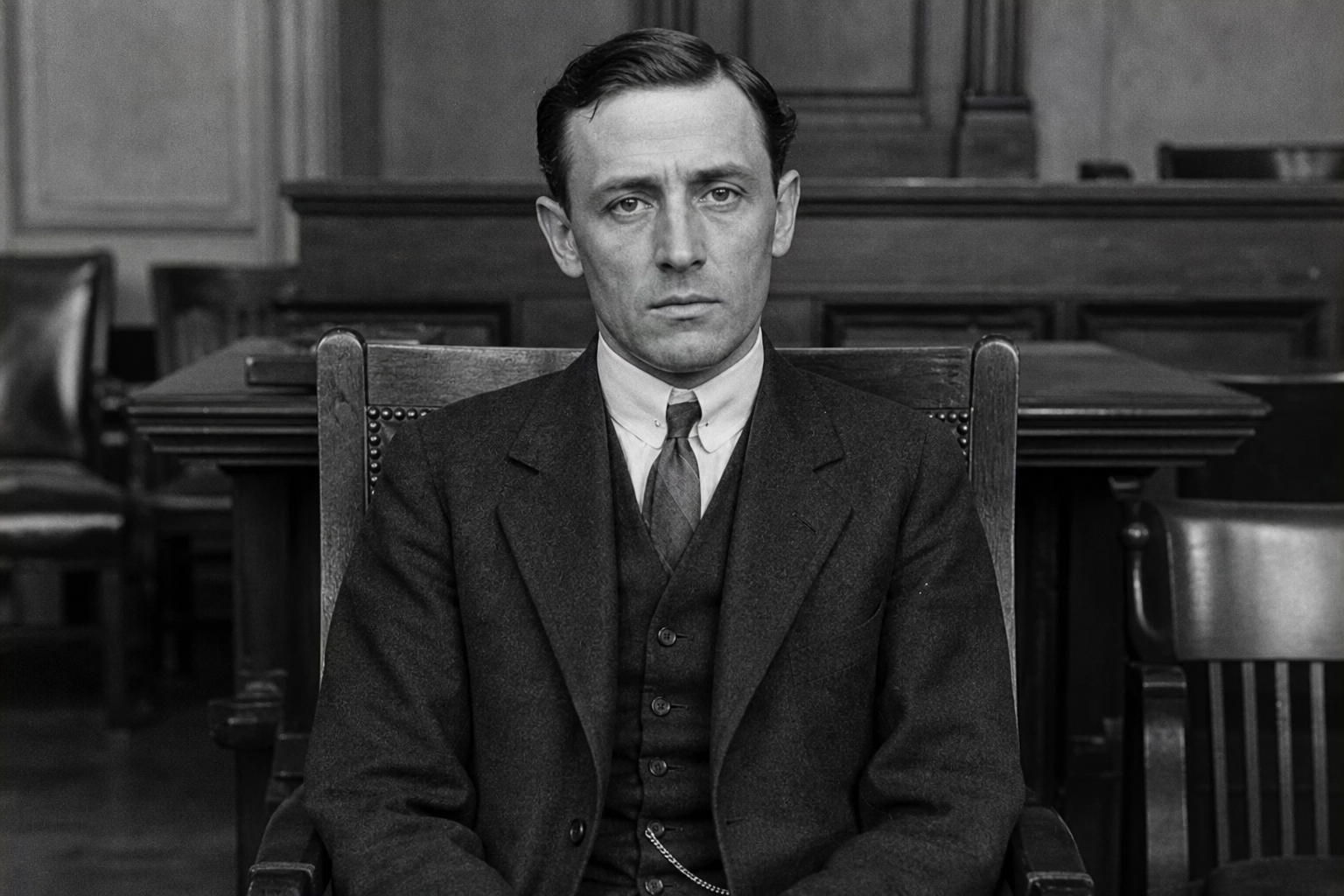
The legal proceedings surrounding the 1919 World Series scandal were as chaotic as the fix itself. The disappearance of the signed confessions remains one of baseball history’s genuine unsolved puzzles. The documents vanished between the grand jury phase and the trial; the chain of custody was broken; and no one was ever held accountable for their absence. Some accounts have suggested that the papers were stolen on behalf of figures connected to gambling interests, but no definitive explanation has ever been established.
The acquittal shocked the public but satisfied almost no one who had followed the evidence closely. Players had confessed. The Series results had been manipulated. Gamblers had profited. And yet, on a legal technicality born partly from missing evidence, all eight men walked free — only to have Commissioner Landis close the door permanently the very next morning.
Landis’s lifetime bans established a precedent that reshaped professional sport’s approach to integrity. Before 1919, organized gambling operated in and around ballparks with relatively little official resistance. The scandal forced the creation of the Commissioner’s office itself — Landis was appointed in November 1920 specifically to restore public trust — and accelerated a crackdown on player-gambler contact that remains in force across every major professional sports league today. The National Baseball Hall of Fame’s archival holdings on the scandal document the full scope of Landis’s subsequent correspondence as he worked to consolidate the Commissioner’s authority in the years that followed.
Why the Verdict History Still Won’t Deliver
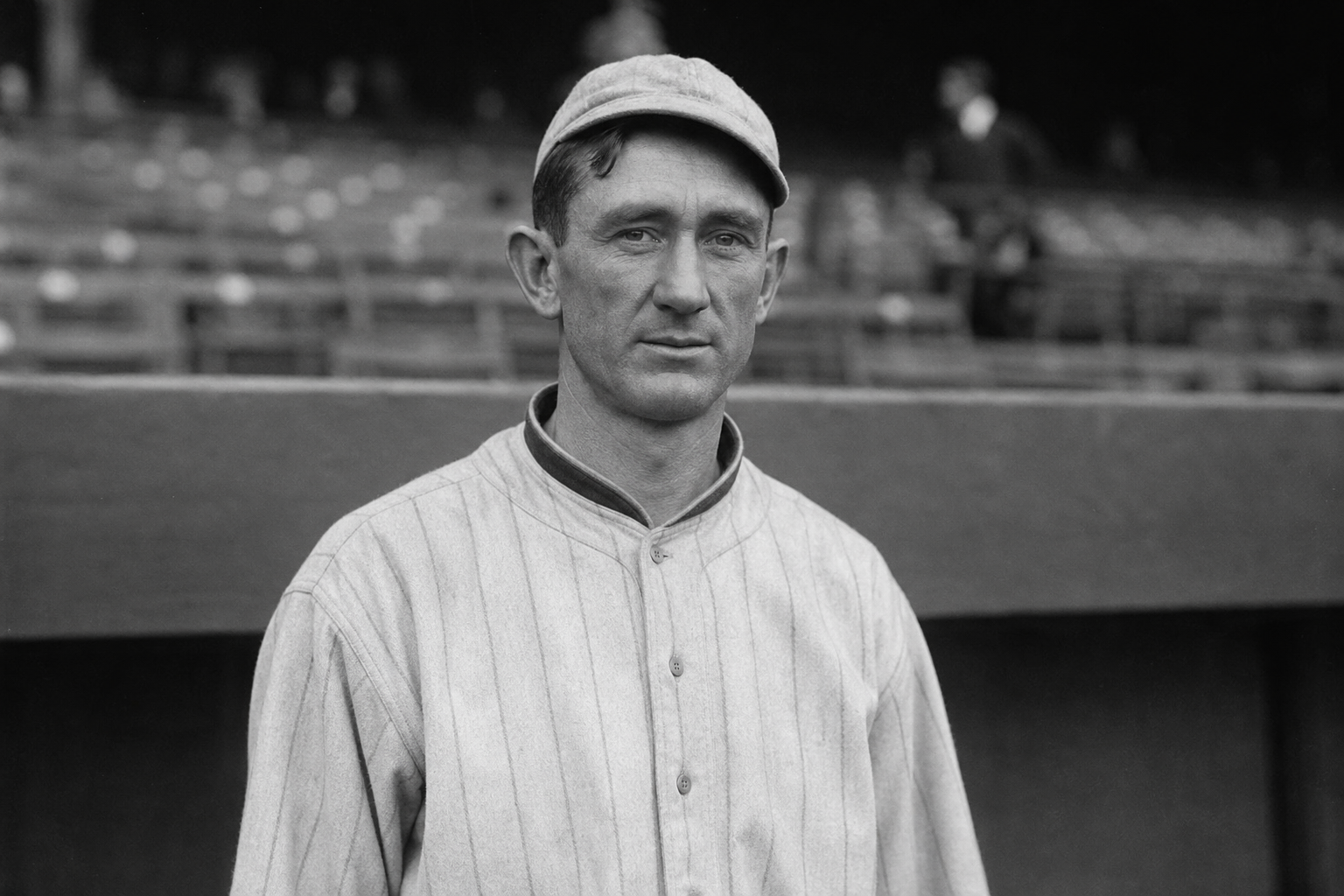
More than a century later, the core tension of the Black Sox story has never been resolved: does accepting money automatically mean actively throwing games? Can a player take a bribe and still compete honestly — and if so, does the bribe alone constitute a betrayal sufficient for a lifetime ban?
Jackson’s Hall of Fame case sits precisely at that fault line. His historic batting numbers would almost certainly have earned him induction under ordinary circumstances. Instead, the Veterans Committee has repeatedly declined to reinstate him. In December 2021, MLB Commissioner Rob Manfred declined to reinstate Jackson posthumously, concluding that the Commissioner’s office lacked authority to overturn Landis’s ruling. The most debated ban in baseball history remains officially intact.
Weaver’s case presents an equally unresolved question about proportionality. He played the Series cleanly by all measurable evidence, accepted no money, and was banned anyway on the same terms as the scheme’s architects. The gap between Gandil’s role and Weaver’s — or McMullin’s — is so wide that uniform punishment has struck many historians as a blunt instrument applied to a situation that demanded precision.
Eight Men Out — Eliot Asinof’s 1963 book and John Sayles’s 1988 film adaptation — frames the scandal primarily as a story of labor exploitation: players pushed toward corruption by an owner who underpaid and disrespected them. That reading is editorially compelling and historically grounded in Comiskey’s documented penny-pinching. It is also contested by historians who emphasize that financial grievance, however legitimate, does not dissolve personal culpability. Both readings can be true simultaneously, which is part of why the scandal has never stopped generating argument.
What is not contested: eight men were banned, the game was permanently changed, and the 1919 World Series scandal endures as the defining example of what happens when the integrity of sport is treated as negotiable. Jackson confessed, was acquitted, and was banned for life anyway — and baseball, more than a hundred years on, still hasn’t fully decided what to do with that.